
Oil Catch Tanks are used in the crankcase ventilation (PCV) system to separate oil mist and condensate, helping keep the intake tract cleaner. You’ll find different port layouts, internal baffle/filter designs and drain options; for related parts see Fuel and Oil System.
Use filters (brand, connections, availability) and open the product page from the card to confirm exact sizes and fitment. Narrow down the right design, then add your choice to the basket.

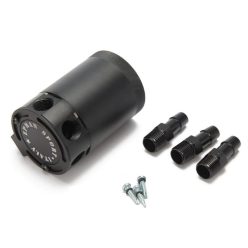
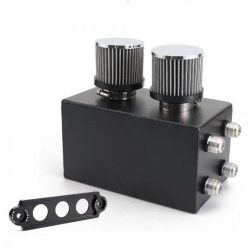
Net price: 48 €
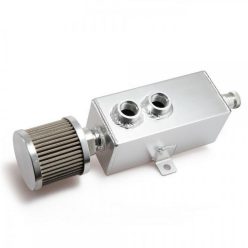
Net price: 33 €
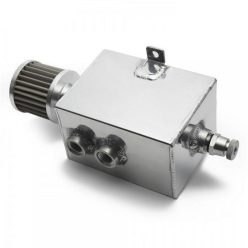
Net price: 41 €
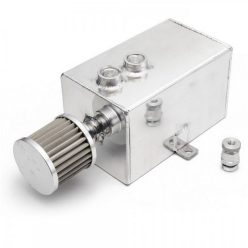
Net price: 41 €
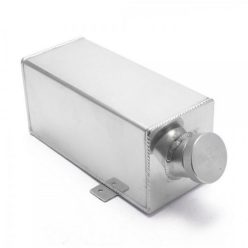
Net price: 25 €
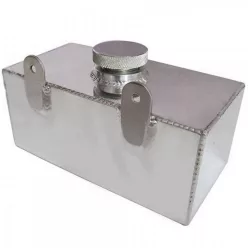
Net price: 29 €
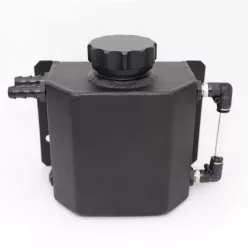
Net price: 29 €
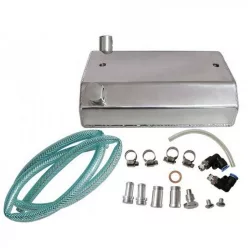
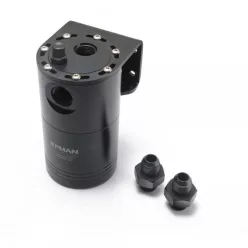
Net price: 64 €

Net price: 39 €
Oil Catch Tanks – overview, cleaner intake plumbing and more controlled PCV
Oil Catch Tanks (oil catch can / oil separator tank) help manage blow-by vapours that carry oil mist into the intake system. On turbo cars this can show up as oily residue in intercooler piping, while on NA engines it often deposits around the throttle body and manifold. A catch tank collects the condensed vapour in a serviceable container, making it easier to monitor what the crankcase ventilation is actually pushing out.
Note: a catch tank does not “fix” engine wear; it simply reduces how much oil vapour re-enters the intake tract. For road use, always consider local regulations, because an open breather setup may not be permitted in some regions. Use the product page specifications as the final reference for ports, sealing method and intended use.
Technical Basics
Most modern cars use a PCV (positive crankcase ventilation) layout that is effectively a closed system: under vacuum it routes vapours back to the intake, and under load it may breathe through a different path. For this, a sealed catch tank with the correct hose routing is the safer choice, typically matching common hose sizes such as 10 mm or 14 mm (depending on the engine). If the tank uses a breather filter, that’s generally an open configuration and should be chosen intentionally for your build.
Separation efficiency depends heavily on internal design: a baffled path and a metal mesh/bronze-type filter element increase condensation and reduce “straight-through” flow. Pay attention to connection standards: AN- fittings seal on a 37° flare, while 3/8" NPT is a tapered thread that seals on the threads (often with the manufacturer-recommended sealant). Mixing standards without proper adapters is a common source of leaks.
Housings are often aluminium for low weight and good heat transfer, but sealing quality and mounting rigidity matter more than material alone. The collected liquid can be a mix of oil, water condensation and fuel vapour by-products, especially in short-trip or cold-weather use. Regular inspection tells you whether your engine’s crankcase ventilation load is increasing over time.
Selection Criteria
Start by deciding whether you need a closed PCV catch tank or an open breather-style solution, because this determines port layout and sealing expectations. Match the tank’s connections to your plumbing: for motorsport hose sets an AN-10-style approach is common, while OEM-style systems may prefer hose barbs. A built-in drain tap/plug is a practical feature if you want quick servicing.
Capacity becomes important with higher blow-by (boosted engines, track use) or when service intervals are longer, but packaging space often limits size. Internal baffling and a proper separation insert can matter as much as litres, because that’s what actually improves oil mist capture. If you’re combining multiple vent sources (e.g., cam cover plus block vent), a 2–4 port configuration can simplify routing.
If your vehicle requires specific fitment, check for compatibility notes (engine code/year) and compare them to your bay layout. On turbo engines, avoiding unmetered air leaks is critical because it can affect idle quality and fuelling behaviour. When in doubt, follow the manufacturer’s diagrams and the product’s stated intended application.
Installation & Maintenance
Good installation is mostly about sealing and mounting: use a rigid bracket, quality clamps, and a hose route that won’t kink under heat and vibration. Place the tank where you can access the drain point easily, and keep hose runs as short and tidy as practical. With threaded ports (e.g., 3/8" NPT), seal as specified by the manufacturer and re-check after the first heat cycle.
Maintenance depends on usage: cold climates tend to create more condensate, while sustained boost can increase blow-by volume. Check early and often after installation to establish a baseline, then service on a routine that matches what your engine produces. If the tank fills unusually fast, inspect the PCV valve and the crankcase ventilation routing.
Quick warning: if the engine starts hunting or idling poorly after fitting a catch tank, first check for leaks, incorrect routing, and whether your setup remains closed where it must be. Open breathers can also draw in dust and moisture if positioned poorly. Always validate with your engine’s PCV schematic.
FAQ
Which connection do I need: 10 mm, AN-10 or 3/8" NPT?
Answer: OEM PCV hoses often suit 10 mm/14 mm hose barbs, while motorsport plumbing commonly uses AN-10 and similar sizes. 3/8" NPT is a tapered thread typically used for screw-in fittings and needs the correct sealing approach. Use the product page port specification as the deciding factor.
Should I run a closed PCV catch tank or an open breather filter?
Answer: For most road cars, a closed PCV-style catch tank keeps the system controlled and is usually closer to emissions-compliant routing. An open breather setup is more common on track-focused or heavily modified builds where routing is redesigned. Check local rules and follow your engine’s PCV diagram.
How often should I drain an oil catch tank?
Answer: It depends on climate and engine condition: cold weather increases condensate, and boosted use can increase blow-by. After fitting, inspect frequently to learn your baseline, then set a routine. If it fills quickly, investigate PCV function and crankcase pressure.
Will a catch can stop oil consumption?
Answer: No—an oil catch can reduces how much oil vapour re-enters the intake, but it doesn’t repair wear or sealing issues. If consumption is high, check the PCV valve, compression and leaks. Treat the catch tank as cleanliness and monitoring hardware.
Where should I mount the tank in the engine bay?
Answer: Choose a location with solid mounting, manageable heat exposure and easy service access for draining. Keep hose runs short and avoid kinks; for closed systems, airtight sealing is essential. Verify routing against your engine’s PCV layout.
Choose the port layout and sealing style that matches your setup, then place your order.
