Expert customer service available Monday to Friday, 8:00 AM – 4:00 PM via e-mail at INFO@LLRACING.EU .

It’s Not Your Turbo: 8 Signs the Whole System Was Built Wrong

It’s Not Your Turbo: 8 Signs the Whole System Was Built Wrong

When a turbo car does not behave the way it should, many people blame the turbo immediately. In reality, the problem is often not the main unit itself, but the way the entire system was built around it. Boost control, vacuum routing, charge piping, intercooling, fueling, oil supply and calibration all shape what you feel from the driver’s seat. If that system is poorly integrated, even a good turbo can feel weak, nervous or unpredictable.

In this article, we show the eight key signs that point to a bad overall setup rather than a bad turbo.

04/05/2026 10:03 LLRacing

There is a classic reflex in the turbo world: when the car does not perform as expected, when boost becomes inconsistent, heat builds up, response feels weak or the whole setup becomes disappointing, many people blame the turbo first. Reality is often much more complicated.

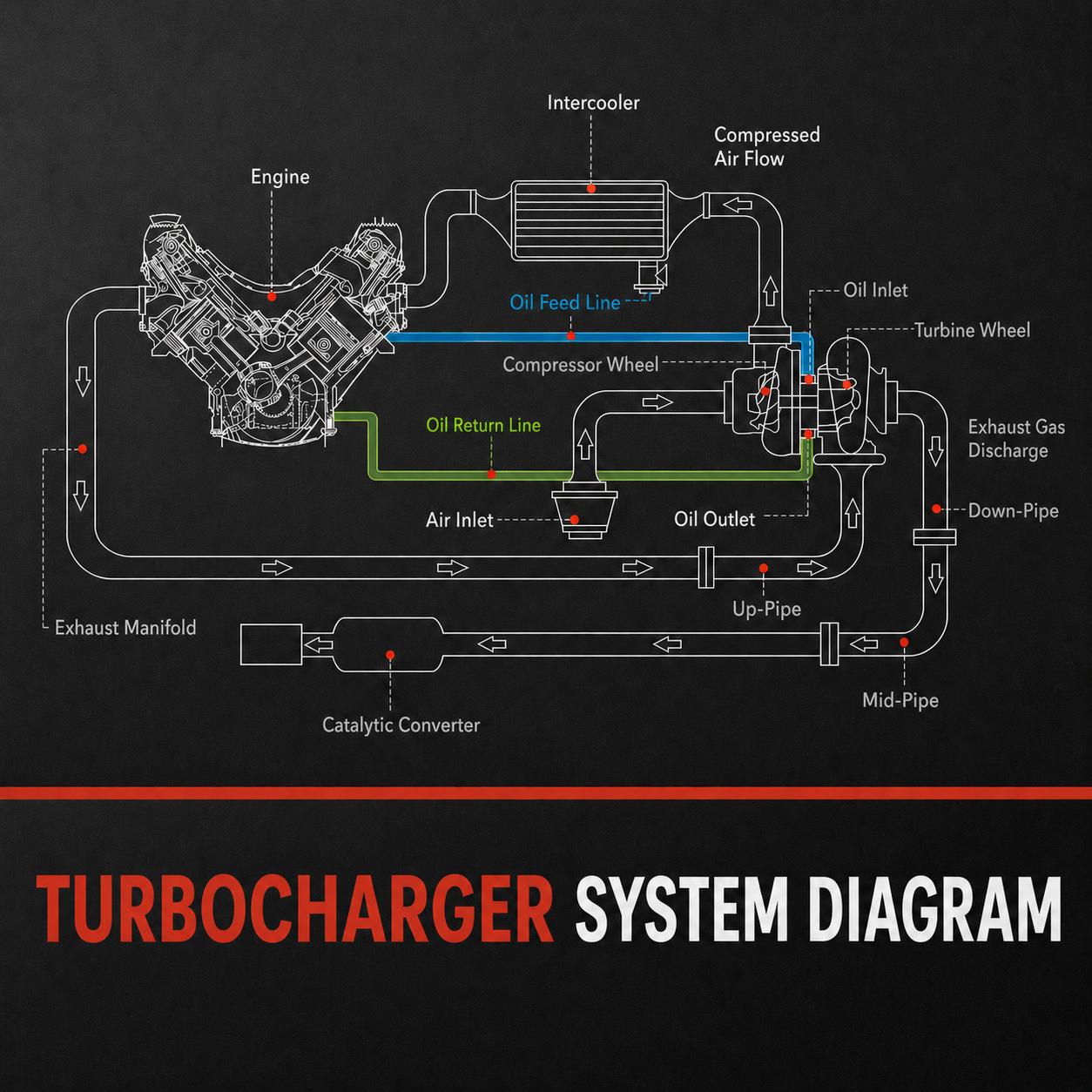
A turbo rarely works alone. What you feel from the driver’s seat is the combined result of multiple systems working together: the charge path, intercooler, wastegate, vacuum control, fuel system, oil supply, heat management, sensors and calibration all influence how the car finally behaves.

The most important truth is this: a turbo setup is not about one single part. It is about the whole system.

The turbocharger is not a standalone component: the fault is often caused by the system working around it.

If that system is poorly built, even a good turbo can produce a weak, nervous, unpredictable or unreliable result. Here are the 8 signs that suggest your turbo may not be the real problem—the overall system is.

1. Unstable boost – pressure does not behave the way it should

One of the clearest warning signs is boost that feels inconsistent or difficult to control. Sometimes the car makes more pressure, sometimes less. It may spike in one rpm range, then fall away in another. The overall character feels unpredictable instead of clean and controlled.

Many owners blame the turbo immediately, but the real cause is often something else:

  • the wrong wastegate spring,
  • poor boost control strategy,
  • faulty vacuum routing,
  • leaks on the charge side,
  • or control logic that simply is not well integrated.

What does this mean?
The turbo itself may not be “bad”—the surrounding system simply cannot manage it properly.

2. Lazy spool – the setup looks strong on paper but feels flat in real life

Many builds disappoint because the owner assembled a setup that sounds powerful on paper, yet the car feels slow to respond, weak in the midrange and generally less exciting than expected. This is not always about turbo size alone.

Poor spool can come from:

  • a turbo that does not match the intended use,
  • excessive volume in the charge piping,
  • system leaks,
  • a poor turbine-side or exhaust-side setup,
  • wastegate issues,
  • or several mismatched parts working against each other.

What does this mean?
The car may feel lazy not because the turbo is bad, but because the whole package was never tuned to the real use case.

3. High intake air temperatures – the system is choking itself with heat

On a turbocharged car, intake air temperature is a critical factor. If the air gets too hot, density drops, efficiency falls, knock risk rises and the ECU may begin pulling timing or reducing performance.

Again, this is often blamed on the turbo, while the real problem is more likely to be:

  • an intercooler that is too small or poorly positioned,
  • bad airflow through the intercooler,
  • under-bonnet heat trapping,
  • insufficient heat protection,
  • or a setup that heat-soaks too easily as a whole.

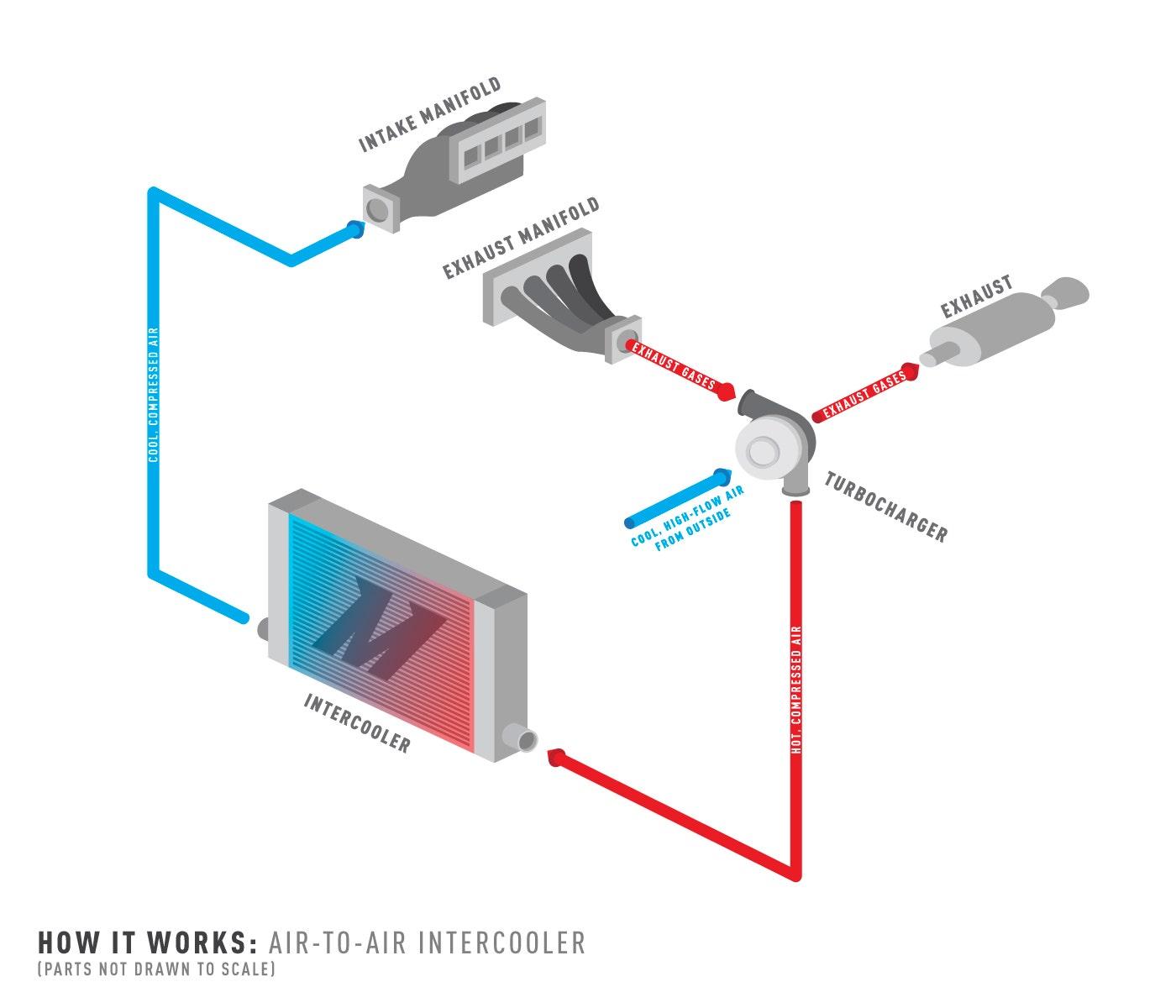
The air compressed by the turbocharger heats up, so the intercooler’s job is to cool it down before it enters the engine.

What does this mean?
The turbo may be doing its job, but the rest of the system cannot keep the charged air in the right operating temperature range.

4. Boost spikes or overshoot – the system reacts instead of controlling

One of the most dangerous behaviors in a turbo setup is when boost overshoots the target pressure. This may happen during a hard throttle application, in certain rpm zones or under specific load conditions. In most cases, this is not really a “turbo fault”—it is a control problem.

Typical causes include:

  • a badly sized or badly positioned wastegate,
  • slow or poorly tuned boost control strategy,
  • vacuum control errors,
  • poor hose routing,
  • or a system that simply is not being controlled precisely enough.

What does this mean?
The turbo is not uncontrollable. The control system around it is not good enough.

5. Heat-soaked, weaker performance – after the first pull, the car is no longer the same

Many turbo street cars feel strong on the first pull, then lose sharpness as heat builds. Response becomes duller, the car no longer feels crisp and the whole setup starts to lose the edge it had when cooler.

This is often caused by:

  • insufficient intercooler effectiveness,
  • poor cooling capacity,
  • bad under-bonnet heat evacuation,
  • oil-temperature issues,
  • or several systems suffering from heat at the same time.

What does this mean?
The car may look strong on paper, but if the performance character falls apart once heat builds, the system was never truly prepared for sustained load.

6. Fuel-side instability – the airflow is there, but the support behind it is not

A turbocharged engine only works properly when increased airflow is matched by stable fuel delivery. Many setups that seem to have “turbo problems” are actually suffering because the fuel system has not been matched to the power level and real operating load.

This may show up as:

  • inconsistent behavior at high load,
  • performance that gets worse once fully heat-soaked,
  • uncertain power delivery,
  • or a general feeling that the car is not clean and confident under boost.

What does this mean?
The turbo may be supplying more air perfectly well, but the rest of the system is not supporting it properly. A good turbo car must be stable on the fuel side too.

7. Oil-related turbo problems – even when the turbo itself is not actually the root cause

Turbo lubrication and oil drain design are sensitive areas. If something is wrong here, unpleasant symptoms can appear quickly. Many owners call this a turbo failure, but the real issue is often in the installation and surrounding conditions.

Common causes include:

  • poor oil feed arrangement,
  • bad oil drain design,
  • unfavorable turbo positioning,
  • too much thermal stress around the turbo,
  • or lubrication conditions that are simply not ideal.

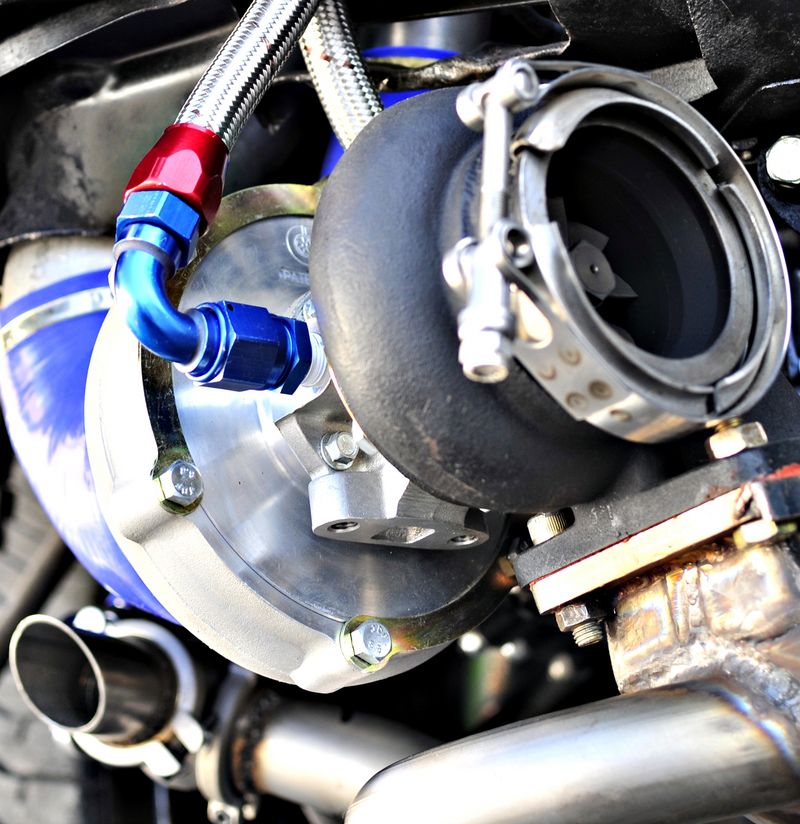
Turbo oil feed connection with braided oil hose and AN fitting

What does this mean?
The turbo is a sensitive core component, but often it is not the turbo that is wrong—it is the environment it has been forced to work in.

8. “Everything is good on paper, but the car still doesn’t work” – the classic system-level warning sign

This is perhaps the most telling sign of all. Every part seems good on its own. Branded turbo, good intercooler, large injectors, proper exhaust, serious wastegate—on paper, the setup should work. Yet it still does not come together.

The car either does not deliver what was expected, only works well in a very narrow operating window, or always feels like a compromise. This is rarely the fault of one single part. It is a system-logic problem.

What does this mean?
Good parts alone do not create a good system. Real quality begins when the parts work well together, not just individually.

What makes a turbo system genuinely good?

A properly functioning turbo car is not defined by peak numbers alone. It is defined by how well the whole package works together. In practice, that usually means:

  • turbo size that matches the intended purpose,
  • wastegate and boost control that behave predictably,
  • intercooling and cooling that can handle real load,
  • stable fuel delivery,
  • correct oil feed and drain design,
  • hoses, fittings and connections without weak compromises,
  • and a package that works not only on a dyno sheet, but in real use.

Conclusion

If a turbocharged car behaves strangely, suffers from inconsistent boost, heat issues, weak response or unpredictable power delivery, it is rarely a good idea to blame the turbo first. Very often, the real problem is not one single component—it is that the whole system was never properly thought through or integrated.

A good turbo setup is not defined by an expensive turbo alone. It is defined by whether everything built around that turbo can also do its job properly.

That is the real difference between a car that only looks strong on paper and a car that genuinely works.

Related reading:
The 10 Most Expensive Myths in Tuning – and What to Do Instead
Most Tuned Street Cars Are Not Killed by Power – They’re Killed by These 5 Bad Decisions
Trackday cooling: oil, coolant, intercooler—where most street cars fail first