
A turbo blanket (turbine housing cover) is a heat-control layer for the hot side of the turbocharger, helping to manage radiant heat in the engine bay. This category includes universal T25, T3, T4, T6 and T78/T88 sizes as well as model-specific Forge, Mishimoto and Subaru-focused options.
Choose by turbine housing family, outer shape, actuator and V-band clearance, then confirm material and fastening style on the product card. Verify exact dimensions and specifications on the product card; in-stock items dispatch fast within the EU.
To avoid fitment mistakes, check housing size and clearance together, because an over-tight or rotated blanket can touch nearby parts and hide an existing leak trace.
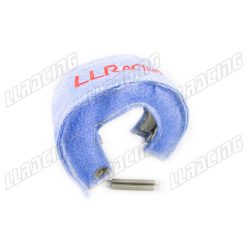
Net price: 39 €
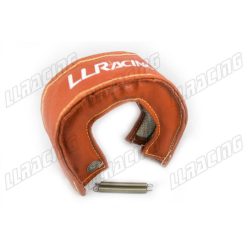
Net price: 39 €
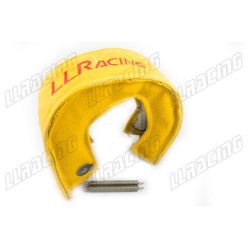
Net price: 39 €
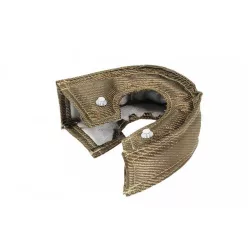
Net price: 284 €

Net price: 272 €
Net price: 311 €
Net price: 284 €

Net price: 338 €
Net price: 170 €
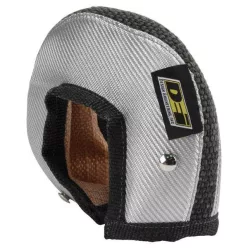
Net price: 207 €
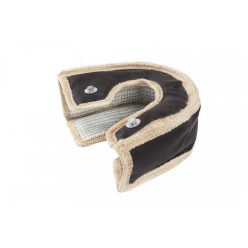
Net price: 24 €
Turbo blankets for heat control and accurate fitment
Category focus: this section is built around heat-control covers for the turbine housing, in other words the turbo blanket solutions commonly used by builders. The live range is not limited to generic T-housing pieces; it also includes several vehicle-specific Forge and Mishimoto designs.
Technical background and system integration
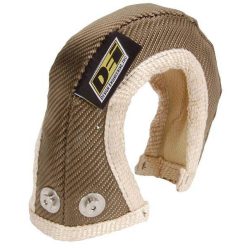
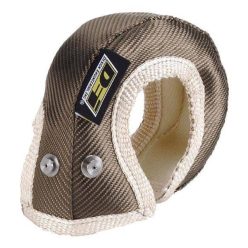
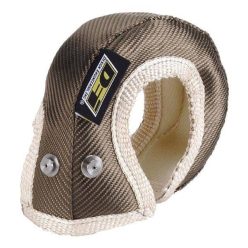
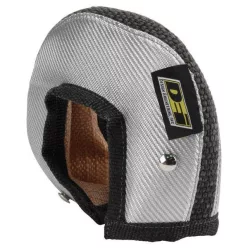
Real product spread: the visible range includes DEI GT22, T25/T28, T3, T4 and Ultra 47 blankets, Forge T25/T28, T3 and T78/T88/T6 pieces, Mishimoto titanium T25/T28, T3 and T4 options, TurboWorks sizes from T1 to T6, plus LLRacing universal T25-T88 and Subaru-focused entries. Colour or marketing name matters less than housing shape and retention layout.
- Size family: T25/T28, T3, T4, T6 and larger T78/T88 directions are all present, so the nominal T-size should always be checked against the real housing shape.
- Material label: titanium, carbon, Onyx, Ultra and different outer-finish variants appear in the category, but the practical choice depends just as much on flexibility and available space.
- Vehicle fitment: the listings include Alfa Romeo, Peugeot, Honda FK2/FK8, Mercedes M133, Subaru WRX/STI, Toyota Supra and other application-led options.
- Retention space: you need room not only for the blanket itself, but also for the wire, hook or spring-style fastening route.
How to choose the right one
Quick selection guide: this is a product-list page, so first decide whether you need a universal T-housing blanket or a vehicle-specific solution. Then confirm the turbine-housing family, actuator position, V-band and manifold clearance, and finally check the product card for material and retention details.
Product-card logic: in this category, the size field and the fastening shape visible in the photo usually give the fastest clue when two close T-housing options seem similar.
- Universal: a good route when you are choosing by T25/T28, T3, T4, T6 or T78/T88 housing and you have enough surrounding space.
- Vehicle-specific: useful when you are buying for BMW N54, Focus RS, Civic Type R, Subaru WRX/STI or another stated application.
- Clearance: always account for the actuator, arm, lines and nearby heat shielding, not just the turbine housing itself.
Installation and failure-prevention tips
Before fitting: place the blanket on a cool, clean and dry turbine housing, then confirm before final fastening that the actuator, arm and nearby hoses still move freely. If you can already see oil or exhaust staining, find the source first.
Common failure point: most problems come from the wrong size or from underestimated clearance. In that situation the blanket can sit under tension, rotate, touch nearby hardware, and after the first heat cycle it may loosen or hide an earlier leak trace; prevent that with a trial fit and a full movement check of the surrounding parts.
- Trial fit: before final fastening, move the arm by hand and make sure the retention path does not pull the blanket off its natural seat.
- Recheck: after first use, inspect position, rub marks and whether any fresh oil or soot trace has appeared nearby.
PRO TIP: when you are deciding between a universal and a vehicle-specific blanket, the free space around the housing usually resolves the choice faster than the turbo name alone.
FAQ
Should I choose a universal or a vehicle-specific turbo blanket?
If you know the turbine-housing family and there is enough surrounding space, a universal option can work well. A vehicle-specific piece becomes more useful when the area is tight or the product card clearly ties the blanket to a particular application.
What is the most common failure or installation mistake?
Check the sequence in this order: housing identification, actuator distance, wire-routing path, V-band and manifold gap, then the blanket position after the first heat cycle. If any of those points is uncertain, remove the part only when cool and verify fitment again.
What is the difference between titanium, carbon and other material-labelled blankets?
The category shows several outer-shell styles and stiffness levels. In practice, conformity to the housing shape, blanket thickness and available clearance matter at least as much as the material label itself.
Can I fit the blanket if there is already light oil or soot around the turbo?
That is not the best starting point. A blanket can make an existing leak or blow-by trace harder to monitor, so it is better to solve the source first and fit the cover afterwards.
What should I inspect after the first test drive?
Check that the blanket has not settled, rotated or created a new rub mark, and confirm that the nearby hoses, wiring and actuator still move as intended. If the position has changed, refit it only after the area has cooled down.
