
Heat protection sleeves and protective sleeving (heat protection sleeves) are wrap-style solutions used to help manage heat exposure around wiring, hoses, looms and plug boots near turbo, manifold or exhaust areas. They are built for heat management where the route of the protected part matters as much as the heat source itself.
The right option depends on internal diameter, overall length and whether you need a split, hook-and-loop or closed construction, because a 19.05 mm, 25.4 mm or 31.75 mm product can suit very different installation paths. Verify exact dimensions and specifications on the product card; in-stock items dispatch fast within the EU.
Choose a version that does not clamp too tightly around the protected part and still leaves room for normal movement, because a calm routing path often matters more than nominal size alone.


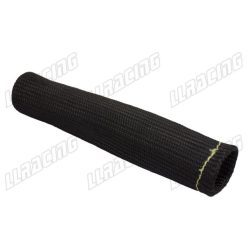
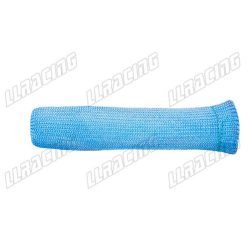
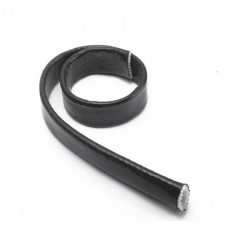
Net price: 9 €

Net price: 10 €

Net price: 10 €

Net price: 11 €
Heat Protection Sleeves and Protective Sleeving for Wiring, Hoses and Plug Boots
This category brings together heat-management products built in sleeve or sleeving form to help protect wiring, hoses, looms and plug boots in higher-heat areas. The right choice depends on the real installation path rather than visual similarity alone, because AN6-AN12 hose protection, hook-and-loop cable shielding and spark plug heat sleeves each place different demands on fitment and routing.
Technical background and system integration
A heat protection sleeve or protective sleeving product is not there to block every heat source completely; its role is to make nearby heat exposure more manageable while helping to protect the surface of the component underneath. It is best judged through the heat path: where the radiant heat comes from, how close the protected part runs to it and how much that part moves in service.
- Heat source: near a turbo, manifold, downpipe or exhaust, radiant heat and proximity to hot metal usually matter more than general under-bonnet warmth.
- Protected part: the category typically includes cable and hose sleeves, spark plug heat sleeves and hose sleeves in several bore sizes.
- Build style: retrofit work can favour split or hook-and-loop designs, while a fresh build may suit a closed sleeve with a tidier route.
- Size range: the listed products can include 10 mm, 13 mm, 16 mm and 19 mm internal bore options, as well as around 19.05 mm, 25.4 mm and 31.75 mm variants.
When chosen well, these products can help with more than direct heat exposure by also reducing rubbing, surface drying and repeated contact with nearby edges. Component protection therefore depends on the full route, the support points and the way the protected part moves during use.
How to choose the right one
Quick selection guide: on this product-list page, first measure the true outside diameter of the part you want to protect and the full length of the exposed section, then decide whether a closed, split or hook-and-loop construction suits the installation better. As this category does not branch into subcategories here, the safest route is to match size, length and construction on the product card against your exact routing path.
- Internal diameter: do not rely only on nominal hose or wire size; include outer sheath, clips and bundling in the measurement.
- Full coverage: measure the whole exposed section, not just the single hottest point near the heat source.
- Installation logic: on an already installed hose or loom, a hook-and-loop style can be easier to fit than a fully closed sleeve.
- Use case: plug-boot sleeves, cable sleeves and AN hose sleeves can share similar names while serving different fitment needs.
If you are between two close sizes, compare which option stays cleaner along the full route and which one can be fitted without pulling the hose or loom away from its natural position.
Installation and failure-prevention tips
Preparation: before fitting, inspect the route for burrs, sharp edges, protruding clamps or fixing points that could load the outer layer during movement. During mechanical securing, leave enough movement allowance so thermal expansion and operating motion do not concentrate directly at the end of the sleeve.
Common issue: most problems appear when the sleeve is chosen too tight, when the exposed section is not fully covered or when the sleeve ends directly next to a sharp bend and a hot surface. That can show up as early hardening, discolouration of the outer layer or marks on the protected part, and it is usually best prevented by accurate sizing and calmer routing.
Where the hose or loom moves in more than one direction, it helps to assess the final position not only at rest but also with expected operating movement in mind.
PRO TIP: if the category shows hook-and-loop aluminised cable or hose sleeves, AN-sized hose sleeves and spark plug heat sleeves side by side, choose by the exact task first and only then by diameter.
FAQ
What is the most common failure or installation mistake?
First re-measure the true outside diameter of the protected part including sheath and clips, then check whether the sleeve fully covers the exposed area. After that, inspect bend points, fixing positions and whether normal movement can pull the protection away from the critical zone.
Is a closed, split or hook-and-loop version better?
On a fresh build, a closed sleeve often gives a tidier route because it wraps the protected part more evenly. On an already installed hose, loom or cable, a split or hook-and-loop version can be easier to fit because it may not require full disassembly.
Is it enough to protect only the hottest point?
Not always, because heat exposure and movement can affect a longer section than the single closest point to the source. It is usually worth considering the entry and exit area as well so protection does not stop too abruptly.
How do I size a sleeve for an AN-marked hose?
The AN reference is a good starting point, but the final choice should be made from the true outside diameter. Include outer covering and how easily the sleeve needs to be installed in the actual space available.
When is the category page enough, and when do I need the product card?
The category page is useful for understanding size and construction logic. The final choice should always be made from the product card, where the exact size, length, build style and the most relevant notes are shown.
