
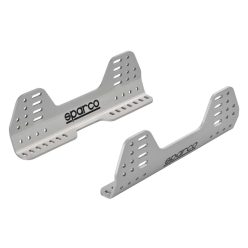
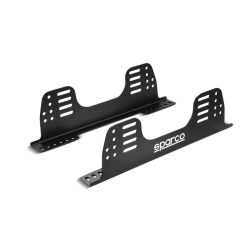
Our seat accessories & mounting hardware cover everything for a safe, ergonomic install: side mounts, sliders, base frames/adaptors, spacers, cushions and fixing kits. Leading brands include Sparco, OMP and Turn One. Match hole patterns (290/320 mm), materials and height to dial in your driving position and meet technical requirements for road or track use.




Net price: 20 €

Net price: 117 €

Net price: 409 €

Net price: 409 €

Net price: 311 €
Net price: 311 €
Brief summary + key benefits
Seat accessories & mounting hardware let you achieve a safe, repeatable driving position. Quality side mounts, sliders, base frames and spacers define height, rake and reach; modular cushions reduce fatigue and improve support. Steel or aluminium parts with correct thickness and hole patterns withstand motorsport loads and keep harness geometry within spec.
Technical Basics
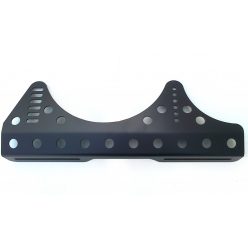
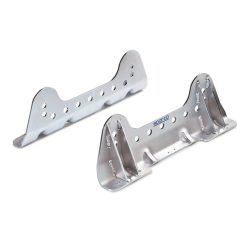
Common side-mount hole spacings are 290 and 320 mm; multiple steps provide height and tilt options. Materials include powder-coated steel for stiffness or lightweight aluminium with reinforcing beads. A slider set comprises left/right runners and a centre latch; typical fore–aft hole spacing is around 405 mm but varies by maker. Vehicle-specific base frames adapt the shell to OEM floor points.
Fasteners: seats to mounts usually use M8 bolts (grade 8.8/10.9), mounts to frames M8/M10. Respect the specified torque and use locking nuts/washers. Cushions (base, lumbar, thigh) fine-tune support; Velcro attachment allows quick swaps between drivers.
Compatibility: side-mount shells require lateral fixation; recliners or OE seats use bottom mounts and sliders. FIA-homologated shells (8855-1999 / 8862-2009) specify allowed fixing points and hole combinations—follow them for scrutineering and safety.
Selection Criteria
Ergonomics: target 90–120° elbow angle at the wheel and slightly bent knees at full pedal travel. Align harness slots with your shoulders; use spacers and thicker pads to adjust if needed.
Material & weight: steel side mounts are robust for racing; aluminium saves weight if thickness and design provide adequate stiffness. Use sliders only if allowed and if cage geometry leaves clearance—fixed mounts are usually stiffer and lighter.
Fitment & hole pattern: confirm 290/320 mm spacing, side-hole height and the vehicle’s floor points. Many base frames are model-specific; universal frames may require minor drilling or shimming.
Safety: use wide washers and quality hardware. Ensure lap belts don’t foul slider levers; for HANS, keep shoulder belt drop within 10–20°.
Comfort: modular pads improve lumbar and thigh support for long stints and reduce sliding in the shell.
Installation & Maintenance
Trial-fit the stack: base frame – slider – side mount – seat. Set fore–aft first, then rake. Before final torque, check harness reach and shifter clearance. Use a torque wrench (M8 ≈ 22–30 Nm, M10 ≈ 40–50 Nm unless otherwise specified). Apply medium threadlocker and mark bolts with paint for quick loosening checks.
Maintenance: after events, re-check torque, slider latch function and inspect mounts for cracks. Clean sliders and lightly lubricate with silicone-safe lube. Air pads, wash covers with gentle cleaners and replace when wear degrades support.
FAQ
Which hole spacing do I need?
Check the seat’s datasheet—most shells clearly list 290/320 mm.
Are sliders allowed for competition?
Often yes, but rules vary. Sliders must remain rigid when locked; verify your series regulations.
What bolts should I use?
At least grade 8.8 M8 with washers/locknuts; follow the manufacturer’s torque data.
Seat feels too low—fix?
Add spacers, choose a higher hole pair and consider thicker base cushions.
When to replace pads?
If they collapse or show wear, support and comfort drop—replace them.
