
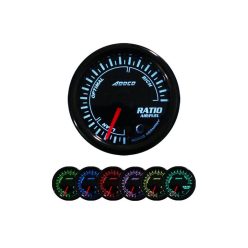
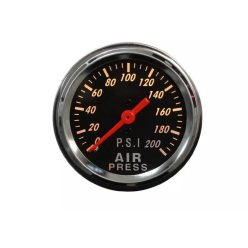
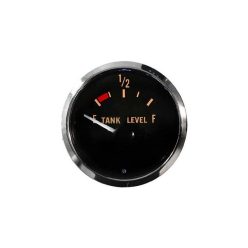
Our gauges & meters help you monitor critical parameters: boost, oil pressure, oil temp, water temp, EGT, AFR, voltage and RPM. Options include 52/60 mm faces, stepper-motor movements, peak/warning and multi-colour backlight from brands like AEM, Auto Gauge, DEPO Racing, VDO, KET and Innovate. Choose by sender type, scale and alert logic to catch issues early and protect your engine.
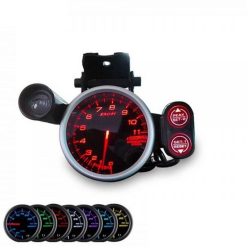
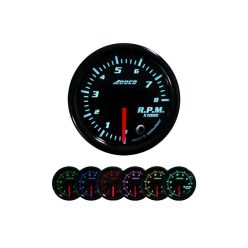
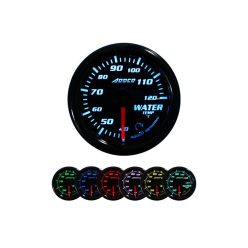
Net price: 27 €
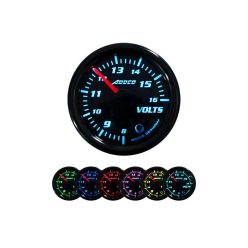
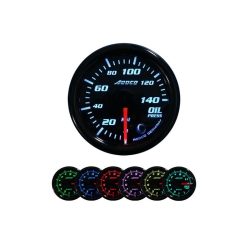
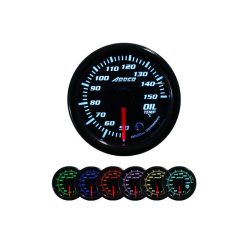
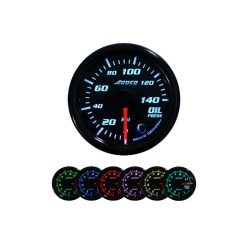
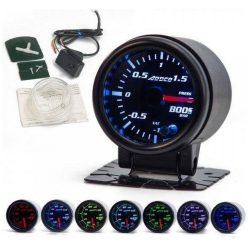
Net price: 22 €
Brief summary + key benefits
Quality gauges deliver real-time data, letting you react before damage occurs. Clear scales, configurable warnings and peak recall make trends obvious. We stock 52/60 mm housings, analogue/digital faces, stepper-motor movements, multi-colour backlighting and complete sender kits, including wideband AFR systems with UEGO sensors.
Technical Basics
Movements are either conventional or stepper for smooth, precise needle control. Most senders are electronic with 1/8 NPT or 1/8 BSP threads; boost is read via MAP sensors or vacuum hose. Oil pressure demands fast response and good grounding; oil/water temperature accuracy depends on sensor placement. EGT uses a K-type thermocouple—weld a bung into the manifold and position the probe at a 2–3 o’clock angle to the flow.
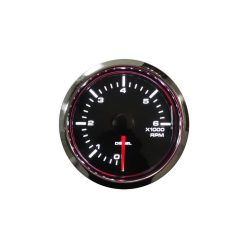
Popular features: peak hold, audible/visual warning, unit switching (bar/PSI, °C/°F), 7-colour backlight, dimming and smoked lenses. AFR controllers often provide a 0–5 V analogue output for logging. Tachometers can read from coil, ECU or OBD-II; adjust input filtering with DIP switches where available.
Use thread sealant carefully: tapered threads seal on the thread (NPT), parallel threads seal with copper/aluminium washers. Route signal and power grounds to solid chassis points to minimise noise.
Selection Criteria
Use case: for street, prioritise readability and alarms; for track, pick high-contrast scales and stepper movements. Drift cars typically focus on oil pressure and water temp; turbo track builds add boost and EGT.
Size & mounting: 52 mm fits most pods; 60 mm offers a larger scale. Check panel space or add an A-pillar pod or DIN panel. Anti-glare lenses improve daytime visibility.
Sender & threads: verify 1/8 NPT / 1/8 BSP / M10x1. Oil circuits often use a sandwich plate under the filter or a T-piece near the OE switch; for coolant, use an in-line hose adaptor (32/34/36 mm etc.).
Ranges: choose appropriate limits (e.g., 2 bar boost for typical petrol, 3 bar for big diesels). Water 40–120 °C; oil 50–150 °C; EGT up to 900–1000+ °C for headroom.
Electronics: look for memory, warning thresholds and data outputs. Wideband kits (Bosch LSU) should support free-air calibration and offer 0–5 V or serial/CAN for logging.
Installation & Maintenance
Mount the gauge securely with rear brackets or a dedicated pod. Fuse the power feed, tap illumination from the sidelight circuit and run shielded signal wires. After opening the oil circuit, bleed and check for leaks; after coolant hose work, refill and bleed the system.
For EGT, weld a bung and protect the thermocouple lead from heat. For AFR, perform free-air calibration on a cold exhaust; install the sensor before the catalyst, typically 40–90 cm from the turbine to avoid condensation and heat shock.
Maintenance: periodically inspect connectors, grounds and sender seals. Wideband sensor life depends on fuel and temperature; recalibrate, then replace if readings drift.
FAQ
Electronic vs mechanical pressure gauges?
Electronic units keep fluids out of the cabin and generally read more stably—choose them for safety.
Where to place the oil temp sensor?
In flowing oil near the filter housing or gallery, not just the sump plug, for representative readings.
Why does my needle flicker?
Poor grounding or electrical noise—rework grounds and routing.
What AFR is safe?
Stoich is ~14.7:1 for petrol at cruise; under load richer targets (e.g., 11–12:1 on many turbo engines). Tune to your setup.
Do I need a separate fuse?
Yes—each gauge circuit should be individually fused.
