
In Fuel Filters, you can compare solutions that help keep debris out of the fuel system, supporting steadier pressure and reducing the risk of injector or regulator issues caused by contamination.
If you are building a complete setup, it is worth checking the parent Fuel and Oil System category too, so hoses, fittings and the chosen filter ports match your layout.
Use filters to narrow by brand, ports and compatibility, then open the product page to confirm AN/ORB sizing and whether it suits your fuel (for example E85). Choose the right option and add it to your basket.
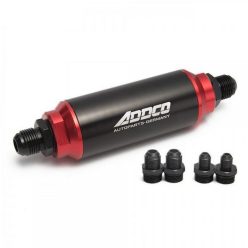
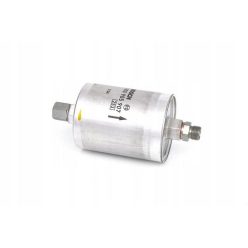
Net price: 26 €
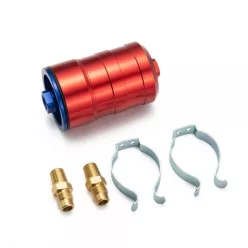
Net price: 20 €
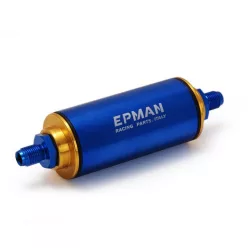
Net price: 16 €

Net price: 80 €
Net price: 17 €
Fuel Filters – cleaner fuel flow, steadier pressure and better injector protection
Fuel Filters are used to trap particles coming from the tank, lines or assembly work before they reach sensitive components such as the fuel pump, pressure regulator or injectors.
This category includes both simple in-line filters and serviceable housings with replaceable or cleanable elements, making it easier to maintain a reliable petrol or motorsport fuel setup over time.
Technical Basics
The key spec is the micron rating of the element: examples in this range include a serviceable 40 micron stainless element in a 6061 aluminium housing with AN6/AN8/AN10 adapters, and finer solutions built around 10 µm stainless elements for higher protection requirements.
Ports and sealing matter as much as the element: you will see -10 AN ORB style ports on some high-flow housings, while other filters use threaded connections such as M16x1.5 for in/out. Always match the port standard (AN 37° vs ORB O-ring vs metric thread) to your existing hoses and fittings.
Fuel compatibility depends on element and seal materials: some products specify FKM (Viton®)-type seals and compatibility with petrol, E85, methanol or diesel, while other designs explicitly restrict alcohol use. Treat the product page as the final authority for allowed fuels and operating pressure.
Warning: manufacturer notes may state that 10-micron filters are for use after the fuel pump only, and that fabric elements are not suitable for E85/alcohol applications, so placement and fuel choice must be checked before installation.
Selection Criteria
Start with the system type: EFI builds usually prioritise fine filtration to protect injectors, while carburettor systems may use different flow and packaging constraints. Compare stated flow/pressure capability, and ensure the housing size fits your mounting location.
Many setups use staged filtration: a coarser pre-filter to protect the pump and a finer post-filter for injectors; confirm the intended role from the product description and your pump’s requirements. If you run E85, double-check seals and element construction, because compatibility can differ even at the same micron rating.
Finally, confirm ports: choose a filter that matches your line size (e.g., AN-6/AN-8/AN-10 via adapters or direct ports) and the correct sealing method. If you are adapting from a threaded filter (e.g., M16x1.5) to AN lines, ensure the required adapters are specified for fuel use and the correct seat type.
Installation & Maintenance
Check flow direction before tightening anything; incorrect orientation can create unnecessary restriction. Mount the filter where you can service it, and avoid hose strain that can stress fittings and seals.
On ORB and many motorsport housings, an O-ring provides the seal; inspect it during assembly and pressure-test the system once installed. New lines or freshly built systems can shed debris early on, so initial checks are worth doing more frequently.
Maintenance depends on element type: stainless elements are often cleanable (some are described as suitable for ultrasonic cleaning), while fabric elements are typically replaced and may have fuel restrictions (notably around E85). Follow the manufacturer’s service guidance and replace seals if they show swelling, cuts or flattening.
FAQ
Q: What micron fuel filter should I use before the injectors?
A: Many EFI setups aim for a 10 µm post-pump filter, but only if the manufacturer specifies that placement. Confirm the element material and whether it is compatible with your fuel, especially E85 or alcohol blends.
Q: Should the fine filter go before or after the fuel pump?
A: Product guidance commonly places fine filtration after the fuel pump to protect injectors, while a coarser stage can protect the pump on the inlet side. Always follow the product page notes for the exact filter you choose.
Q: Are all 10-micron elements safe for E85?
A: No—some designs explicitly state that fabric elements are not suitable for E85/alcohol use. If you run E85, look for stated compatibility and seal materials (often FKM/Viton® is noted) and verify on the product page.
Q: How do I match the ports to my fuel lines?
A: First identify whether the filter uses AN, ORB or a metric thread such as M16x1.5. Then choose the correct fittings/adapters for both the thread and the sealing method, not just the hose size.
Q: How often should I service a fuel filter?
A: It depends on fuel quality, how new the system is, and track use. Stainless elements may be cleaned, while replaceable elements should be changed per the manufacturer’s guidance and whenever restriction symptoms appear.
Narrow down by ports and fuel compatibility, then order the fuel filter that matches your build.
