
In EPMAN Fuel Pressure Regulators you’ll find Race and ByPass regulators, with several listings stating 0–10 bar adjustment and AN6/AN10 connections.
There are vacuum-referenced (boost reference) kits rated up to 0–140 psi, plus carburettor-focused 1.5–5 PSI low-pressure regulators with 8 mm/10 mm hose connections.
Use Filters and sorting, then open each product card to confirm the 1/8 NPT gauge port and port sizes. Choose the right FPR and place your order.

Net price: 18 €
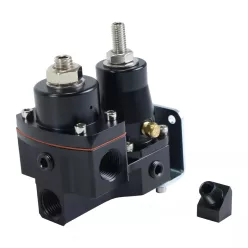
Net price: 61 €

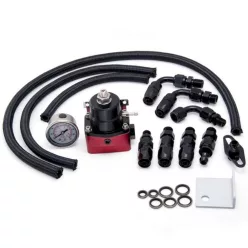
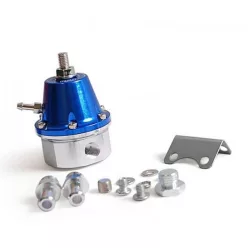
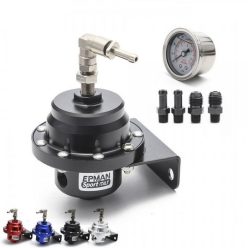
Net price: 25 €

Net price: 34 €
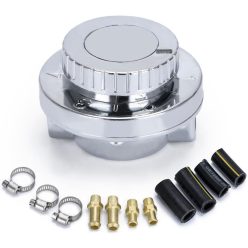
Net price: 35 €
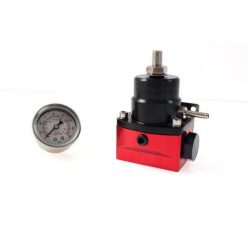
Net price: 33 €
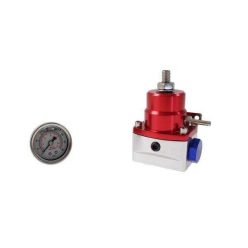
Net price: 31 €
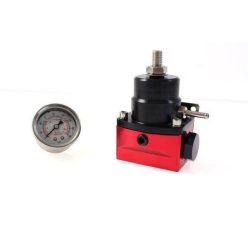
Net price: 21 €
EPMAN Fuel Pressure Regulators – adjustable pressure control, measurable setup and multiple connection options for custom fuel systems
A fuel pressure regulator (FPR) is used to maintain a stable, set fuel pressure while directing excess flow through the return line (where applicable) to keep the system consistent.
This EPMAN selection includes Race and ByPass regulators with pressure gauges, where multiple product pages state a 0.0–10.0 bar regulation range and a 1/8 NPT gauge connection.
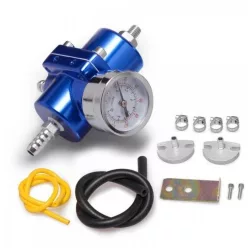
For EFI petrol builds, a complete kit is listed with a vacuum/pressure port (boost reference), a stated 1:1 ratio and a 0–140 psi (0–9.65 bar) working range, making it easier to verify and fine-tune pressure.
For carburettor setups, a dedicated low-pressure regulator is listed as 1.5–5 PSI adjustable and explicitly described as not suitable for fuel injection (EFI) systems.
Technical Basics
The ByPass regulator description mentions installation behind the fuel rail, and the range includes versions with AN6 or AN10 inlet/outlet sizing depending on the item.
The Race series page lists AN6 input and AN6 output, and notes that the 1/8 NPT gauge connection can also be used to mount a sensor instead of an external gauge.
Among the ByPass items, there is an AN10 in / AN10 out version which also lists a 0.0–10.0 bar range and a liquid-filled pressure gauge for easier reading under vibration.
The EFI “High Performance” kit is described for a return-style system and includes a boost reference vacuum/pressure port; its connections are rubber fuel hose style (hose barbs) on inlet, outlet and return, and the kit lists a gauge, hoses, a mounting base and clamps.
The EFI-to-Carb dual stage regulator listing provides two pressure stages: 8–16 PSI on the pump/line side and 5–9 PSI on the carb side, with 3/8" NPT inlet/return ports and two 1/8" NPT gauge ports for setup checks.
The carburettor 1.5–5 PSI regulator page lists 150 LPH maximum flow, 7 PSI maximum inlet pressure and 10 mm ports (with 8 mm connectors), so sizing should be matched to your pump output and hose diameter.
The EPMAN S-size regulator with a white face lists 2–8 bar adjustment, 2× AN6 plus 2× 8 mm connections, a 4.5 mm vacuum connection and a 33 mm diaphragm, with a hard-anodised aluminium housing.
Selection Criteria
Start with system type: EFI builds often rely on a return line and benefit from boost reference control, while carburettor setups typically need a true 1.5–5 PSI low-pressure regulator rather than an EFI-range unit.
Next, choose the pressure window you actually need: several EPMAN Race/ByPass listings state 0–10 bar, while the S-size white-face regulator is specified as 2–8 bar. Use the exact product page of the item you’re ordering as the deciding reference.
Then match the plumbing: the range includes AN6, AN10 and 8 mm/10 mm hose connections, and gauge/sensor take-offs are commonly 1/8 NPT. Confirm that your hoses and fittings match without forcing adapters.
For boosted engines, prioritise a regulator or kit with 1:1 boost reference, and make sure the vacuum hose size (for example a 4.5 mm nipple) fits your planned routing.
If fast verification matters, choose items that include a liquid-filled gauge or provide a 1/8 NPT gauge port so you can read pressure directly at the regulator.
Finally, consider packaging and space: a compact S-size regulator can help in tight bays, while ByPass layouts influence where you place the unit relative to the fuel rail and return routing.
Installation & Maintenance
Depressurise the fuel system before work and perform a careful leak check after the first start, especially around hose clamps and AN fittings, because fuel leaks are a serious safety risk.
Do not mix sealing standards: AN flare fittings seal on the cone, while NPT ports seal on the taper, so treat a 1/8 NPT gauge port with proper tapered-thread practice and avoid excess sealant contamination.
On rubber-hose kits, confirm the inner diameter of the hose and clamp quality, because a loose hose barb connection can leak under pressure and heat.
With vacuum reference (boost reference), secure and route the vacuum line away from heat and sharp edges; a split or leaking hose can cause unstable fuel pressure and drivability issues.
As ongoing checks, periodically inspect fittings and mounting points; if pressure creeps or oscillates, investigate the return line for restrictions and re-check all connections.
FAQ
Which EPMAN fuel pressure regulator should I use for a carburettor?
Use a true 1.5–5 PSI low-pressure regulator, as the listed carburettor item is described specifically for carb use and not for EFI. Confirm your hose size (8 mm/10 mm) and your pump’s maximum outlet pressure before ordering. That helps prevent pressure creep and flooding.
What does 1:1 boost reference mean on a regulator kit?
A 1:1 boost reference setup adjusts fuel pressure in step with manifold pressure changes so injector differential pressure remains more consistent under boost. This is especially relevant on turbo builds. Always confirm the vacuum/pressure port is listed on the exact product page.
Should I choose AN6, AN10 or 8 mm/10 mm hose connections?
Choose AN6 or AN10 if your system is built with AN hoses and fittings, and choose 8 mm/10 mm hose barbs if you are using rubber fuel hose. Many EPMAN items also use a 1/8 NPT gauge port, which is a separate standard from AN. Match everything on paper before installing.
Why do some EPMAN regulators include a liquid-filled gauge?
A liquid-filled gauge can damp needle flutter caused by vibration, making readings easier during setup. This is useful when you want quick on-car verification. If you prefer electronic logging, check for a 1/8 NPT port to mount a sensor.
What is the EFI-to-Carb dual stage regulator used for?
It is described as a compact solution to manage 8–16 PSI on the pump/line side and deliver 5–9 PSI for the carb side, using 3/8" NPT ports and two 1/8" NPT gauge ports for easy adjustment. If emissions compliance is relevant for your vehicle, read the product-page note carefully and plan accordingly. Always verify your plumbing and mounting space before fitting.
Once you’ve confirmed pressure range, connections and reference needs, choose the right EPMAN regulator and place your order.
