
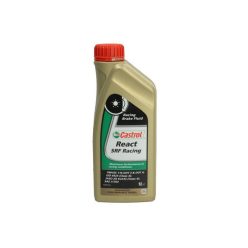
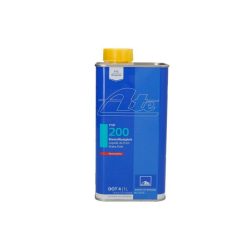
In the Brake Fluid category you will find high-performance DOT 4 racing brake fluids from brands such as MOTUL, ATE and Castrol. Products like ATE Typ200, MOTUL RBF 600/660/700 and Castrol React SRF Racing offer exceptionally high dry and wet boiling points for stable pedal feel during track days, drifting and high-power road use. Choosing the right DOT 4 competition brake fluid is essential to avoid brake fade and to maintain consistent, reliable braking under extreme temperatures.

Net price: 9 €


Role of Brake Fluid and Key Benefits
Brake fluid is the hydraulic medium that transmits pedal force to the calipers and wheel cylinders. If the fluid overheats and begins to boil, vapour bubbles form, the pedal travels further or goes soft, and braking force drops dramatically – the classic symptom of brake fade or vapour lock. High-performance DOT 4 fluids such as ATE Typ200, MOTUL RBF 600/660/700 and Castrol React SRF Racing are engineered with very high dry and wet boiling points, giving much greater safety margins under repeated heavy braking than standard OEM fluids.
The DOT 4 specification sets minimum boiling points of 230 °C dry and 155 °C wet, but genuine racing fluids exceed these by a wide margin. ATE Typ200 offers around 280 °C dry and ~198 °C wet, MOTUL RBF 600 around 312 °C / 204–205 °C, MOTUL RBF 660 around 325 °C / 204–205 °C, while Castrol React SRF Racing achieves a class-leading ~310–320 °C dry and ~270 °C wet. Such headroom is crucial when using multi-piston calipers, big brake kits and sticky tyres on track or in competition.
Technical Basics
Most road cars use glycol-based DOT 3, DOT 4 or DOT 5.1 brake fluids, which are hygroscopic – they absorb moisture from the air over time. This is why we distinguish between “dry” boiling point (fresh, almost water-free fluid) and “wet” boiling point (after absorbing around 3–3.7% water, near end of service life). For DOT 4 the legal minimums are 230 °C dry and 155 °C wet, but premium performance fluids are designed to exceed these to reduce the risk of vapour lock and pedal fade under repeated high-energy stops.
Fluids such as ATE Typ200 Racing, MOTUL RBF 600 and MOTUL RBF 660 are 100% synthetic polyglycol-based DOT 4 racing fluids that provide extreme thermal stability and controlled viscosity. Their high dry boiling points in the 280–325 °C range and wet boiling points around 198–205 °C make them well suited to multi-piston calipers, large-diameter rotors and track-focused ABS/ESP systems. Consistent viscosity across a wide temperature range ensures that modern stability systems can modulate pressure quickly and accurately.
Castrol React SRF Racing occupies a special position: it is a DOT 4 fluid using a silicone-ester blend with an exceptionally high wet boiling point of around 270 °C, far above typical glycol-based fluids. This means that even after absorbing some moisture over time, SRF still resists boiling under extreme race conditions. The trade-offs are higher cost, specific handling considerations for water contamination and some compatibility constraints, but for endurance racing its performance is hard to match.
Selection Criteria
When choosing brake fluid, start by honestly assessing how the car is used. For mainly road-driven cars with occasional spirited use, a high-quality DOT 4 like ATE Typ200 is often ideal: higher dry and wet boiling points than stock, yet acceptable service intervals. For frequent track days or club racing, MOTUL RBF 600 or 660 provide larger safety margins; for intensive endurance events or very heavy cars on slicks, Castrol React SRF Racing is often the go-to choice thanks to its exceptional wet boiling point and long-term high-temperature stability.
Always respect the vehicle’s OEM DOT specification. Most cars are designed for DOT 4 or DOT 3, and you can safely use higher-performance DOT 4 Racing fluids in those systems. DOT 5 (silicone-based) must not be mixed with glycol-based DOT 3/4/5.1 fluids, and in most modern cars it is not recommended at all. DOT 5.1 is chemically compatible with DOT 4, but in motorsport applications it is still best practice to pick one specific fluid and flush the system fully, rather than mixing brands or types.
Service intervals are another key consideration. High-performance DOT 4 racing fluids tolerate heat extremely well but will still absorb moisture over time, reducing their wet boiling point. For road use, 1–2 year change intervals are typical; for cars that see regular track days, many owners refresh fluid every season or even mid-season. In full competition use it is common to bleed or change fluid after every event, especially when running multi-lap sprint races or long stints where brake temperatures stay high.
Installation & Maintenance
Changing brake fluid is safety critical, so correct procedure is vital. Old fluid should be fully flushed and the system bled until fresh fluid reaches each caliper, ideally using an ABS/ESP bleed routine where available so that the hydraulic block is also purged. The advertised dry boiling point of a DOT 4 Racing fluid only applies if the system is truly filled with fresh, uncontaminated fluid and no pockets of old DOT 3/4 remain trapped in lines or modules.
Because high-performance fluids are hygroscopic, opened bottles should not be stored for long periods. Moisture gradually diffuses into the fluid through air exposure, lowering its boiling point, so part-used containers are best consumed quickly and kept tightly sealed in a cool, dry environment. Avoid using old, half-full bottles of unknown age in a freshly built or overhauled brake system – you may effectively start with “used” fluid and reduced performance.
As part of ongoing maintenance, monitor pedal feel and fluid condition. Dark, heavily discoloured fluid or visible debris indicates it is time for a change. After hard track sessions, if the pedal becomes longer or softer under repeated braking, it may be a sign that the fluid has been pushed close to its limits. In such cases, testing fluid with a boiling-point tester or proactively changing it is wise, especially if the car will be driven at high speed again soon.
FAQ
How is racing DOT 4 brake fluid different from standard DOT 4?
Racing DOT 4 fluids have significantly higher dry and wet boiling points than standard DOT 4, making them much more resistant to fade under repeated heavy braking. The trade-offs are generally shorter recommended service intervals, greater sensitivity to moisture and a higher price compared to basic OEM fluids.
How often should I change brake fluid on a track car?
For a car used regularly on track days, many drivers change brake fluid at least once per season, and heavy users may flush or bleed more frequently. Dedicated race cars often receive fresh fluid or at least a full bleed after each event to ensure maximum safety margin against overheating and vapour lock.
Can I mix different brands of DOT 4 brake fluid?
Chemically, glycol-based DOT 4 fluids are miscible, but mixing brands or types is not ideal for performance use. The best practice is to choose one high-quality fluid and fully flush the system, so you know exactly which boiling point and viscosity characteristics you are working with.
Is Castrol React SRF Racing suitable for road use?
Yes, Castrol React SRF Racing can be used on the road, but it is engineered primarily for extreme motorsport conditions. It offers outstanding wet boiling performance and long-term stability but comes with a higher cost and specific service considerations, so many road/track users reserve it for cars that see serious circuit time.
Why is DOT 5 brake fluid usually not recommended in modern cars?
DOT 5 is a silicone-based fluid that does not mix with glycol-based DOT 3/4/5.1 fluids and behaves differently in terms of compressibility and water handling. Most modern braking systems are designed around glycol-based fluids, so using DOT 5 can lead to compatibility issues and inconsistent pedal feel unless the entire system is specifically built for it.
