
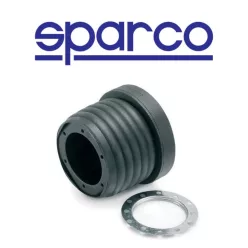
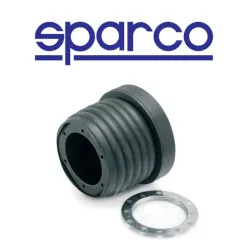
Our Audi steering wheel hubs enable a clean OEM-to-motorsport wheel swap. Each hub adapter is tailored to model and year, preserving horn function and, on airbag cars, the required resistor load. Choose quality solutions from brands like Sparco and MOMO for precise fitment, solid clamping and a vibration-free feel during everyday driving or track use.
Net price: 67 €

Net price: 73 €
Net price: 78 €


Brief summary + key benefits
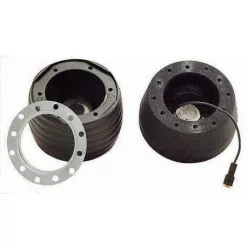
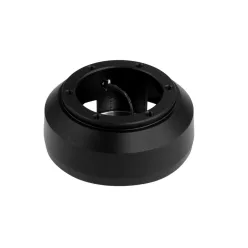
The Audi – steering wheel hubs category focuses on model/year-specific adapters that replace the OE wheel while retaining horn function and, when applicable, the correct resistor load for airbag systems. Reputable brands such as Sparco and MOMO offer precise fitment across popular Audi platforms—from classics like 80/90/100 to A1, A4/A5/A6 and even R8—delivering stable clamping, clean alignment and a refined interior look suitable for road and track alike. :contentReference[oaicite:5]{index=5}
Technical Basics
A hub bridges the column’s taper/spline to common motorsport bolt patterns such as 6×70 mm or 6×74 mm. Typical constructions use steel and/or aluminium for strength and weight balance. Offset (depth) determines reach and steering arc; choose it to match seating and wheel diameter. On airbag-equipped cars, a correct resistor value prevents warnings; wrong loads or wiring cause fault codes. Compatibility depends on exact model codes, years and even horn contact ring geometry, so always confirm the application list before purchase. :contentReference[oaicite:6]{index=6}
Integrating a quick release is possible and often desirable for motorsport access, but it adds stack height. Account for this when calculating final offset. Universal/weld-on QR solutions are available if a model-specific hub is not desired, yet they require professional installation and inspection for play-free operation. :contentReference[oaicite:7]{index=7}
Selection Criteria
Start with the target bolt pattern (many aftermarket wheels use 6×70 mm). Next, match the Audi column spline and confirm horn ring/harness compatibility. Choose offset (depth) by use case: near-OE reach for road comfort or a shorter hub for track sharpness. If adding a quick release, subtract its thickness from your ideal depth to maintain ergonomics and stalk access.
Loads & environment: hubs see continuous torque and vibration. Prefer designs with generous wall thickness around the flange and taper, and use quality fasteners of class 8.8/10.9 tightened with a torque wrench in a star pattern. Review individual product pages for Audi-specific compatibility—there are dedicated A1, classic 80/90/100, and A4/A5/A6/R8 hubs in the range. :contentReference[oaicite:8]{index=8}
Installation & Maintenance
Disconnect the battery before working—critical on airbag cars. Mark the OE wheel’s centre, remove trims and the locknut per the service manual. Seat the hub on a clean, dry taper; avoid grease on splines. Tighten the locknut to the specified torque (Nm), and only use threadlocker if expressly allowed. Verify horn operation and confirm the resistor value/wiring where required.
Fasten wheel-to-hub screws in a star pattern to the right torque, then perform a 100–200 km re-torque. Inspect for play, rubbing on shrouds, or wiring tension at full lock. For quick release mechanisms, periodically check latch wear and clean the mating surfaces to maintain zero play. :contentReference[oaicite:9]{index=9}
FAQ
Q: Which bolt pattern do most aftermarket wheels use?
A: Commonly 6×70 mm (and sometimes 6×74 mm). Confirm your wheel spec to avoid mismatch.
Q: Do airbag cars need a resistor?
A: Often yes; the correct resistor value prevents warnings after the wheel swap.
Q: How do I choose hub depth?
A: Keep OE-like reach for daily comfort; go shorter for a more direct track feel, especially with smaller wheels.
Q: Can I add a quick release?
A: Yes—factor its thickness into the final offset and verify play-free engagement over time.
Q: What hardware should I use?
A: Quality fasteners (e.g., 8.8/10.9) tightened to spec with a torque wrench in a star sequence.
