
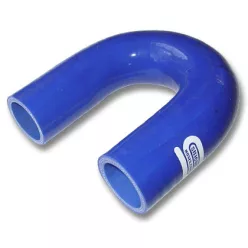
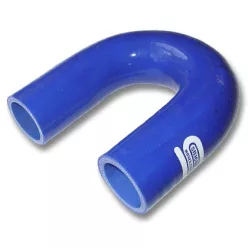
A 180-degree silicone elbow coupler (180°-os szilikon könyök idom) is a U-bend connector for clean return routing in tight bays on intake, intercooler and coolant layouts.
Select by ID, leg length and available clearance, then open the product card to confirm reinforcement, wall build and recommended clamp style.
Verify exact dimensions and specifications on the product card; in-stock items dispatch fast within the EU.
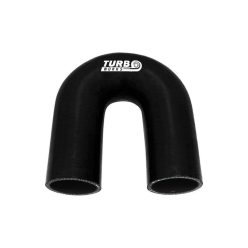
Net price: 13 €
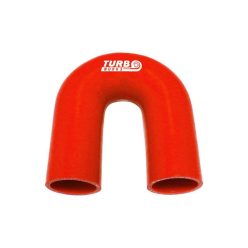
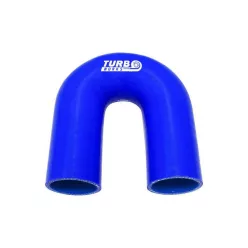
Net price: 20 €
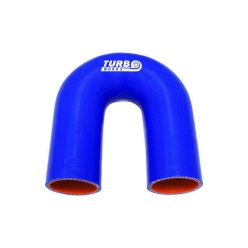
Net price: 17 €
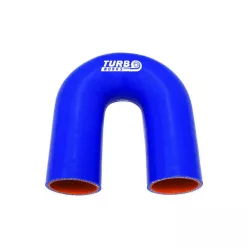
Net price: 19 €
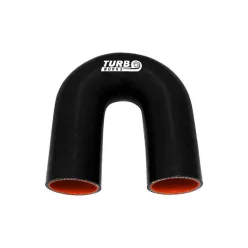
Net price: 31 €
Net price: 15 €
Net price: 16 €
Net price: 16 €
Net price: 17 €

Net price: 18 €

Net price: 18 €
180-degree silicone elbow couplers for compact U-turn hose routing
Often called a silicone U-bend, a 180° elbow helps you turn the hose back on itself while keeping sealing integrity and reducing unwanted stress on pipes and fittings. Getting the right ID and leg length also helps accommodate thermal movement and engine rock without the hose rubbing on nearby components.
Common uses include charge-air/intercooler runs, intake connections, vacuum/PCV plumbing and coolant circuits. Construction varies by product (reinforcement layers, liners and finish), so treat the product card as the reference for exact build and compatibility.
Technical basics
A good 180° elbow is about fitment, not hype: uniform ID, sensible bend radius, and enough straight leg for a clamp to sit on a stable section. If the elbow is forced into position, it can preload the joint and encourage micro-movement under heat cycles, which may show up as weeping or a slight slip.
Sizes are commonly listed in inches (e.g., 1.5", 2", 2.25", 2.5", 3") with helpful mm equivalents (38, 51, 57, 63.5, 76 mm). Colour and surface finish are usually secondary to matching the spigot OD, bead/flare shape and the available clearance around the bend.
How to choose
1) Match ID to the pipe/spigot OD so it slides on firmly without distortion. 2) Check leg length so the clamp lands on a straight section, not on the start of the bend. 3) Confirm clearance to hot parts and sharp edges, and leave room for movement. 4) Pick a clamp style that suits access and provides even compression for your spigot geometry.
To compare other angles and straight options within the same family, browse: Silicone Hose Couplers.
Installation and maintenance
Start with a dry test-fit to confirm there is no twist or side-load, and that the clamp won’t sit on the bend transition. Deburr sharp edges, keep any bead/flare that helps retention, and align the elbow so it isn’t fighting the routing. Degrease using a manufacturer-recommended cleaner, then allow to dry completely before applying load/boost.
Typical issues (single summary): leaks or blow-off are most often linked to the wrong ID, oily spigots, too little straight leg under the clamp, sharp edges, or a clamp that’s pulled off-square; aim for straight engagement, even compression and a re-check after a heat cycle.
If you need an alternative leg length or a different bend geometry, use the filters and open multiple product cards side-by-side to confirm fitment.
PRO TIP: Mark the clamp position with a paint pen; after a short drive you can instantly see any creep and correct alignment before it becomes a recurring issue.
FAQ
Is a 180° elbow better than using two 90° couplers?
A single 180° elbow can reduce the number of joints and simplify routing, which may help sealing consistency. Two 90s can be easier to package when space is awkward, so choose based on clearance and leg length needs.
How do I confirm the correct size?
Check the pipe/spigot OD and match it to the coupler ID shown on the product card. A correct fit should slide on firmly without excessive force and should not feel loose before clamping.
I see a small leak line at the clamp—what should I inspect first?
Make sure the clamp sits on a straight leg and is not bridging onto the bend. Inspect for burrs, surface contamination and any side-load from misalignment, then re-check after a heat cycle.
Which clamp type should I use?
There isn’t one universal answer: access, spigot shape and the need for even compression matter most. Use the product card guidance and avoid settings that visibly cut into the silicone.
Can I use these near fuel or oil?
Only if the product card explicitly states the required liner/material compatibility for that media. If unsure, choose a coupler designed for that fluid and avoid petroleum-based sprays during assembly.
