
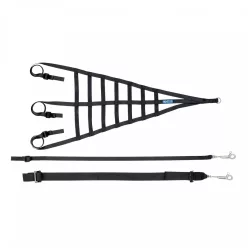
Window nets are essential safety equipment for competition cars, preventing the driver’s arm or loose objects from exiting the cockpit in a crash. Our range focuses on FIA 8863-2013 compliant solutions from Sparco, with various mounting styles (Velcro and quick-release buckles) and sizes for touring, drift and rally use. Choose a certified net to meet scrutineering and keep your attention on driving.
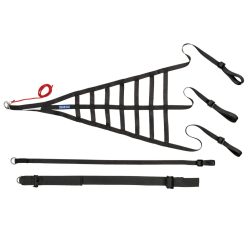
Net price: 204 €
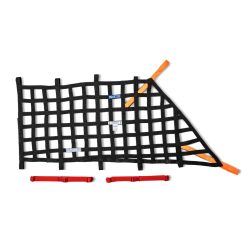
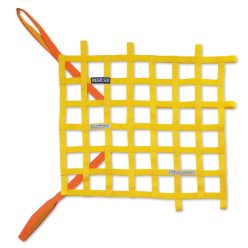
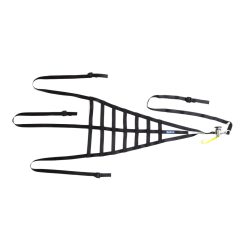
Net price: 417 €
Brief summary & key benefits
Window nets protect the driver and cabin in side impacts by retaining arms and loose objects while still allowing a fast exit. Products in this category comply with FIA 8863-2013 “Racing Nets” and the Appendix J Art. 253 requirements, so they pass scrutineering in most national and international series. Sparco models offer different mounting systems (full-perimeter Velcro, webbing with quick-release buckles), making installation straightforward on existing roll cages and seat positions. The benefits are low weight, stable tensioning and one-hand release in emergencies.
Technical Basics
The FIA 8863-2013 standard defines construction, dimensional requirements, labelling and the mandatory homologation tag. Approved products undergo tensile and durability tests and appear on FIA Technical List 48. Typical materials are high-tenacity polyester or nylon webbing with reinforced stitching, combined with steel rings, adjusters and wide Velcro bands for secure attachment. The Sparco T-Series specification, for instance, uses a symmetrical 100 × 50 cm design with Velcro on all sides, suitable for either side of the car, and often adds a quick-release clasp so that marshals or the driver can open it instantly.
Compatibility: the net attaches to the roll cage around the door aperture (A/B-pillar and roof bars). Choose hardware to match tube diameter and available bar positions; some installations require dedicated brackets. Common pitfalls include insufficient tension, poor angle near the head, or removing/obscuring the FIA label—all can lead to scrutineering failure. Always keep the label visible and intact and verify the homologation before the event.
Selection Criteria
Start with your series rulebook: most circuit, drift and rally series require FIA 8863-2013 homologation. Then size the net area to your cockpit—measure from seat shoulder line to the door frame and identify roll-cage bar locations. Around 100 × 50 mm mesh cells and a 100 × 50 cm overall size are common for saloon bodies, though compact shells may prefer smaller formats. Material choice: polyester webbing provides good UV resistance and limited stretch; tighter mesh improves retention but can reduce lateral visibility slightly. For frequent practice, full-perimeter Velcro gives quick daily operation; in competition, webbing with metal adjusters and quick-release buckles offers the most secure setup. If multiple drivers share the car, a symmetrical net eases side swaps.
Motorsport examples: in touring cars the upper edge typically mounts to the roof cross bar with the lower edge to the door bar; in drift, teams often focus on sealing the steering-wheel area to prevent arm excursion; in rally, breathable large-area nets help on long road sections. Always confirm the homologation validity and manufacturer tag; scrutineers will check both.
Installation & Maintenance
Mark the mounting points on the roll cage first (upper A-pillar bar, roof cross, door bar). For webbing types, route straps so that buckles are reachable and open in one movement; with Velcro-edged nets, ensure full-perimeter engagement. The net must be taut without interfering with harnesses or the HANS device. With the door closed, test outward visibility and hand motion. Maintenance: after each session inspect stitching, webbing abrasion, buckle operation and the homologation label. Clean gently with lukewarm water; avoid aggressive solvents. At least annually, re-tension the net and re-torque any mounting bolts. Replace the net if damaged, overstretched or after a major impact.
Warning: do not mix ineligible hardware or DIY fixes; incorrect installation can slow egress and increase injury risk. Cross-check your item with the FIA standard and product specifications before competition.
FAQ
Is FIA approval mandatory?
In most series yes; look for the 8863-2013 mark and the factory label. Sources: FIA Standard and homologation lists.
Velcro or buckle—what should I choose?
Velcro is fast for daily use; webbing with a quick-release buckle gives the most secure retention for racing. Many models combine both.
Are sizes universal?
No. While 100 × 50 cm is common, select based on your seat position and cage layout.
Service life?
Webbing ages; with regular inspection 3–5 years is typical. Replace immediately if damaged or after a major crash.
Road use?
Not intended; these products are for competition vehicles with a roll cage and multi-point harnesses.
