
Tyre pressure gauges (guminyomásmérők) help you check and set tyre pressure for road, workshop or track use, supporting consistent handling.
Choose between digital or analogue, check supported units (psi/bar/kPa), and consider hose or angled heads for access. Verify exact dimensions and specifications on the product card; in-stock items dispatch fast within the EU.
For day-to-day use, aim for quick, square valve contact and, if you adjust often, a bleed function can make fine changes easier.
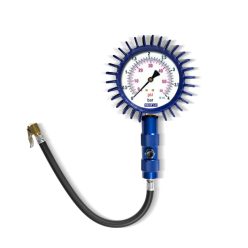
Net price: 198 €
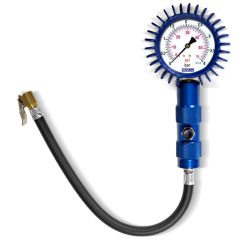
Net price: 141 €
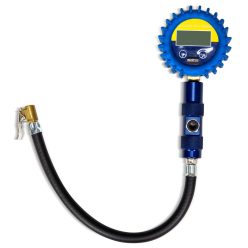
Net price: 153 €
Tyre Pressure Gauges
Tyre pressure gauges are sometimes searched as “tyre pressure gauge” tools for wheel service; they’re about getting a repeatable reading so pressure checks and adjustments stay comparable over time.
This category typically includes hand-held workshop and track-friendly options (digital or analogue, with hose, angled head, and bleed-style variants depending on the model). As the range expands, filters and product cards are the fastest way to confirm features and fit.
Technical background: what makes a gauge easy to use?
Usability is often defined by small details: how clearly it reads, how well the head seals on the valve, and how stable the reading is, which supports repeatable setup during routine checks.
Alongside units (psi/bar/kPa) and range, look at the valve head design, hose length (if fitted), and whether it includes a bleed valve for fine pressure reduction, helping with controlled adjustment when you’re dialling in pressures.
- Valve fit: head geometry that seals well on the common valve type for your wheels.
- Readability: clear scale or display for quick decisions in the bay.
- Access: hose or angled head can help on tight wheels and brake packages.
How to choose the right one
Quick selection guide: decide whether you need it mainly for workshop or track, and whether a bleed function is useful for frequent fine tweaks.
Then check the product card for supported units, valve head style, hose length, power supply (digital models), and how the head reaches your valve stem around the wheel design, so you pick for real-world use.
- Units: psi vs bar preference, and whether you want both available.
- Head type: straight, angled, or hose-based depending on access.
- Bleed option: handy if you often reduce pressure in small steps.
- Handling: grip, button size, and display visibility with gloves.
If you’re building out a full wheel and tyre service setup beyond measuring pressure, browsing the wider wheel-service assortment can help match tools across the workflow.
Use, care and failure prevention
When measuring, seat the head squarely on the valve and keep the contact brief to reduce avoidable air loss, supporting consistent readings from check to check.
For digital gauges, battery condition can influence usability; for analogue, avoid heavy knocks and keep the head clean. Sensible storage and basic care help maintain long-term reliability in regular use.
A common mistake is a poor seal at the valve (angled contact, worn head seal), which can cause hissing and fluctuating readings. Prevention is usually a quick inspection of the head, keeping the contact surfaces clean, and holding the head steadily during measurement.
PRO TIP: If you switch between psi and bar, pick one default unit and stick to a consistent measuring routine (for example, similar tyre temperature state) for easier comparisons.
FAQ
Should I choose a digital or analogue tyre pressure gauge?
Digital gauges are quick to read and often offer multiple units, while analogue options can be simple and battery-free. Your choice usually comes down to readability, durability expectations and how you work.
Why do I get different readings or a “jumping” display?
Check that the head is square on the valve, there is no hiss at the connection, the valve and head are clean, and on digital models verify the battery. Repeat the test under similar conditions for a fair comparison.
When is the best time to measure—cold or after driving?
For comparability, measuring in similar conditions tends to help (for example, similar ambient temperature and tyre state). After use, tyre temperature changes can influence the reading.
What’s the advantage of a bleed-valve gauge?
A bleed function lets you reduce pressure more gradually while monitoring the value. It can be convenient if you make frequent small adjustments, such as during track sessions.
How do I confirm the gauge fits my valve and wheel access?
Use the product card to confirm valve compatibility and head style. If access is tight due to wheel design, an angled head or hose-based design can make placement easier.
