
In TurboWorks Universal Fuel Pumps, you’ll find several universal AC pumps for performance builds: external 044 (Bosch 044 alternative) options around 300–400 LPH, plus in-tank GSS340/GSS342-style pumps at 255–340 LPH. The range includes E85-labelled versions and complete bracket + filter kits for cleaner installations. To compare all brands in the universal segment, open Fuel Pumps - Universal. As a LEAF page, sort by price/availability and open a product card to confirm ports, dimensions and flow/pressure figures. Pick the right TurboWorks pump and check out.
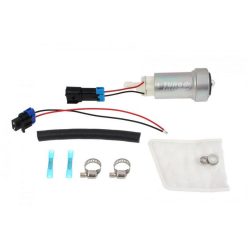
Net price: 80 €

Net price: 55 €
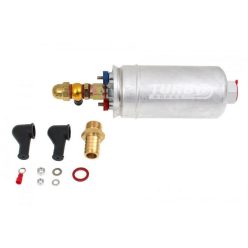
Net price: 41 €
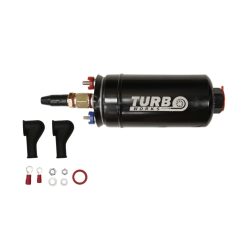
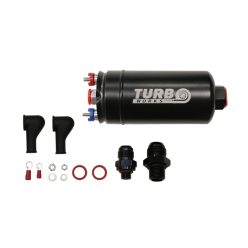
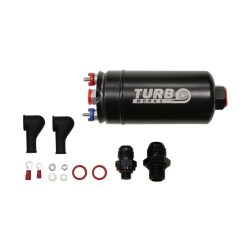
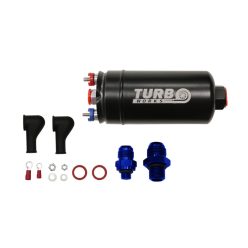
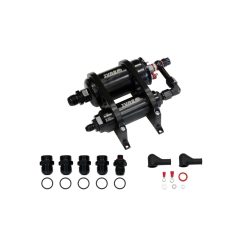
Net price: 106 €
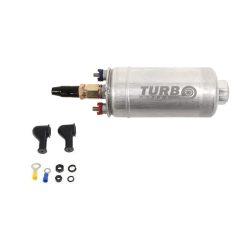
Net price: 127 €
TurboWorks Universal Fuel Pumps – external 044 and in-tank options sized by flow and connections for consistent fuel delivery
TurboWorks Universal Fuel Pumps groups universal fuel pump solutions where you choose by LPH, operating pressure (bar/psi) and installation type, rather than relying on a vehicle-specific fitment list. This is especially useful when you’re building a custom fuel system with aftermarket lines, filters and a regulator.
The selection commonly includes external (inline) 044 pumps (Bosch 044 alternative) around 300–400 LPH, as well as in-tank GSS340/GSS342-style sports pumps rated at 255–340 LPH. Several items are clearly marked for E85 (ethanol), and you can also find bracket + filter kits that package mounting and filtration into a single serviceable unit.
Technical Basics
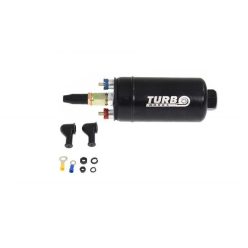
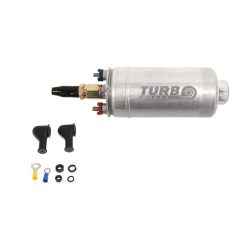
External (inline) 044 pumps are a common motorsport format, and the practical checks are the 6.5 bar operating pressure and port standards. For example, the 300 LPH 044 listing specifies M18x1.5 inlet and M12x1.5 outlet with 196 mm length and 60 mm diameter, so you can plan fittings and mounting space before ordering.
On the 044 400 LPH E85 item, the description provides flow at pressure: 370 LPH @ 3 bar and 340 LPH @ 5 bar, and it also references included adapters (AN10 → M18*1.5 inlet and AN6 → M12*1.5 outlet). This matters because real-world flow changes with system pressure, and the adapter choice affects restriction and serviceability.
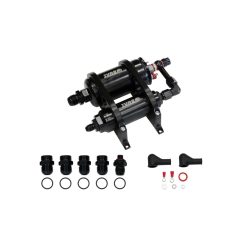
The bracket + filter (kit) versions package the external 044 pump with mounting hardware and a filter, and they are listed as E85-compatible with 6.5 bar operating pressure. These kits are useful when you want a neat, removable assembly rather than sourcing a bracket and filter separately.
For in-tank setups, TurboWorks offers 255 LPH and 340 LPH sports pumps in the GSS340/GSS342 style, with compact dimensions around 39 mm diameter. Fitment depends on the hanger/basket and wiring pass-through, so the “will it physically fit” question is as important as the flow rating.
There is also a lower-flow external option listed as 12 V with 135 l/h @ 3 bar, 8.5 bar max pressure and 8 mm inlet / 12 mm outlet. This can be relevant for simpler plumbing or as a feeder pump, as long as hose size and clamping match your layout.
Quick warning: a high-rated fuel pump won’t perform if the inlet side is restricted or if voltage drops under load, so filtration, hose diameter, venting and electrical supply should be treated as one system.
Selection Criteria
First, choose installation type: external (inline) 044 format versus in-tank GSS340/GSS342-style. External pumps simplify service access and flexible mounting, while in-tank pumps can be quieter and benefit from fuel cooling, but require compatible hangers and internal hoses.
Next, size by LPH and your target: 300–400 LPH 044 alternatives are typically used in higher-demand builds, while 255–340 LPH in-tank pumps often cover many road/track setups. If the listing mentions horsepower guidance (NA/turbo), treat it as an estimate and validate against injector sizing and your actual rail pressure.
Then consider fuel type: if you run E85, prioritise items explicitly described as E85/ethanol compatible. Ethanol blends can increase flow demand and stress hoses/seals, so it’s sensible to align pump choice, filtration and materials with the fuel you actually use.
Finally, confirm connections: M18x1.5/M12x1.5 threaded ports typically need dedicated fittings, while AN10/AN6 adapters are convenient if your system is already on AN lines. For barb-style plumbing, an 8 mm inlet / 12 mm outlet pump may reduce complexity, but always verify hose and clamp compatibility.
Installation & Maintenance
For external (inline) AC pump installs, mount the unit securely with vibration isolation, keep it away from direct exhaust heat, and build a short, well-fed inlet side with an appropriate pre-filter. After first prime, check every joint and re-check after heat cycling.
For in-tank GSS340/GSS342-style pumps, the hanger/basket and internal hose routing are the common failure points. Confirm the electrical pass-through and connector quality, then verify pressure stability under load, not only at idle.
Electrically, treat 12 V supply as a performance factor: relay power, correct fuse sizing and solid grounding help prevent voltage drop that reduces pump output. If you run pumps in series/dual configurations, confirm current draw and pressure behaviour with measurements, not assumptions.
Maintenance is filtration-first: a clogged filter can increase noise and reduce delivery, often presenting as hesitation at higher demand. With E85, increase inspection frequency for hoses, seals and filter condition, because ethanol can accelerate degradation in unsuitable materials.
FAQ
Should I choose an external 044 pump or an in-tank GSS340/GSS342-style pump?
External 044 pumps suit flexible mounting and straightforward service access, but need careful inlet plumbing and heat protection. In-tank GSS340/GSS342-style pumps can be quieter and benefit from fuel cooling, but require a compatible hanger/basket and internal hose setup. Decide based on your packaging constraints and how you want to service the system.
What ports does the 044 300 LPH TurboWorks pump use?
The listing specifies an M18x1.5 inlet and an M12x1.5 outlet. That typically means you’ll use dedicated threaded fittings or adapters to match your lines. Always check your filter and regulator connection standards before ordering.
Why does flow change between 3 bar and 5 bar on the 044 400 LPH E85 item?
Fuel pump flow decreases as required system pressure increases, which is why the description provides both 370 LPH @ 3 bar and 340 LPH @ 5 bar. Use the value closest to your real operating pressure when sizing. If you raise base pressure, re-check headroom.
When does a bracket + filter kit make sense?
A bracket + filter kit is useful when you want a tidy, removable assembly that’s easy to mount and service. The listed 044 kits are described as E85-compatible and specify 6.5 bar operating pressure. You should still confirm filter micron rating and flow match your injector/rail needs.
Is there a TurboWorks external pump with hose-barb connections?
Yes, one external option is listed with 8 mm inlet and 12 mm outlet, plus 135 l/h @ 3 bar and 8.5 bar max pressure. This can simplify plumbing if your system uses hose and clamps. Verify hose sizing and secure clamping to prevent leaks.
Sort by your target flow/pressure, confirm ports and dimensions on the product page, and order the TurboWorks fuel pump that matches your build.
