
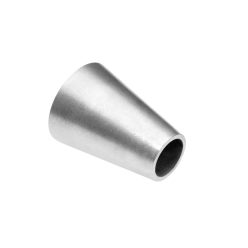
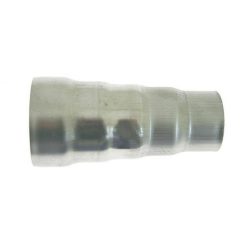
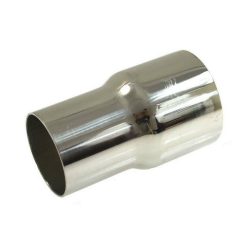
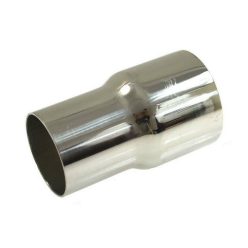
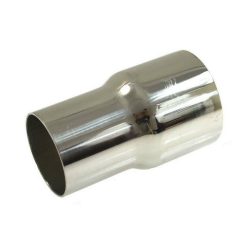
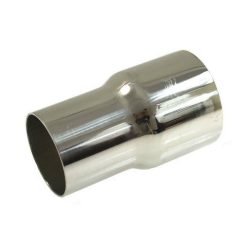
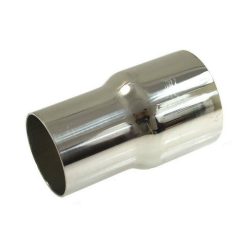
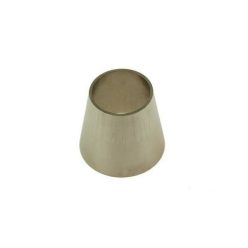
Our Stainless Steel Reducer Pipes (transitions) are weld-ready diameter adapters for intake and exhaust fabrication. Offered in multiple inlet–outlet combinations and practical lengths, they let you connect sections with different sizes while maintaining smooth flow. Stainless construction ensures durability, heat resistance and corrosion protection for street and workshop builds.
Net price: 11 €
Net price: 7 €

Net price: 7 €
Net price: 7 €
Net price: 7 €

Net price: 7 €
Net price: 7 €
Net price: 7 €
Net price: 10 €
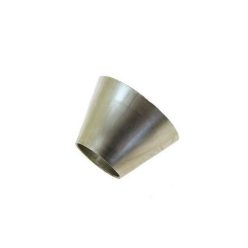
Net price: 17 €
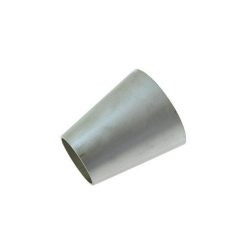
Net price: 15 €
Brief summary & key benefits
Stainless Steel Reducer Pipes (transitions) connect sections with different diameters while keeping the flow smooth. They are widely used on turbo outlets, downpipes and mid/rear exhaust sections, as well as on intake and intercooler plumbing. A gradual, conical profile reduces losses compared with a sharp step, and stainless material provides dependable heat and corrosion resistance.
Technical Basics
Reducers are weldable stainless components that join two nominal sizes. The tapered section creates a controlled area change, lowering turbulence and noise compared with abrupt transitions. The range covers many common automotive pairs (e.g., 51→57, 57→63.5, 63.5→70, 70→76 mm) and multiple overall lengths, so you can select the geometry that best fits the available space. Typical mistakes include leaving too little straight for the weld, creating an internal lip at the joint, or mixing dissimilar metals within one connection.
Selection Criteria
Size pair: match the mating tubes (mind outer/inner dimensions and any sleeves/clamps). Transition length: longer tapers are generally more flow-friendly, while shorter pieces help in tight spaces. Wall thickness: choose heavier walls for hot, highly loaded sections; lighter walls may be used on the cold side. Orientation: the same part can be used as a reducer or an expander—choose the direction that best suits flow and access for welding.
Keep materials consistent within a section to minimise galvanic effects and thermal expansion mismatch. Where large size changes are needed, consider using two stages rather than a single aggressive taper to maintain velocity and reduce pressure spikes.
Installation & Maintenance
Mark cut points, deburr and degrease the ends, and dry-fit the assembly. Use a jig or magnets and tack all around before final welding to counter heat pull. For exhausts, back-purging (argon) keeps the internal root smooth and reduces oxide scale. After welding, pressure- or smoke-test for leaks; after initial heat cycles, re-torque clamps and inspect hangers. Periodically check mounts, heat shielding and clearances to prevent vibration cracks or contact wear.
FAQ
Which reducer size should I buy?
Pick the exact inlet–outlet pair that matches your tubing; verify nominal vs actual dimensions.
Is a longer taper better?
Generally yes for flow, but packaging may dictate a shorter body.
Can I use the same part as an expander?
Yes—the orientation can be reversed; select based on flow direction and weld access.
Are reducers suitable post-turbo?
Yes—use adequate wall thickness, solid supports and consider purging for smooth internal roots.
Do I need gaskets?
Not for fully welded joints; for clamped joints, use quality sleeves/clamps and flat mating faces.
