
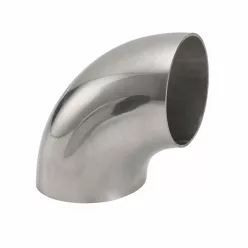
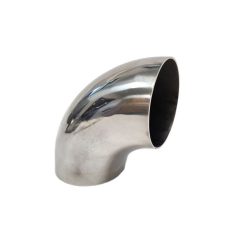
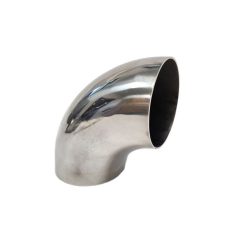
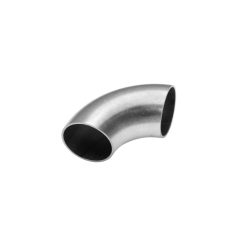
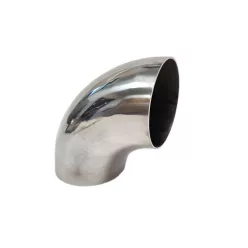
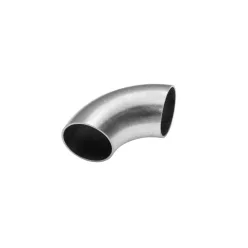
Our Stainless Steel 90° Elbow Pipes are weld-ready bends for intake and exhaust fabrication. Available in several popular diameters, they help you achieve tight routing with a single clean bend. Stainless construction ensures long-term durability, heat resistance and corrosion protection—ideal for street builds and workshop projects where accurate fitment matters.


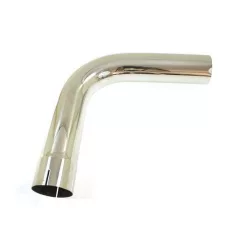
Net price: 17 €
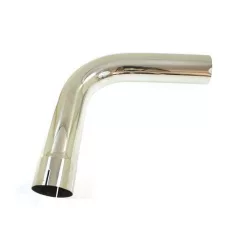
Net price: 19 €
Brief summary & key benefits
Stainless Steel 90° Elbow Pipes deliver a large direction change with a single component, keeping packaging tight where space is limited. Thanks to the corrosion resistance and heat tolerance of stainless steel, these elbows are suited to both intake and exhaust work—from post-turbo routing to steering pipework around chassis components. Multiple popular diameters are available to integrate with typical systems, and the weld-ready design supports durable, vibration-resistant joints.
Technical Basics
A 90° bend is the tightest standard angle commonly offered as a single piece, making it a compact solution when other options would require multiple parts. Prepare the tube ends carefully—deburred, degreased and square—to ensure leak-free welds. Compared with 45° or stepped smaller angles, a 90° can introduce more loss, so aim for a smooth internal root. Using back-purging (argon) reduces oxide scale on the inside of the weld, improving flow and durability, especially on exhaust sections.
Typical mistakes include leaving too little straight for the weld bead, overheating thin walls, and mixing dissimilar materials within one joint—this can cause galvanic issues and stress from thermal expansion. Maintain consistent support: poorly placed hangers can load the joint and shorten service life.
Selection Criteria
Diameter: choose to match engine output and the rest of the system. Oversized intake tubing may reduce air velocity; undersized exhaust raises backpressure. Bend strategy: pick a 90° when you need a single, neat corner; where space allows, two 45° bends with a short straight can smooth the transition. Wall thickness: use heavier walls in hot, high-load sections; lighter walls are acceptable for cold-side pipework. Material pairing: keep metals consistent within a section to avoid corrosion pairs and thermal-mismatch stress.
Placement: common applications include downpipe turns, routing around subframes or crossmembers, and neat corners in intercooler plumbing. If clearance is tight to bodywork or looms, add heat shielding or wrap and verify that no contact occurs under engine movement.
Installation & Maintenance
Mark cut points accurately, then deburr and clean. Use a fixture or welding magnets for alignment, and tack around the joint to balance heat pull. For exhaust fabrication, back-purging helps keep the internal surface smooth. After welding, check for distortion and potential contact points; pressure- or smoke-test for leaks and re-torque clamps/hangers after a few heat cycles. Periodically inspect mounts, weld toes and heat protection to prevent vibration cracks and abrasion.
FAQ
When should I choose a 90° bend?
When you need a large direction change in limited space and prefer to do it with a single part.
Is a 90° worse for flow?
It can be; mitigate by using sound welding practice, smooth internal roots and adequate radius where possible.
Is it suitable right after the turbo?
Yes—select appropriate wall thickness, use quality supports and ensure proper heat management.
Do I need gaskets?
Not for fully welded assemblies; for clamped joints, use correct sleeves/clamps and flat mating faces.
What should I check after initial use?
After heat cycles, inspect for leaks and re-torque clamps and hangers; verify no contact with nearby components.
