Net price: 59 €
Net price: 765 €
Net price: 64 €
Net price: 547 €
Net price: 352 €
Net price: 86 €
Net price: 1 157 €
Net price: 147 €
Net price: 471 €
Net price: 984 €
Net price: 380 €
Net price: 18 €
Net price: 44 €
Net price: 1 139 €
If your car leans out on boost, stumbles after a hot soak, or shows pressure swings in logs, the injector isn’t always to blame. The root cause is often returnless fuel system design and how the regulator and fuel rail behave under real load. This guide breaks down return vs returnless layouts, why pressure control matters, and how to spot the signs before you hurt an engine.
This is for street builds, track cars, drift setups, and anyone upgrading pumps, rails, or lines who wants repeatable fueling—not “it was fine yesterday.” We’ll keep it practical: what works, what fails, and a checklist you can follow with data and a pressure reading.
Fueling “stability” isn’t a vibe—it’s pressure control, flow capacity, heat management, and system layout. Both return and returnless can be rock-solid, but they fail in different ways. The trick is matching the architecture to your use case and diagnosing with logic, not guesses.
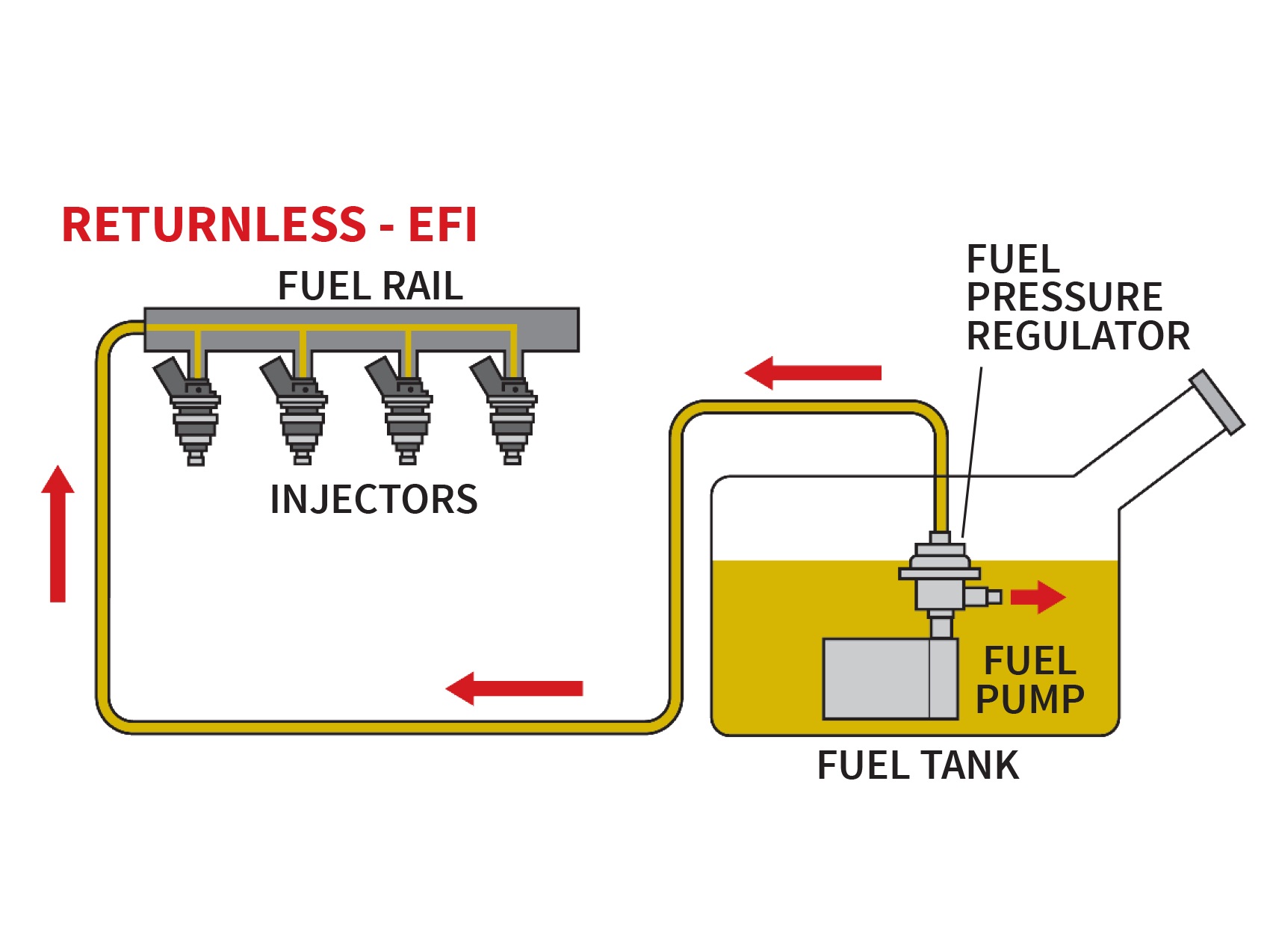
A returnless fuel system is any setup that doesn’t run a traditional, continuous return line from the engine bay back to the tank. Instead, pressure is typically managed at the tank module (or by pump control), and the engine receives fuel through a single feed line. Less plumbing up front, fewer connections in the bay, and often less fuel circulating near heat sources.
One important nuance: in the aftermarket world, “returnless” can also mean a deadhead arrangement—where the regulator sits on the feed side and the rail is effectively capped at the far end. That’s not the same behavior as many OEM returnless systems, and it changes how pressure pulses and heat soak show up.
Your injectors don’t care about marketing terms. They care about consistent differential pressure at the fuel rail. When that pressure drops or oscillates during a transient (tip-in, gear change, boost ramp), your commanded fueling can drift—and the ECU’s corrections may not be fast enough.

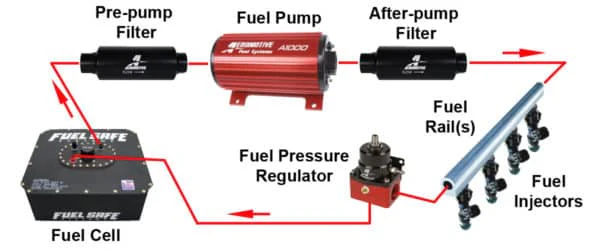
In a classic return setup, the pump delivers more than you need and a bypass regulator bleeds the excess back to the tank. Because fuel is always moving through the rail area, pressure control is often more forgiving when demand swings quickly.
The tradeoffs are extra plumbing, more potential leak points, and—if routing is poor—more heat dumped into the fuel via constant circulation.
Many factory returnless systems rely on tank-side regulation and/or pump speed control. The goal is reduced vapor/evap load and less hot fuel circulating in the engine bay. When everything is within the factory operating window, this can be extremely stable—because the control strategy is integrated with sensors and safety logic.
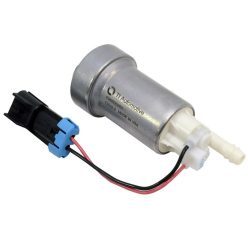
Once you push beyond that window (higher sustained load, different fuels, track heat, big flow demand), the limiting factor is often the module, the pump control, or the pickup/baffling behavior at low fuel level.

Deadhead layouts can work well in mild builds, especially where packaging matters. But because fuel can be more “static” at the rail, the system may be more sensitive to pressure pulsation and heat soak. The same car that’s perfect on a cool street pull can act inconsistent after repeated laps or long drift runs.

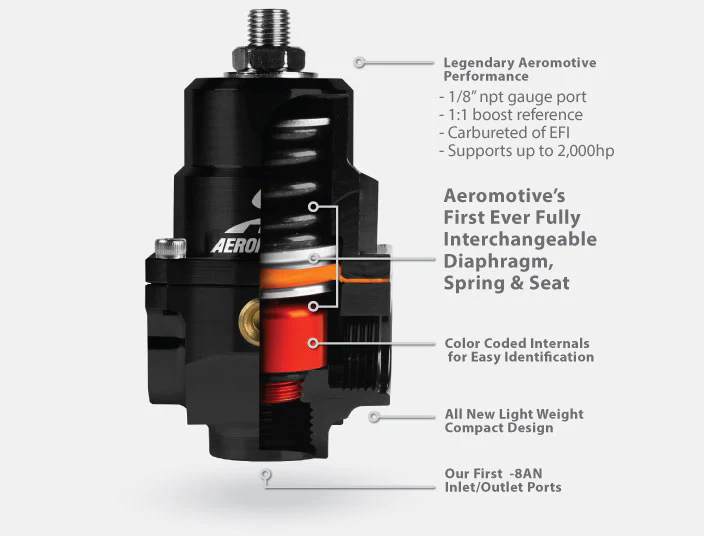
The regulator is the referee of your whole fuel system. It doesn’t create flow—your pump and plumbing do. The regulator’s job is to maintain a stable target pressure under changing demand, without oscillation or creeping.
Bypass regulators control pressure by returning excess fuel. Deadhead regulators control pressure by restricting feed flow. In practice, bypass tends to be more tolerant of rapid demand swings, while deadhead can be cleaner to install but more sensitive to layout details.
On forced-induction builds (and many NA setups), a boost/vacuum reference can help keep injector differential pressure more consistent. The most common failures aren’t exotic—they’re a cracked line, a poor signal source, a long run that delays response, or a fitting that leaks under boost. A bad reference often shows up as lean spikes on boost onset or weird trims that don’t match your injector data.
Regulators need to “see” the pressure that matters. If the rail is far from the regulation point through restrictive fittings, sharp bends, or undersized line, you can get a situation where the regulator looks stable but the rail isn’t. That’s when you see load-dependent lean-out even though idle and cruise look fine.

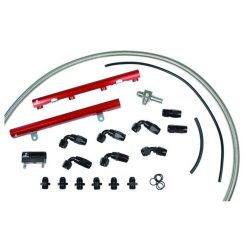
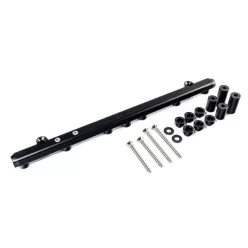
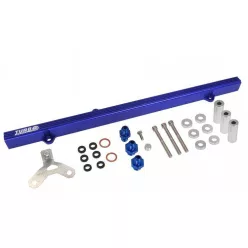
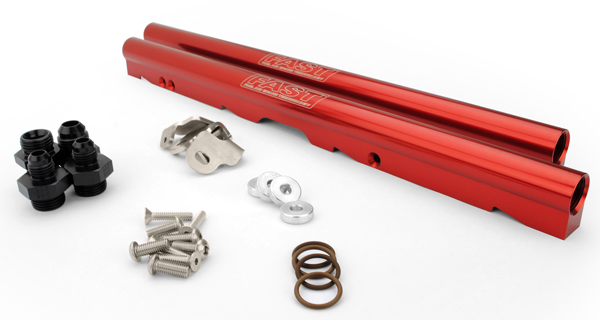
A fuel rail is not just a mounting bar. It’s a distribution manifold and a pulse-damping element. Bigger isn’t automatically better—the goal is predictable flow to each injector and reduced sensitivity to pulsation.
Flow-through designs encourage consistent movement across the rail, which can help with temperature and pulse behavior. Dead-end rails can be fine, but they’re more likely to show quirks in deadhead systems where there’s no continuous circulation.
Injectors open and close in pulses, and those pulses can translate into pressure ripple—especially with certain line lengths and rail geometries. If you see AFR oscillation that follows engine events rather than sensor noise, you may be looking at a pressure ripple problem. Solving it is about the whole system: rail design, line routing, and regulation strategy.
Start with your use case, not parts. The same setup behaves very differently on a street pull versus sustained track load in summer heat.
If you’re seeing lean-out, misfire under load, or inconsistent AFR after heat soak, run this list and change only one variable at a time.
Pattern recognition helps: if it fails only at high load, suspect flow capacity or electrical supply. If it fails after heat soak, suspect temperature and vapor behavior. If it fails on transients, look at regulation response and reference quality.
Often yes—if the tank module, control strategy, and flow capacity have margin, and pressure stays stable under real load. If your logs show the system at the edge, a return-style bypass layout can be a more predictable foundation.
Where it can “see” the pressure that matters with minimal restriction between it and the rail. If you’re using boost reference, keep the signal clean, short, and reliable.
When the stock rail limits flow/distribution, or you’re chasing pressure ripple and cylinder-to-cylinder consistency. Don’t expect a rail alone to solve wiring, pickup, or regulation issues.
Strongly recommended. A sensor turns “maybe it’s fueling” into proof, and it saves money by preventing random part swaps.
Return and returnless both work when designed as a system. Prioritize measurement, layout, and heat control. Build with headroom, and your tune becomes easier, safer, and more consistent.
If you’re planning the next step, check related categories and build the fuel system so it can grow with your setup.