
The Push-On Fuel & Oil Line Fittings category covers push-on solutions typically used with rubber and nylon hoses for fuel, oil or auxiliary fluid routing where fast serviceability matters.
You’ll mainly see AN sizes from AN-4 up to AN-12, offered as straight, 45° and 90° options to keep routing neat and kink-free in tight bays.
Use filters for stock and price, then sort by name or price to narrow down quickly.
Choose the size and angle you need, then add the fittings to your cart.
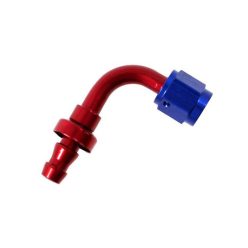
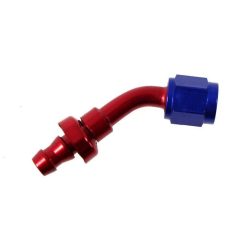
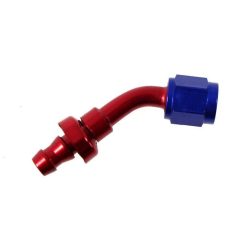
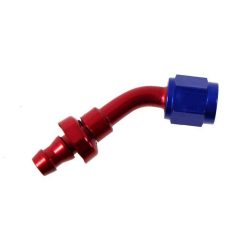


Net price: 17 €
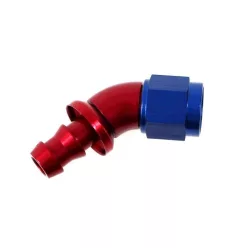
Net price: 14 €

Net price: 10 €

Net price: 12 €

Net price: 17 €
Push-On Fuel & Oil Line Fittings – fast assembly, compact routing, practical AN sizing
Push-On Fuel & Oil Line Fittings are connectors where the hose is pushed onto a ribbed/barbed spigot, while the system side often uses an AN connection for modular plumbing. They are popular for builds that value quick service access and tidy routing, especially where space is tight and frequent rework is expected.
In practice, you’ll typically choose between straight, 45° and 90° bodies, across common AN sizes such as AN-4, AN-6, AN-8, AN-10 and AN-12. The “right angle” choice is not cosmetic: it directly affects hose bend radius, vibration load at the joint, and how easy the system is to inspect later.
Technical Basics
A push-on joint relies on correct hose-to-spigot compatibility: hose inner diameter, compound, and reinforcement determine how securely it grips the barbed section. For this category, product descriptions explicitly mention use with rubber and nylon hoses, so treat the hose spec as part of the “fitting selection”, not an afterthought.
On the plumbing side, AN connections commonly seal on a 37° flare surface rather than on the threads. Warning: mixing standards (AN/JIC vs ORB vs metric) or mating damaged sealing cones is a common cause of weeps, so confirm thread and sealing type before you tighten anything.
“Push-on” is often associated with push-lock (push-lok) hose types, but not every hose is suitable for this assembly method. For fuel systems, chemical compatibility (including ethanol blends) matters; for oil and breather/PCV/catch-can lines, temperature and oil mist ageing are typical failure drivers—always follow the hose manufacturer’s guidance for the intended medium.
Selection Criteria
Selection has two key constraints: the system-facing AN size (e.g., AN-6 or AN-8) and the hose specification required on the push-on side. Your pump/regulator/rail/filter ports often dictate the AN end, and adapters (reducers) should be chosen only after you confirm thread and sealing type at each component.
Choose the body angle based on routing reality: 90° helps when you must turn immediately at the port, 45° can prevent an abrupt bend, and straight keeps things simple and easy to service. Good routing reduces hose twist, avoids chafing, and improves reliability on return lines and auxiliary oil/fuel circuits.
Consider the environment: if the line runs near heat sources (manifold, turbo, downpipe), plan for heat protection and proper clamping so vibration cannot work the joint loose. If your use case is borderline (higher pressure or extreme temperatures), base the decision on the specific hose and fitting specifications rather than generic assumptions.
Installation & Maintenance
Cut the hose cleanly and square, then ensure the inner edge is free from debris so it can slide fully onto the barbed spigot. The hose must seat to the correct depth; partial engagement is a typical reason for pull-off risk and seepage. If the hose manufacturer specifies an additional clamp or retention method, follow that instruction—especially in fuel-related circuits.
On the threaded side, keep sealing surfaces pristine: a scratched 37° cone or cross-threaded start can leak even when “tight”. Pressure-test the system cold, then re-check after a short heat cycle, because temperature and vibration can reveal marginal assembly issues.
For maintenance, periodically inspect for hardening, cracking, or chafing of the hose and for any “sweating” at the joint. If you disassemble the connection, clean the mating faces and confirm threads are not damaged before reassembly.
FAQ
Which hose type is suitable for push-on fittings?
Use a hose that is specified by its manufacturer for push-on/push-lock assembly. In this category, product descriptions mention rubber and nylon hose use, so verify your hose spec matches the intended medium and temperature. For fuel, always confirm compatibility with the exact fuel type you run.
AN-6 vs AN-8: how do I choose?
AN-6 is common for many return and auxiliary circuits, while AN-8 is often selected when you want more flow margin and less pressure drop. Check the ports on your pump, regulator and rail, because these frequently dictate the practical choice. Size the full system, not just one fitting.
Do I need a clamp on a push-on connection?
It depends on the hose specification, temperature and operating conditions, so the manufacturer’s guidance is the deciding factor. In fuel circuits, an appropriate clamp can add safety, but only use a method that does not damage the hose. Correct seating depth on the barbed spigot is essential either way.
Why does the AN side leak after assembly?
Most leaks come from a damaged/dirty 37° sealing surface or a standards mismatch (AN/JIC vs ORB vs metric). Confirm the port sealing method and check that the cone faces are clean and undamaged. Adapters can introduce extra failure points, so verify each interface.
Straight, 45° or 90° – which one is best?
90° is best for immediate tight turns, 45° helps with gradual direction changes, and straight is the simplest and often the easiest to service. Choose the angle that avoids kinks, twist and chafing in your actual routing. Account for engine movement and vibration, not just static fitment.
Once you’ve confirmed hose type, AN size and routing angle, pick the right push-on fittings and build a clean, leak-free line layout.
