
Our Other Battery Accessories category covers practical add-ons for clean, safe installs: ring terminals, quick-disconnects, terminal boots, cables, fuse holders and battery tie-downs. Durable materials and precise fitment help prevent contact issues and overheating while keeping wiring neat for both road and motorsport applications.
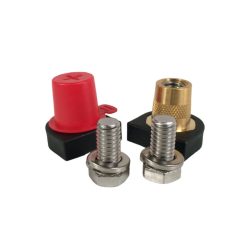
Net price: 21 €
Brief summary & key benefits
The Other Battery Accessories range helps you secure, protect and service the electrical system’s most critical points. Quality copper or tinned-copper terminals reduce resistance, properly sized cables prevent voltage drop, and robust battery retainers keep the pack stable. Terminal boots and housings minimise short-circuit risk and corrosion, resulting in longer service life and fewer intermittent faults on road and track.
Technical Basics
Good conductivity and mechanical integrity are key. Ring terminals and clamps are typically brass or tinned copper for oxidation resistance and consistent torque. Match the cable cross-section (mm²) and the stud hole size for a tight fit. Terminal boots insulate the positive post to avoid accidental contact. A correctly rated fuse on the main feed protects the loom in case of a short. Battery tie-downs must resist vibration; a loose pack can cause electrical and mechanical damage.
Materials & finishing: tin plating improves corrosion resistance, heat-shrink and braided sleeving protect against abrasion. For high currents, use fine-strand cable for flexibility and durability. Crimped joints with the correct die create uniform, low-resistance connections; where appropriate, you may add solder as support, but the primary bond should be the crimp.
Common pitfalls include undersized conductors, loose lugs, overly long grounds and missing fusing on the positive lead. These lead to heat build-up, dropouts or hard starting. Consistent colour coding and labelling simplify troubleshooting and reduce mistakes during future upgrades.
Selection Criteria
Choose the charger interface and connector type that fits your workflow: quick-disconnect for frequent removal, ring terminals for permanent installs. Size cable gauge to expected peak current and length; starter circuits typically need larger cross-sections than auxiliary lines. Check housing material (stainless hardware, impact-resistant plastics) and verify temperature and oil resistance. For motorsport, prioritise vibration resistance, low weight and serviceability; for road cars, weather sealing and long-term corrosion protection matter most.
Use cases: pit-lane setups benefit from multi-point battery trays with anti-slip pads and self-locking nuts; daily drivers gain from accessible maintenance leads tucked behind a grille; touring builds with extra loads (winch, audio) need upgraded ground points and main feeds sized to the new demand.
Installation & Maintenance
Isolate the system, then place the main fuse as close to the battery positive as possible. Tighten lugs to the specified torque on clean metal and strain-relieve the loom with ties or clamps. Seal exposed joints with heat-shrink and cap terminals with protective boots. Inspect fixings periodically, look for corrosion traces and check for abnormal warmth under load.
For long storage, consider a dedicated maintenance lead so you can connect a maintainer without opening panels. In humid areas, apply dielectric grease on terminals and route cables away from sharp edges or heat sources. When adding high-draw accessories, reassess ground straps and main cables to keep voltage stable across the system.
FAQ
Q: What cable size should I use?
A: Match cross-section to peak current and length; starters need larger conductors, auxiliaries can use smaller sizes.
Q: Where should the primary fuse go?
A: On the positive lead, as close to the battery as practical, to protect the entire run.
Q: Why use terminal boots?
A: They prevent accidental contact and reduce corrosion, improving long-term reliability.
Q: When are quick-disconnects useful?
A: If you frequently remove the battery or store the vehicle; they make the process faster and safer.
