
A nut-fastened bolt-on black wheel spacer (bolt-on wheel spacer) mounts to the hub first, then the wheel attaches to this intermediate part, so wheel position can move outward while hub location and mounting-face logic stay in view. In this category you will find mainly nut-fastened, black-finish options.
Do not choose by thickness alone: with lines around 0.87-1.57 inch (22-40 mm), the PCD, centre bore, wheel back-pad pocket and hub-lip geometry all influence whether the fit will be clean. Use the filters first, then check the product card for the exact fitment and fixing layout.
Before installation, confirm there is still working clearance around the wheel back-pad, brake area and arch side, because that helps avoid later vibration or contact issues. Verify exact dimensions and specifications on the product card; in-stock items dispatch fast within the EU. Test fitting matters especially here.
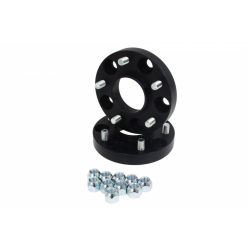
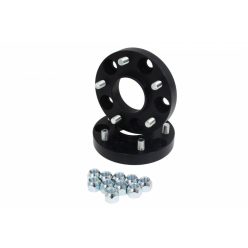
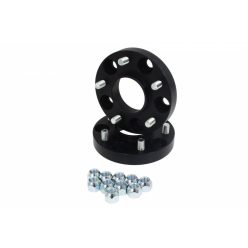
Net price: 89 €
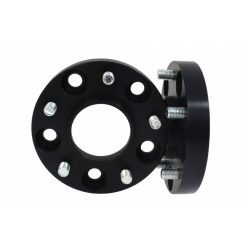
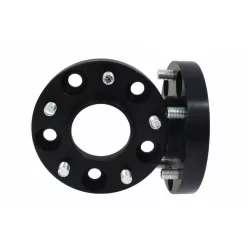
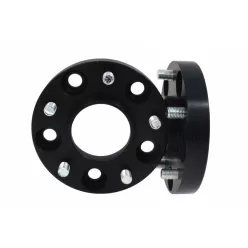
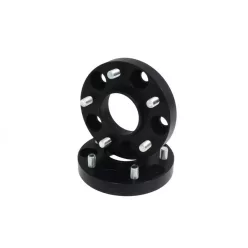
Net price: 105 €
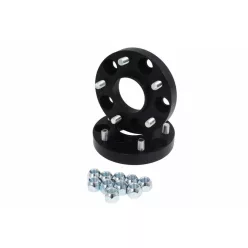
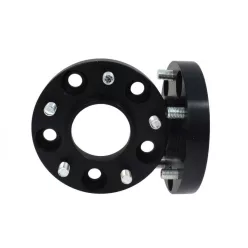
Net price: 114 €
Nut-Fastened Bolt-On Black Wheel Spacers: Fitment, Seating and Fastening Logic
This category covers black hub-mounted spacer parts where the wheel connects through an intermediate component and the nut-fastened layout becomes part of the overall fitment picture. The right choice is not only about stance, but also about accurate seating.
Technical background and system integration
This type of wheel spacer sits between the hub and the wheel, so the result is not defined by thickness alone. Contact-face seating, locating-lip support and the outer fixing layout all influence the load path through the assembly.
When chosen well, it can help create space around brakes or suspension while making the wheel's outer position easier to plan. For a stable interface over repeated heat cycles, clean faces, the correct seat profile and hub-centred support all matter together.
- PCD: The vehicle bolt pattern must match the selected part exactly.
- Centre bore: Always check the stated mm size against both the hub and the wheel.
- Thickness: Typical lines here sit around 0.87-1.57 inch (22-40 mm), so inner clearance and outer position should be checked together.
- Wheel back-pad: Rear pocket depth and flat seating area decide how cleanly the system can assemble.
How to choose the right one
As a quick selection guide, identify the vehicle PCD, centre bore and original fixing system first, then choose a thickness that may create brake or suspension room without moving the wheel too close to the arch. In this category, product-card checking matters just as much as the thickness itself.
Do not look only at the inner gain in clearance; also check how the wheel's outer position changes at full steering lock and through suspension travel. The right decision comes from the combined inner-outer clearance, wheel back-pad shape and fastening details.
If you are comparing more than one fastening layout, this subcategory is best judged by the product-card data specific to the nut-fastened design.
Installation and failure-prevention tips
Before assembly, clean the hub face and the wheel mounting surface, remove rust, burrs and thick coating residue, then do a dry test fit. On a mechanical joint, clean seating, the maker's tightening procedure and a gradual criss-cross tightening sequence matter more than any generic figure.
Common failure: if rust, coating residue or burrs remain between the hub and spacer, or if the centre bore and wheel back-pad shape are not matched precisely, the wheel may show slight run-out, vibration or a repeating rubbing sound. Clean surfaces, a trial build and a recheck after the first heat cycle help prevent that result.
After the first use, inspect the interface again, confirm free rotation and make sure there is still enough room around the brake, suspension and arch side. Early reinspection often reveals doubtful fitment before it turns into a bigger issue.
PRO TIP: Do not only check how far the wheel moves outward; also inspect where the tyre runs closest to the arch at full lock, under compression and with real vehicle load.
FAQ
What is the most common failure or installation mistake?
Start with this check order: PCD, centre bore, wheel back-pad clearance, free rotation, then a repeat inspection after the first use. If any point looks uncertain, do not finalise the installation until the product-card data and the actual wheel-hub dimensions match cleanly.
How does the nut-fastened version differ from the bolt-fastened version?
The difference is not only the hardware style, but also how the outer fixing relationship is built. That is why the chosen subcategory and its own product-card details should guide the decision.
Is matching the PCD alone enough?
No. Even with the same PCD, centre bore, locating lip, thickness and inner wheel geometry may differ, so the full fitment stack has to be checked together.
What should I inspect after the first drive?
Recheck the contact faces, free rotation, clearance to the arch and brake side, and pay attention to any vibration or change in steering feel. If anything looks or feels unusual, remove the wheel and inspect the full fitment stack again.
How can I tell whether the wheel back-pad will work?
Look for enough flat seating area and the pocket depth needed by the design. A wheel can appear compatible on paper and still need a separate test fit if the rear shape is tight.
