
Our Lambda & Engine Sensors range covers wideband O₂, MAP, temperature and position sensors to feed your ECU with clean, accurate data. Choose by application, pressure/temperature range and connector standard so the readings remain reliable under heat, vibration and load—on road or at the track.
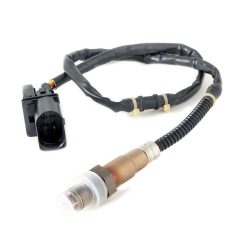
Net price: 86 €
Net price: 78 €
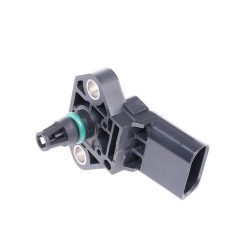
Net price: 29 €
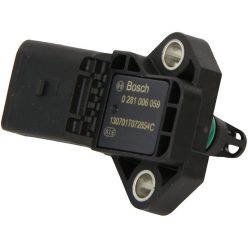
Net price: 29 €
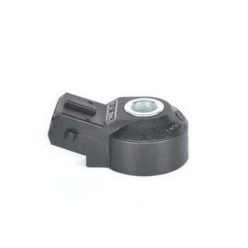
Net price: 27 €
Net price: 18 €

Net price: 102 €

Net price: 60 €
Brief summary & key benefits
Lambda & Engine Sensors provide the core signals for modern engine control. Wideband O₂ gives accurate AFR, MAP reports load, temperature sensors feed air/coolant data, while position sensors keep timing precise. Clean signals mean faster calibration, repeatable power and dependable telemetry on road and track.
Technical Basics
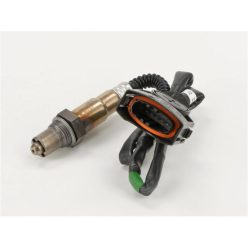
Wideband O₂ (lambda): Bosch LSU 4.2/4.9 are industry standards. The pump current corresponds to λ; a controller regulates cell temperature and stoichiometry. Proper heater control is vital for fast light-off and stable readings.
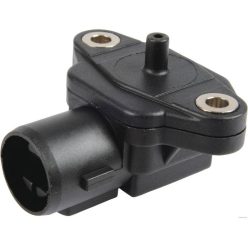
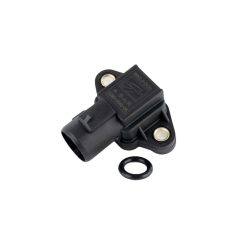
MAP sensors: choose the absolute range (e.g., 3/4 bar). Output is typically 0–5 V linear; load the correct scale in the ECU. Higher range tolerates more boost but may reduce low-load resolution.
IAT/CLT: NTC-based; accuracy depends on the ECU’s calibration table. Select housings that survive heat and vibration at the intended location.
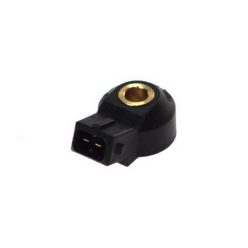
Knock sensing: piezo sensors require clean mating surfaces and correct torque. The ECU band-pass filters and windows the signal against background noise.
Position/TPS: verify Hall/VR type and tooth pattern (e.g., 60–2). TPS needs end-stop calibration for a true 0–100% sweep.
Selection Criteria
Use case: road cars value OEM connectors and lifespan; race builds prioritise response and robustness. For lambda, the bung angle and placement prevent condensation damage. For MAP, pick a range just above target boost.
Compatibility: check connector families (EV1, DTM, Junior Timer, Bosch compact) and ECU support. Shielded looms and sealed IP-rated connectors prevent noise and moisture issues.
Calibration: import correct curves for MAP/NTC sensors; use official firmware tables for the wideband controller. Wrong data yields false AFR and load calculation.
Installation & Maintenance
Placement: mount the lambda after the turbine but before the catalyst; tilt 10–15° to drain condensation. For MAP, use short vacuum hose and avoid T-pieces; place IAT in representative airflow.
Wiring: route signals away from high-current ignition/injector feeds; cross at 90° when needed. Share grounds between controller and ECU to reduce loop noise.
Protection & life: avoid leaded fuels with widebands; heat soak and vibration shorten life. Seasonal checks: fasteners, seals and corrosion on connectors.
Validation: log AFR stability (RMS), MAP offset (KOEO ≈ ambient), and temperature plausibility. Fix issues by inspecting connectors, grounds and harness routing.
FAQ
LSU 4.2 vs 4.9?
4.9 offers newer design and faster response but confirm controller compatibility.
Where to weld the bung?
50–60 cm after the turbine, angled 10–15° to avoid condensation damage.
3 or 4 bar MAP?
Pick just above your target boost; oversizing reduces low-load resolution.
AFR jitter?
Improve grounds, add shielding and review harness routing.
