
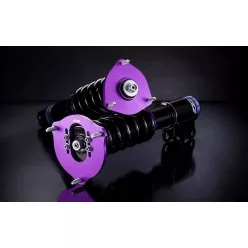
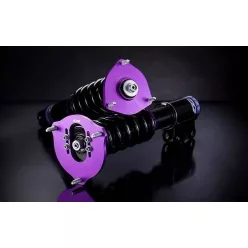
Hyundai – D2 Racing Street suspension kits are road-focused, height-adjustable spring–damper systems for i20/i20 N, i30/i30 N, Elantra N, Veloster and Genesis Coupé. Threaded bodies with refined damping sharpen cornering while preserving daily comfort. Before buying, confirm axle loads, drivetrain (FWD/AWD/RWD) and the approved adjustment range.

Net price: 912 €

Net price: 912 €

Net price: 912 €

Net price: 1 096 €
Net price: 1 096 €

Net price: 1 096 €

Net price: 1 096 €

Net price: 912 €
Net price: 912 €

Net price: 912 €

Net price: 912 €

Net price: 912 €
Brief summary & key benefits
Hyundai – D2 Racing Street kits bring steadier body control, precise ride-height tuning and predictable handling to N and non-N platforms while preserving everyday comfort. A sensible drop lowers the centre of gravity, trims pitch/roll and clarifies steering feedback. Application-matched damping and anti-corrosion finishes support long-term consistency across seasons.
Technical Basics
Each kit pairs gas-charged dampers with vehicle-specific steel springs. A threaded body and locking collars allow per-axle height adjustment; dust boots and quality seals protect sliding parts. Depending on application, springs may be linear for direct feedback or dual-rate/progressive to improve small-bump compliance while maintaining support under load. Heat-stable oil keeps damping consistent over long drives and temperature swings.
Platform notes: many i20/i30 variants use a rear torsion beam with limited camber adjustability, whereas i30 N and some Elantra N versions adopt multi-link rears with broader alignment latitude. The Genesis Coupé is RWD and responds sensitively to ride-height changes—excessive lowering reduces usable bump travel and alters control-arm angles. Bigger brake/wheel packages increase unsprung mass and often call for a touch more rebound control.
Selection Criteria
Use case — For commuting and fast-road driving, begin near a mid-range height to preserve travel and alignment freedom; lower slightly for occasional track events only if clearance remains safe. This balance typically delivers strong comfort with crisp responses on patchy roads.
Body/drivetrain — FWD i20/i30 models place more mass over the front axle, so prioritise front camber/toe targets and appropriate rebound control. AWD derivatives carry additional hardware mass that shifts axle loads and the ideal damping window. On the Genesis Coupé, small rear ride-height changes can noticeably alter balance—document adjustments carefully.
Tyres & wheels — Larger wheels and shorter sidewalls reduce compliance and raise bottom-out risk. On street tyres, moderate camber and a middle ride height protect tyre life and keep steering linear; semi-slicks may justify firmer damping if roads allow.
Brakes & unsprung mass — N models add brake/wheel mass and thermal load; add a touch more rebound and avoid extreme camber to balance turn-in bite with stability and wear.
Daily comfort — Ultra-low stances increase NVH and reduce travel. For mixed usage, aim for a middle stance with balanced toe and conservative camber; this keeps the chassis composed over crests and compressions.
Installation & Maintenance
Have a qualified shop install the kit. Clean threads and apply light anti-seize; torque fasteners to factory specs and preload rubber bushes at ride height. After a shakedown drive, re-torque and perform a four-wheel alignment (camber/toe/caster). Check wheel-arch clearances on full lock and under compression, especially on wide-wheel setups.
For longevity, periodically wash the threads, refresh anti-corrosion spray and verify that lock collars are secure. Keep a written baseline (height/damping/camber) so you can revert quickly between daily and event settings. Any knocking, oil mist or pogo-like behaviour warrants inspection of dampers, top mounts and mounting points.
FAQ
Q: How low can I go for street use?
A: Stay within the manufacturer’s approved range and start near mid-height to preserve travel and geometry.
Q: Do torsion-beam rears limit alignment?
A: Yes — rear camber is largely fixed; balance the car with front camber and appropriate toe targets.
Q: Is alignment mandatory after installation?
A: Yes — lowering alters geometry; set camber/toe/caster properly after fitting and after any height change.
Q: Are N models set up differently?
A: Typically yes — higher unsprung mass benefits from slightly more rebound control and modest negative camber for road use.
Q: Will big wheels reduce comfort?
A: Short sidewalls cut compliance; consider a slightly higher ride height and measured damping for daily roads.
