
In our Honda control arms category you will find front and rear lower control arms and matching bushings developed specifically for Honda Civic and other popular Honda models. High-quality parts from brands like MTUNING, TURBOWORKS and D1SPEC help you restore or fine-tune suspension geometry for sharper turn-in and more predictable grip. These components are ideal both for street cars that need a freshen-up and for track-focused Hondas where precise camber and toe adjustment is essential.

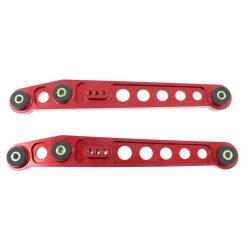
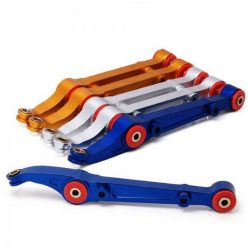
Net price: 90 €
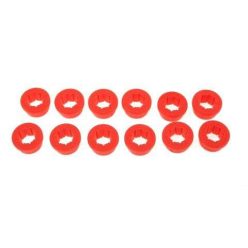
Net price: 6 €
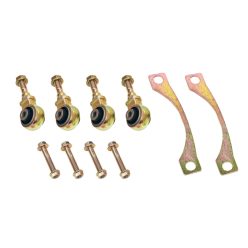
Net price: 29 €
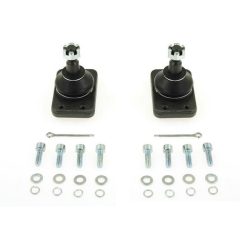

Net price: 61 €
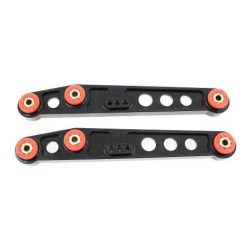
Net price: 73 €

Net price: 150 €
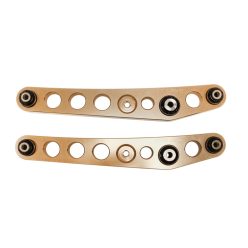
Net price: 150 €

Net price: 69 €

Honda control arms for precise suspension geometry and confident handling
Honda control arms are critical suspension components that link the hub to the chassis subframe and define wheel camber, caster and toe. The parts in this category include front and rear lower control arms, adjustable arms and matching bushings that cover several Civic generations and other Honda models. By renewing worn arms and upgrading to stiffer or adjustable designs you can significantly improve steering response, braking stability and tyre wear. These products are suitable for full suspension overhauls, lowering set-ups and track-day builds. Using incorrect or worn arms can quickly lead to uneven tyre wear and unstable behaviour at speed.
Technical Basics
A control arm defines the position and path of the wheel as the suspension moves, so its length, pickup points and bushing characteristics all influence wheel alignment. In this Honda range you will find both strong steel and lightweight aluminium arms, as well as fully adjustable versions with threaded inserts for fine tuning. Polyurethane bushings create a stiffer connection between the arm and the chassis, reducing unwanted movement and sharpening the car’s reactions. However, the stiffer the joint, the more road vibration may be transmitted into the cabin. It is therefore important to choose components that are properly matched to your specific Honda model, engine and year.
Compared with standard rubber, a quality polyurethane bushing resists heat, oil and ageing much better, keeping the alignment values stable for longer. In a performance suspension the combination of stiffer springs, grippier tyres and more aggressive driving puts higher loads on the control arms and mounting points. Arms with proper material thickness, solid welds and corrosion protection are essential for safety and long-term durability. Neglecting worn bushes or cracked arms can result in knocking noises, vague steering feel and an unpredictable car during heavy braking or cornering.
Selection Criteria
When choosing Honda control arms, start by accurately identifying your chassis code, engine type and production year, as mounting points and lengths differ between Civic generations such as EG, EK and EP3. Next, consider your main use: daily road driving, mixed street and track, or dedicated motorsport. For mostly street use, OEM-style arms with slightly firmer bushes usually provide the best balance between comfort and precision. For track-day or competition cars, adjustable arms with camber or length adjustment allow you to dial in more aggressive geometry to maximise grip.
On lowered or height-adjustable suspensions the arms must compensate for the changed ride height to keep the camber and toe within a sensible range. Excessive negative camber might look “race-inspired” but will quickly destroy the inner shoulders of the tyres. Adjustable rear lower control arms and dedicated camber kits help restore correct alignment while still allowing the car to sit lower. You should also take into account the intended tyre width and compound, as wide semi-slicks or slicks generate greater lateral loads. Using underspecified arms in such conditions can lead to deformation or failure, especially under kerb strikes on track.
Installation & Maintenance
Replacing Honda control arms requires careful installation, correct torque settings and proper pre-loading of rubber or polyurethane bushes at normal ride height. Wherever possible, use fresh bolts and self-locking nuts, and always follow the vehicle manufacturer’s torque specifications. Once the arms and bushings are installed, a full professional wheel alignment is strongly recommended to set camber, caster and toe accurately. Incorrect installation or skipping the alignment step can make the car unstable, even if the parts themselves are high quality.
Ongoing maintenance should include regular inspection of the control arm mounting points, looking for cracks, bent brackets or elongated holes, especially on cars that see frequent track use. Check the condition of the bushings for signs of tearing, excessive movement or separation from the arm housing. Any corrosion on steel arms should be cleaned and protected to prevent structural weakening over time. After heavy impacts, large potholes or aggressive kerb usage, it is wise to re-check both the arms and the car’s wheel alignment. Ignoring early symptoms such as clunks and wandering steering nearly always leads to more expensive repairs later.
FAQ
When should I replace the control arms on my Honda? You should consider replacing control arms or bushings if you notice clunking noises over bumps, unstable behaviour under braking or visibly uneven tyre wear. High-mileage cars often develop play in the arms that can be felt as vague steering. If inspection reveals cracked arms or torn bushes, replacement is urgent for safety reasons.
Do I really need adjustable control arms on a lowered Honda? If your Honda is lowered significantly compared with stock, adjustable arms are highly recommended. They allow you to correct excessive negative camber and bring toe back into range, improving grip and tyre life. On mild drops a stock-style arm might still work, but whenever you change ride height substantially it is safer to budget for an alignment and, if required, adjustable arms.
Are polyurethane bushings suitable for daily-driven Hondas? Quality polyurethane bushings can be used on daily drivers, especially if you enjoy a more direct, responsive feel from the suspension. They will usually add a bit more noise and vibration compared with soft OEM rubber, but the trade-off is sharper steering and longer service life. For maximum comfort stick with rubber; for a sportier character polyurethane is a good compromise.
Is wheel alignment mandatory after changing Honda control arms? Yes, a full wheel alignment is strongly recommended after any control arm or bushing replacement. Even small differences in arm length or bushing deflection can alter camber and toe. Skipping alignment can lead to rapid tyre wear and unsafe handling, particularly in wet or high-speed conditions.
Can upgraded control arms handle track use and semi-slick tyres? Purpose-made performance control arms are designed to handle the extra load of grippier tyres and hard braking on track. To stay safe, you must still install them correctly, inspect them regularly and use suitable bushings and hardware. Under extreme use, such as repeated kerb strikes, even strong parts can be damaged, so routine checks after track events are essential.
