
Hand tools & sockets (kéziszerszámok és dugókulcsok) cover ratchets, spanners and bits that support clean fastener fit and efficient access during servicing.
Pick by fastener type (hex, Torx, E-Torx) and match drive size (1/4", 3/8", 1/2") plus socket depth (shallow/deep) to avoid loading the corners.
When something feels tight, the right profile, a fresh socket and solid support often prevent rounded heads. Verify exact dimensions and specifications on the product card; in-stock items dispatch fast within the EU.
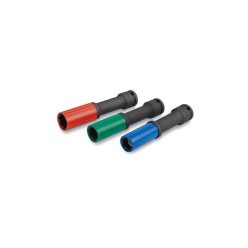
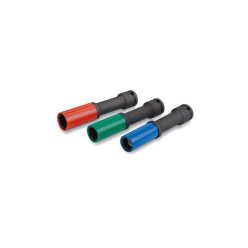
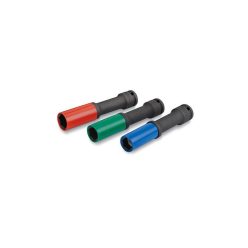
Hand tools & sockets for workshop builds: ratchets, spanners, bits
This category groups the core workshop hand tools and socket systems—commonly searched as hand tools & sockets—built around fitment and repeatability. The focus is size-and-profile selection that keeps your kit easy to expand.
For motorsport-style maintenance, the right combination can improve consistency: correct engagement and stable leverage help deliver controlled torque transfer without turning every stubborn fastener into a recovery job.
Technical background: drive, profiles, and access
Ratchets and sockets revolve around drive sizes (1/4", 3/8", 1/2"), while bits and socket profiles must match the fastener head; good engagement improves contact control at the head.
In tight bays, extensions and universal joints unlock access, but alignment still matters; keeping load in line helps avoid unwanted side-force and supports guided loading on the fastener.
- 6-point: often a safer choice under higher effort because it tends to load flats rather than corners.
- 12-point: can speed positioning when access is limited and the fastener condition is good.
- Bit profiles: Torx, E-Torx, hex and spline benefit from exact sizing for consistent engagement.
How to choose: sets, depth, compatibility
Quick selection guide: start from your most common metric sizes (mm), then choose a drive size that suits access and expected load so the system stays scalable as your kit grows.
- Drive size: 1/4" for finer work, 3/8" for general servicing, 1/2" for larger fasteners and tougher joints.
- Depth: shallow sockets for stable seating, deep sockets for protruding studs and recessed fasteners.
- Profiles: 6-point, 12-point, Torx, E-Torx, hex-bit and special sockets matched to the job.
- Accessories: extensions, U-joints and adapters help with tight access and awkward angles.
If you’re browsing for additional related gear, the Workshop Tools main category navigation is a handy way to jump across tool groups without losing your selection flow.
Use, workshop routine, and failure prevention
Before loosening or tightening, clean the fastener head so the socket can sit fully; full seating supports full-face engagement rather than corner loading.
If a joint resists, confirm size and profile first, then keep the force line straight; extensions and U-joints can introduce side-load, reducing axial support at the head.
A common issue is using a worn or incorrect socket, or not seating it fully—this shifts load to the corners and can round the fastener. Prevention is simple: inspect the socket, clean the head, and choose a shape that maintains profile engagement before you apply force.
PRO TIP: Keep a “fresh-condition” socket and bit set for precise work, and demote worn pieces to non-critical tasks to protect fasteners.
FAQ
6-point or 12-point sockets: which should I pick?
6-point often gives better purchase under effort, while 12-point can be quicker to position in restricted access. Fastener condition and access are key deciding factors.
When do I need deep sockets?
Deep sockets help with protruding studs, longer nuts, or recessed fasteners where a shallow socket or ratchet body would foul.
What’s the most common mistake when a fastener head rounds, and what should I check?
Checklist: verify exact size (mm), correct profile (Torx/E-Torx/hex), socket condition (not worn), cleanliness of the head, and that your load stays in-line with the fastener axis.
Can I use chrome sockets with an impact wrench?
Only if the product is clearly rated for impact use; if it isn’t specified, choose impact-rated sockets based on the product description.
Which drive size is a good “core” starting point?
Many workshops lean on 3/8" as a versatile middle ground, with 1/4" for finer work and 1/2" for larger fasteners. Your car’s typical fasteners should guide the balance.
