
The Frame & Chassis Components category covers structural parts for solid-axle 4x4s: longitudinal and cross-members, radiator supports, control-arm and Panhard brackets, spring perches and shock towers, plus gearbox crossmembers. Accurate hole patterns, high-strength steel and corrosion protection provide a rigid base for suspension and driveline performance on and off the road.
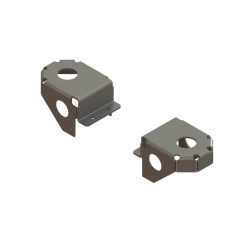
Net price: 91 €

Net price: 149 €

Net price: 148 €

Net price: 187 €

Net price: 91 €

Net price: 134 €

Net price: 134 €

Net price: 4 414 €
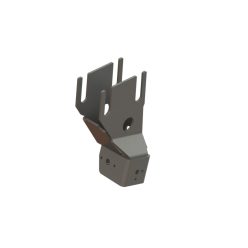
Net price: 134 €

Net price: 174 €

Net price: 267 €

Net price: 321 €
Brief summary and key benefits
Frame & chassis components underpin structural integrity. Properly designed crossmembers and longitudinals raise rigidity, channel loads and help preserve suspension geometry. This range includes radiator supports, control-arm and Panhard brackets, spring perches and towers, and gearbox crossmembers. Parts commonly target Nissan Patrol Y60/Y61, where age, corrosion and heavy off-road use often demand reinforcement or replacement. Accurate hole patterns and thick-gauge material reduce on-car fettling and shorten installation time.
Technical Basics
These parts are laser-cut from high-strength steel, CNC-bent and reinforced with welded ribs. Crossmembers transmit torsional and bending loads between rails, while radiator supports carry the cooling pack and front-end forces. Control-arm and Panhard brackets define suspension kinematics; their bore positions and bush seats govern caster/pinion stability. Spring perches and tower reinforcements spread vertical loads to prevent cracking. The gearbox crossmember supports the driveline, managing NVH via mounts and keeping prop-shaft angles and exhaust clearances within spec.
Materials & coatings: typically 3–6 mm structural steel with local doublers and welded gussets. Corrosion protection uses powder coat, zinc or 2-K systems; closed edges and drain slots mitigate mud and moisture traps. Use 10.9/12.9-grade fasteners with locking nuts and specified torque.
Common pitfalls include mis-positioned holes causing body stress, under-thickness plate, poor welding heat control (distortion) and bracket angle errors that shift suspension geometry. Prevent these with quality parts, careful prep and ride-height mock-ups.
Selection Criteria
Use case: touring, expedition, harsh off-road or high-power swaps. For heavy loads, choose ribbed, multi-point mounts that better distribute torque. Towing builds place extra emphasis on the crossmember and rear bracing.
Fitment: account for generation differences (e.g., Patrol Y61 GU). Verify clearances to diff, props and exhaust, and ensure radiator support alignment with the cooler and shroud. For Panhard/control-arm brackets, bush type, bore size and weld land cleanliness are decisive.
Serviceability: favour removable insert designs on the gearbox crossmember to ease transmission service. With tower and perch reinforcements, maintain access for damper/spring replacement.
Installation & Maintenance
Dry-fit first, mark contact faces, then degrease. Tighten fixings in stages and in a cross pattern to specified torque. For weld-on parts, strip coatings to bright metal, ensure gap-free joints and verify dimensions after tack welding before finishing beads. After assembly, perform a 100–200 km re-torque and visual check, especially at suspension and driveline mounts. Repair coating damage promptly; treat box sections with cavity wax and provide drain holes where sensible.
Safety note: inaccurate suspension pick-up positions can cause steering shake and abnormal tyre wear. If the vehicle pulls or vibrates, re-check bracket angles, axle centring and obtain a professional alignment.
FAQ
When should I upgrade a crossmember?
After cracks/corrosion, powertrain swaps or frequent off-road use that reveals chassis twist.
Are weld-on reinforcements acceptable?
Yes—with proper prep and heat control; verify geometry afterwards and restore coatings.
Why does hole accuracy matter?
To ensure stress-free installation; misalignment can shift suspension angles.
Is a re-torque needed?
Yes—inspect and re-torque structural joints after the first 100–200 km.
Compatible with lifted suspensions?
Yes; bracket and crossmember designs account for altered angles and clearances.
