
Engine oils (motor oils) help maintain the oil film between loaded engine surfaces, manage heat and support consistent lubrication behaviour; this page focuses on performance and racing grades rather than generic daily-driver oils.
Your choice should follow the viscosity grade, engine build, intended use and pack size together, because a fast-warming road/track car may need a different direction from an endurance or high-clearance setup.
To avoid avoidable issues, start from the build spec and manufacturer recommendation instead of assuming a thicker oil is automatically safer. Verify exact dimensions and specifications on the product card; in-stock items dispatch fast within the EU. Use filters for viscosity, price and stock status, then open the product page for the detailed data.
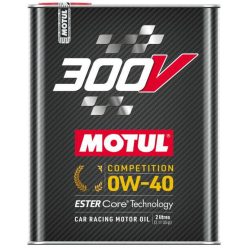
Net price: 38 €
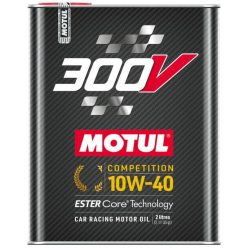
Net price: 35 €
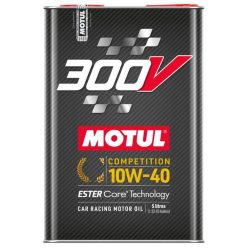
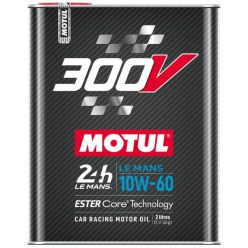
Net price: 33 €
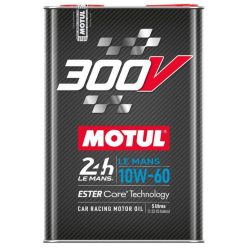
Net price: 86 €

Net price: 35 €

Net price: 35 €

Net price: 42 €

Net price: 86 €

Net price: 39 €
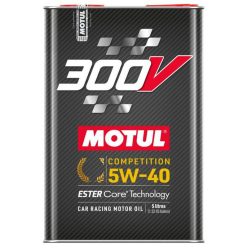
Net price: 90 €
Engine oils for motorsport and hard-driven performance builds
Performance lubrication: This category brings together performance lubricants used as engine oils for high-load petrol and diesel engines, where oil-film behaviour, heat management and the right viscosity direction matter to bearings, rings and valvetrain stability.
The current range is built mainly around MOTUL 300V Competition and Le Mans products in 0W-40, 5W-40, 5W-50, 10W-40, 10W-60, 15W-50 and 20W-60 grades, mostly in 2L and partly in 5L packs.
These oils may suit naturally aspirated, turbocharged or supercharged performance engines, but the final choice should still come from the manufacturer recommendation, the engine build, the likely oil temperature and the service pattern of the car.
Technical background and system integration
Viscosity: The cold-side number influences how the oil may behave at lower temperatures, while the hot-side grade is more about the operating-temperature direction of film thickness. That is tied not only to power level, but also to bearing clearances, ring package, oil pump behaviour and real oil temperature.
Cold and hot side: A 0W-40 or 5W-40 may make sense where quicker cold-flow behaviour is part of the target, while 50 or 60 hot-side grades are more often considered when sustained load, higher oil temperature or larger internal clearances move the build in that direction.
Competition vs Le Mans: The Competition grades commonly fit builds looking for a strong balance between response, oil-pressure stability and wear control, while the Le Mans options are often considered for sustained heat, higher-clearance engines or combinations more exposed to fuel dilution.
- 0W-40 / 5W-40: often relevant for fast-warming road and track builds covering a broader usage window.
- 5W-50 / 15W-50: worth considering when you want more hot-side margin without jumping straight to a 60 grade.
- 10W-60 / 20W-60: can come into play for longer loaded sessions or engines built with larger internal clearances.
How to choose the right one
Manufacturer guidance: Start with the handbook or engine-builder sheet before anything else. If more than one viscosity band is allowed, narrow the choice by ambient conditions, fuel-dilution risk and the way the car is actually driven.
Engine build: The same capacity or power figure does not automatically mean the same oil choice. A standard-clearance road engine, a rebuilt historic motor and a high-heat track build may each point in a different direction even if their output looks similar on paper.
Use case: Sprint sessions, track days, drift, endurance and fast road mileage do not stress the oil in the same way. Frequent cold starts, short hot runs and prolonged high oil temperature all shift the decision differently.
If two grades still look viable, let the handbook and engine-builder data outweigh forum folklore or the simple assumption that thicker must be safer.
Installation and failure-prevention tips
Oil-change process: A useful comparison starts with the correct filter part number, a measured fill quantity and a final level check using the manufacturer’s method on level ground. On modified cars, the extra volume of oil coolers and lines should be part of the calculation.
First checks: After the change, watch cold-start behaviour, warm-up and the fully hot oil level. If the car has gauges or data logging, note oil pressure and oil temperature under comparable conditions, because that tells you far more than seat-of-the-pants feel.
Common mistake: A typical misstep is choosing viscosity only by power target while ignoring engine clearances and real operating oil temperature; symptoms may include lazier cold lubrication behaviour, unusual mechanical noise or less convincing gauge behaviour once fully hot. The best prevention is to match the oil to the handbook, builder specification and real use pattern at the same time.
Motorsport use will often justify shorter review intervals than normal road driving. If the car sees frequent track work, repeated short hot sessions or a higher chance of fuel dilution, the oil condition deserves closer monitoring.
PRO TIP: If you test more than one viscosity in the same car, keep the filter type, fill level and comparison conditions as consistent as possible, otherwise it is easy to read the result the wrong way.
FAQ
Which viscosity grade makes sense for a road and track car?
The answer comes from the handbook, engine clearances, oil temperature and use pattern together rather than from the power goal alone. For many road and track builds, a 40 or 50 hot-side grade is a logical starting point, but rebuilt or harder-run engines may point elsewhere.
What is the most common failure or installation mistake?
Check the manufacturer viscosity recommendation, the engine-builder notes, the filter part number, the exact fill quantity and the oil level using one consistent method. If the car has gauges, compare cold-start behaviour with the fully warmed-up pattern, because that quickly shows whether your direction is sensible.
Is 5W-40 better than 10W-60?
Neither is universally better; they simply suit different engine builds and operating windows. A 10W-60 is not an automatic upgrade for every engine, but a direction that may suit higher heat load or larger internal clearances.
Is a 2L pack enough?
That depends on the engine’s total oil capacity and whether you want reserve for topping up. On many cars, 2L is only part of the required fill, so always check the full capacity including filter change before ordering.
When should I change the oil more often?
Frequent track use, high oil temperature, repeated short intense sessions and fuel dilution can all justify shorter review intervals. If the car sits for long periods, a fresh fill at the start of the season often gives a cleaner baseline.
