
Our ECU Add-On Devices expand your engine management with CAN I/O expanders, wideband O2 controllers, thermocouple (EGT) amplifiers and dedicated looms. Add channels, gain accuracy and tighten data logging so fuelling, ignition and protection strategies work consistently on road and track.

Net price: 377 €

Net price: 310 €

Net price: 283 €

Net price: 377 €
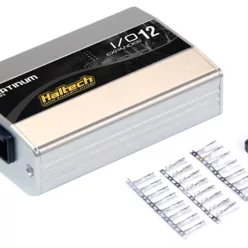
Net price: 310 €
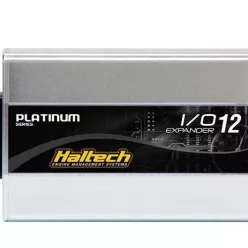
Net price: 283 €
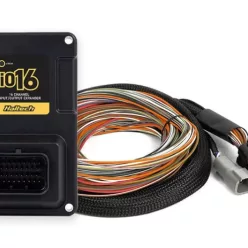
Net price: 535 €

Net price: 314 €
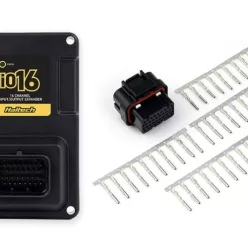
Net price: 358 €
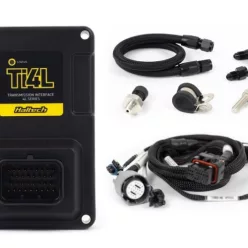
Net price: 284 €

Net price: 373 €

Brief summary & key benefits
ECU Add-On Devices extend engine management: CAN I/O expanders add channels, wideband O2 controllers stabilise AFR control, and thermocouple (EGT) amps deliver accurate exhaust temperature data. Together they unlock finer data logging, tighter protections and cleaner calibration for road and motorsport builds.
Technical Basics
CAN expanders move multiple inputs/outputs over a two-wire bus, minimising wiring bulk. Typical modules provide analogue (0–5 V, NTC), frequency inputs and low-/high-side drivers. Wideband controllers (e.g., Bosch LSU 4.9 or NTK) offer fast, stable AFR feedback for closed-loop fuelling. Thermocouple K-type amplifiers read high temperatures with noise filtering so EGT-based protection and cylinder balancing work reliably.
Signal integrity matters: keep a clean ground scheme, isolate sensor power, and route shielded lines away from ignition and high-current paths. Sampling rate and resolution define how well fast transients appear in logs; consider overall bus load on CAN to avoid congestion.
Selection Criteria
Start by listing missing I/O: required analogue/digital/frequency inputs and controlled outputs. Choose enclosure and IP rating for the environment. For wideband, decide between LSU 4.9 and NTK sensors based on fuel, heat and durability. For EGT, pick channel count (1/2/4/8), connector style and calibration options. Pre-terminated looms speed installation and reduce errors.
Use cases: on turbo track cars, cylinder-wise EGT guides fuel/ignition trims; on dual-purpose road/track builds, wideband-driven AFR improves idle and part-throttle economy; in rally, CAN I/O expanders simplify steering-wheel and auxiliary control integration.
Installation & Maintenance
Work on an isolated system. Terminate the CAN bus correctly with 120 Ω at each end, and maintain consistent twist in the pair. Keep sensor looms away from heat and edges, protect with sleeving and grommets, and strain-relieve at modules. Follow O2 sensor heater procedures and ensure the exhaust is leak-free to avoid skewed readings. Regular log review (AFR, EGT, fuel pressure) prevents failures and speeds diagnosis.
Safety note: observe module output current limits and implement proper fusing. Use solid grounding and short power paths to avoid drop-outs during cranking and high load.
FAQ
Q: When should I use a CAN I/O expander instead of wiring directly to the ECU?
A: For many channels or remote locations—CAN expanders reduce wiring complexity and improve scalability.
Q: LSU vs NTK wideband?
A: LSU 4.9 is common and cost-effective; NTK tolerates higher heat/lead and often lasts longer in harsh duty.
Q: How many EGT channels do I need?
A: Four for most inline-4 turbo engines, eight for V engines; at minimum monitor the hottest cylinders.
Q: My signals are noisy—what helps?
A: Short grounds, a clean star ground, shielded sensor wiring and correct CAN termination typically fix it.
