
EBC BSD Sport Grooved brake discs from the Blade Sport Discs range are high-performance rotors engineered for fast road and track day use. The unique overlapping blade slots efficiently vent hot gases and debris while helping to keep pad contact flat and stable. High-carbon, high-silicone cast iron improves thermal stability and crack resistance, and the slot pattern is tuned to reduce wind noise compared with many conventional grooved discs.
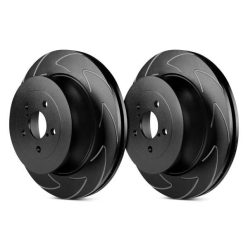
Net price: 479 €
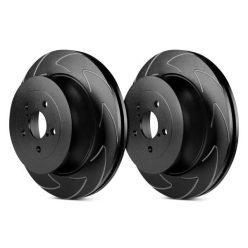
Net price: 371 €
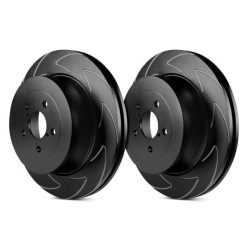
Net price: 317 €
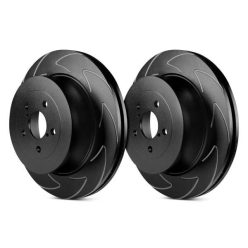
Net price: 367 €

Net price: 307 €

Net price: 250 €

Net price: 210 €

Net price: 396 €

Net price: 557 €

Net price: 533 €

Net price: 230 €

Net price: 371 €
EBC BSD Sport Grooved brake discs for fast road and track
EBC BSD Sport Grooved brake discs are designed for drivers who demand more than OE-level braking without stepping into full race hardware. As part of the BSD (Blade Sport Discs) line, these rotors combine a high-carbon alloy casting with an innovative blade slot pattern that enhances cooling and pad stability. They are a strong choice for tuned street cars, spirited mountain driving and occasional track days where consistency and fade resistance matter as much as everyday comfort.
Technical Basics
EBC BSD discs are cast from a high-carbon, high-silicone grey iron alloy developed specifically for performance brake rotors. This material offers improved resistance to thermal distortion, micro-cracking and fatigue compared with standard G3000 iron, especially under repeated heavy braking. Each disc is precision machined, balanced and run-out checked to ensure smooth operation and low vibration at speed.
The signature feature of BSD Sport Grooved discs is the overlapping blade slot design. Rather than a simple straight or curved slot, multiple blade-style grooves intersect across the friction surface. As the disc rotates, these slots act like a pump, sweeping away hot gases, dust, water and debris from the pad–disc interface. This helps maintain a stable friction coefficient, reduces the risk of glazing and keeps pad contact flatter, which in turn improves bite and pedal feel.
The overlapping pattern also helps to control brake noise. Traditional one-directional race slots can produce a pronounced “whoosh” or whistle under hard braking; the BSD layout breaks up this effect by staggering the slots. Most applications also feature a durable corrosion-resistant coating on non-friction areas, protecting the hub and vanes from rust and keeping the discs looking clean in the wheelarch. All critical dimensions – diameter, thickness, centre bore and bolt pattern – match the OEM discs for direct bolt-on fitment.
Selection Criteria
Choosing the correct EBC BSD Sport Grooved disc starts with accurate vehicle identification: make, model, engine, year and axle position. Each BSD part number corresponds to a specific OE rotor size and brake system configuration, so disc diameter, thickness, centre bore and bolt circle should be cross-checked against the existing discs. For best braking balance, front and rear BSD discs should be selected as a matched set where available.
From a usage perspective, BSD discs are ideal for fast road cars and dual-use vehicles that see occasional track days. The blade slot design significantly improves gas evacuation and heat management compared with plain discs, helping to delay fade on heavy downhill sections or repeated high-speed stops. For intensive race use, especially on very heavy or highly powered cars, a larger two-piece motorsport rotor may still be preferable, but BSD covers a wide range of demanding street and club-level applications.
Pad choice has a major influence on how EBC BSD rotors behave. For mainly road use, Ultimax2 or Greenstuff pads give a good balance of low noise, dust and improved bite. On more powerful or tuned cars, Redstuff or Yellowstuff compounds offer higher temperature capability and stronger initial response. Dedicated race pads can be used for frequent track days, but they tend to be noisier, dustier and more abrasive on discs in everyday driving, so they are best reserved for cars that spend most of their time on circuit.
Installation & Maintenance
Correct installation of EBC BSD Sport Grooved brake discs is critical to achieving vibration-free, consistent braking. Hub faces must be cleaned back to bare metal so the disc sits perfectly flat; any rust, paint or debris trapped between hub and disc will create run-out and potential pedal pulsation. Mounting bolts should be tightened to the manufacturer’s specified torque, and it is good practice to check lateral run-out with a dial indicator once the discs are fitted.
After fitting new discs and pads, a proper bedding-in procedure is mandatory. This involves a controlled sequence of moderate then progressively harder stops from medium speeds, allowing short cooling intervals between runs. Bedding lays down an even transfer layer of pad material on the blade-slotted surface, which stabilises friction and reduces the risk of judder, hotspots and early cracking. Jumping straight into repeated full-power stops from cold can damage even high-quality performance rotors.
Routine maintenance includes periodic measurement of disc thickness at several points around the rotor, ensuring it remains above the minimum specified value. After track days or extended mountain driving, you should visually inspect the discs for heavy scoring, heat checking and blue or brown discolouration. If you notice persistent vibration, steering shake or pulsing under braking, check hub cleanliness, run-out and pad condition before continuing hard use; catching issues early is far cheaper than replacing damaged pads, calipers or wheel bearings.
FAQ
How are EBC BSD Sport Grooved discs different from standard discs?
EBC BSD discs use a high-carbon performance casting and an overlapping blade slot pattern instead of a plain friction surface. This combination improves gas evacuation, cooling and pad stability, giving more consistent braking and better fade resistance than typical OE rotors. At the same time, the slot design is tuned to keep noise levels relatively low for road use.
Are EBC BSD Sport Grooved discs suitable for daily driving?
Yes, BSD discs are intended primarily for fast road use, so they work well on daily-driven cars when paired with a suitable pad. You may notice a slightly sharper pedal and a bit more feedback than with plain discs, but noise remains reasonable thanks to the blade slot design. For commuters who occasionally drive enthusiastically or visit track days, they offer a very good compromise.
Which pads should I use with EBC BSD discs?
For mixed road use, a mid-aggressive sport pad such as EBC Greenstuff or Redstuff is usually ideal. Heavier or more powerful cars used on track days may benefit from Yellowstuff or similar high-temperature compounds. Full race pads are possible, but they tend to increase noise and disc wear in everyday driving, so they are recommended mainly for track-focused builds.
Do BSD Sport Grooved discs make more noise than plain discs?
Compared with plain OEM discs, some additional brake noise is normal, especially under very hard braking. However, the overlapping blade slots are specifically designed to reduce wind noise compared with more aggressive straight-slot patterns. Most users find the small increase in noise acceptable given the improvement in performance and consistency.
Do I need to bed in new BSD discs?
Yes, every new disc and pad combination requires a structured bedding-in procedure. Proper bedding ensures even pad material transfer on the slotted surface, which is critical for avoiding judder and hotspots. Taking the time to bed the brakes correctly will significantly improve feel, performance and component life.
When should I replace EBC BSD Sport Grooved discs?
You should replace BSD discs when their thickness approaches the specified minimum or when you see extensive heat cracking, deep scoring or severe discolouration. Frequent track use and aggressive pads will accelerate wear, so more regular inspections are important in those cases. Replacing discs in good time is safer and cheaper than running them beyond their limits and risking damage to other brake components.
