
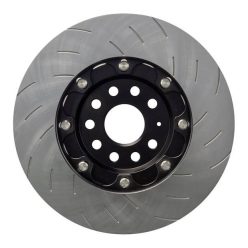
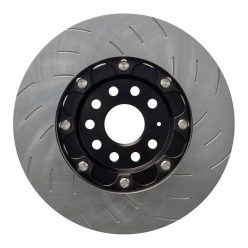
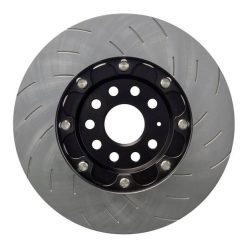
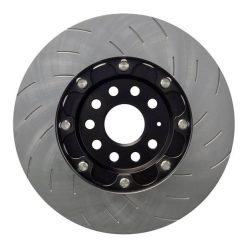
EBC 2-piece floating brake discs from the Racing SG2F range are high-end rotors engineered for powerful road and track cars. A lightweight aluminium centre bell is combined with a high-carbon cast iron friction ring, joined by fully floating stainless-steel bobbins that allow the outer ring to expand freely under heat. This reduces unsprung mass, improves thermal stability and delivers quiet, rattle-free operation on the road with race-capable performance on track.
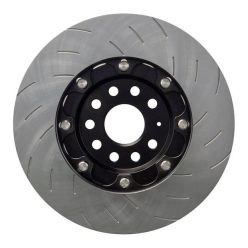
Net price: 1 233 €
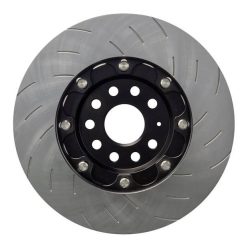
Net price: 1 298 €
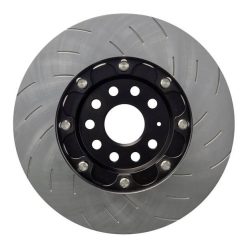
Net price: 1 371 €
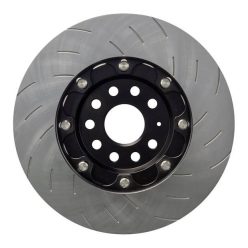
Net price: 1 651 €
Net price: 1 693 €
Net price: 990 €
Net price: 983 €
Net price: 1 083 €
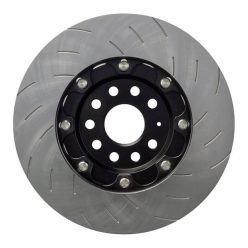
Net price: 968 €
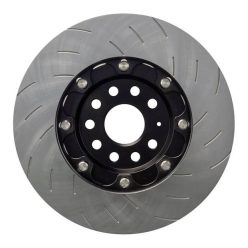
Net price: 1 019 €
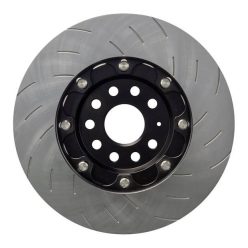
Net price: 1 273 €
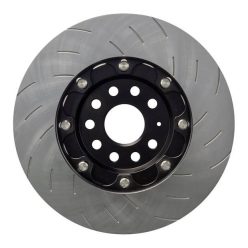
Net price: 1 203 €
EBC 2-piece floating brake discs for serious road and track use
EBC 2-piece floating brake discs in the SG2F Racing series are designed for drivers who demand true motorsport-level hardware that still works reliably on the road. By separating the lightweight aluminium centre bell from the high-carbon cast iron friction ring and joining them with a fully floating bobbin system, these rotors cope with extreme temperatures without the distortion and cracking that can affect one-piece discs. At the same time, they significantly reduce unsprung and rotational mass compared to equivalent one-piece rotors.
Technical Basics
The outer friction ring of EBC’s 2-piece floating discs is cast from a high-carbon G3500-type grey iron alloy developed specifically for high-load brake rotors. This material offers excellent wear characteristics and crack resistance even after aggressive track use, outperforming conventional G3000 castings in demanding conditions. Many applications are produced using a specialised centre split casting process, which reduces the tendency for heat-induced distortion that is common with cheaper cast iron rotors.
The ring is bolted to a CNC-machined aluminium centre bell via a series of stainless-steel bobbins, giving a fully floating two-piece construction. Stainless bobbins resist corrosion, ensuring that the outer ring continues to float freely even after years of exposure to heat, road grime and moisture. Each bobbin location incorporates an anti-rattle spring clip, preventing the characteristic off-brake disc rattle that plagues many full-race 2-piece systems and making these discs quiet enough for everyday street use.
Most EBC 2-piece floating discs use a performance-oriented swept groove slot pattern that helps evacuate gases, dust and water from the pad–disc interface while maintaining a manageable level of noise and pad wear. Internal curved cooling vanes increase airflow through the rotor compared to straight vanes, further improving heat dissipation during long downhill sections or repeated high-speed stops. Non-friction surfaces are typically coated with a durable anti-corrosion finish, keeping the bells and vanes looking clean and making future servicing easier.
Selection Criteria
Choosing the correct EBC 2-piece floating brake disc starts with accurate vehicle identification: make, model, engine, year, drive layout and axle position. On some vehicles, EBC offers a direct replacement for factory 2-piece pin-drive discs, converting them into a fully floating system without any modification to the car. On others, the SG2F rotor is a plug-and-play upgrade over standard one-piece discs, using the OE calipers and hubs while dramatically increasing performance and thermal capacity.
You should always verify rotor diameter, friction ring thickness, centre bore and bolt pattern against the original discs to ensure correct fitment and brake balance. Matching front and rear applications where available is recommended so that the car’s brake balance and ABS/ESC systems continue to behave as intended. Many SG2F part numbers are aimed at high-performance platforms such as RS, M, AMG, GT-R, Type R and similar models, but the same principles apply when upgrading more modest cars that see serious track work.
Pad choice plays a major role in how EBC 2-piece floating discs behave in practice. For powerful road cars that occasionally visit the track, EBC Yellowstuff or aggressive Redstuff pads often provide the best compromise between cold response and high-temperature stability. For frequent track days or club racing, Bluestuff and full race compounds offer the necessary heat capacity, but they will generally be noisier, dustier and more abrasive on rotors in everyday use. EBC specifically positions these 2-piece discs as equally at home on public roads and race tracks, provided the pad compound matches the real-world usage.
Installation & Maintenance
Correct installation of EBC 2-piece floating brake discs is crucial to achieving stable, vibration-free braking. Hub faces must be cleaned back to bare metal, removing rust, paint and dirt so the disc sits on a perfectly flat surface; contamination here is one of the most common causes of run-out and pedal pulsation. Mounting hardware should be tightened to the specified torque, and checking lateral run-out with a dial indicator is strongly recommended, especially on cars that have previously suffered from brake judder.
Every new disc and pad combination requires a carefully structured bedding-in process. This usually consists of a series of moderate stops followed by progressively harder stops from medium speeds, with short cooling intervals in between. Proper bedding lays down an even transfer layer of pad material on the grooved friction surface, stabilising friction and reducing the risk of hotspots, uneven deposits and early cracking. Jumping straight into repeated maximum-effort stops from cold can damage even the best performance rotors, including high-end 2-piece designs.
One of the main long-term advantages of 2-piece floating rotors is serviceability. When the cast iron friction rings eventually wear down to minimum thickness, they can be replaced independently, allowing the aluminium bell and stainless bobbins to be reused. This reduces running costs over multiple pad and disc cycles, especially on cars that see heavy track use. Regular inspections should include checking disc thickness at several points, looking for heat checking, significant blue/brown discolouration and wide cracks or grooves after demanding driving.
If you notice persistent vibration, steering shake or unusual rattling noises under braking, you should inspect hub cleanliness, run-out, mounting hardware torque and bobbin condition before continuing with hard driving. Although anti-rattle spring clips make the system very quiet in normal use, extreme abuse or incorrect installation can still lead to noise or premature wear. Adhering to the manufacturer’s specified minimum thickness and maintenance recommendations is essential to ensure that the brake system remains safe and predictable on both road and track.
FAQ
How are EBC 2-piece floating brake discs different from one-piece discs?
EBC 2-piece floating discs separate the lightweight aluminium centre bell from the high-carbon iron friction ring and join them with fully floating bobbins. This design reduces unsprung mass, allows the outer ring to expand freely under heat and dramatically lowers the risk of warping and cracking under extreme use. It also enables the friction ring to be replaced independently when worn.
Are EBC 2-piece floating discs suitable for daily road use?
Yes, EBC Racing’s fully floating 2-piece discs are specifically engineered to be at home on the road as well as the track. Stainless-steel bobbins with anti-rattle spring clips mean the discs run quietly in everyday driving, avoiding the off-brake clatter typical of some race-only systems. When paired with appropriate pads, they offer OE-like refinement with vastly improved performance reserves.
What brake pads should I use with EBC 2-piece floating discs?
For fast road and occasional track days, EBC Yellowstuff or Redstuff pads are usually the best starting point, offering strong bite and good high-temperature behaviour with manageable noise and dust. Frequent track drivers and club racers may need Bluestuff or full race pads to withstand sustained heat, accepting increased noise and rotor wear as the trade-off. Matching the pad’s operating window to your real usage is critical.
Do 2-piece floating discs really reduce unsprung weight?
Yes, the use of a lightweight aluminium centre bell in place of a solid cast iron hat significantly cuts the mass of each rotor compared with an equivalent one-piece disc. Lower unsprung and rotational mass improves steering response, tyre contact and suspension performance, and can even marginally benefit acceleration and fuel economy.
Is there any special maintenance required for EBC 2-piece floating discs?
No exotic maintenance is needed, but the bobbins, friction rings and hub interfaces should be inspected regularly, especially on track-driven cars. Stainless bobbins minimise corrosion and help the ring continue to float freely, but discs must still be replaced when minimum thickness is reached. Regular checks for run-out, cracks and heavy discolouration are an important part of safe high-performance brake maintenance.
How long do EBC 2-piece floating brake discs typically last?
Service life depends on vehicle weight, power, pad compound and how often the brakes are pushed to their limits, but these rotors are designed for demanding fast-road and frequent track use. Many drivers will see multiple pad sets per friction ring before thickness approaches the minimum limit, especially in mixed road/track use. Regular thickness measurements and visual inspections make it easy to plan ring replacement before performance starts to suffer.
