
In DeatschWerks Universal Fuel Pumps, you’ll find DeatschWerks in-tank and in-line pump options across roughly 165–440 LPH (e.g., DW100, DW200, DW300C, DW400, DW440). To compare universal fuel pumps from multiple brands, open Fuel Pumps - Universal. As a LEAF page, the quickest way is to filter by stock/price and confirm the installation type, fittings and flow-at-pressure figures on each product page. Pick the DeatschWerks pump that matches your system and place your order.
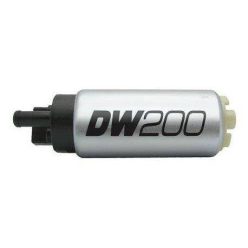
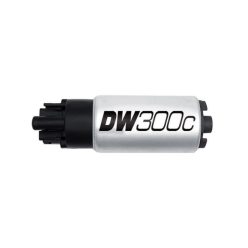
Net price: 223 €
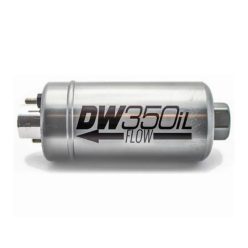
Net price: 260 €
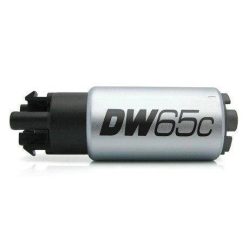



Net price: 691 €

Net price: 580 €

Net price: 187 €

Net price: 75 €
DeatschWerks Universal Fuel Pumps – choose by flow, pressure and packaging for your build
DeatschWerks Universal Fuel Pumps are for builds where selection is driven by flow, operating pressure and installation format rather than a vehicle-specific part number. This is common on upgraded EFI setups, conversions and track-oriented fuel systems where you want predictable headroom.
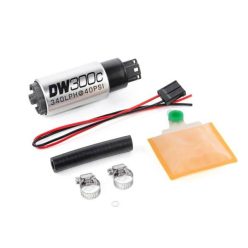
The range shown here spans different formats and outputs, roughly 165–440 LPH, from compact DW100-type replacements up to high-flow DW440 options, with a dedicated low pressure lift pump also listed.
Technical Basics
Focus on real flow at your operating pressure, because flow changes with pressure: the DW200 page references 255 LPH at 40 PSI and 185+ LPH at 80 PSI, while the DW350iL lists 350 LPH at 40 PSI and 295+ LPH at 80 PSI.
DeatschWerks offers both in-tank and in-line layouts: the DW400 is described as an in-tank pump with 415 LPH at 40 PSI and a 46 mm diameter, which matters for hanger/module fitment and clearance.
Fuel compatibility is model-specific: the DW100 description notes ethanol blends up through E25, whereas the DW400 mentions suitability for pump gas, E85 and race fuels. Always treat the product page notes as the final reference before ordering.
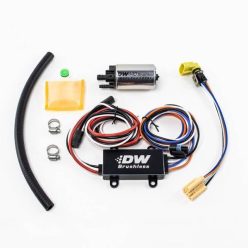
Control strategy can also be part of the decision: the DW400 description mentions compatibility with PWM pump drivers, while the DW440 is described as a brushless in-tank pump with an included controller that accepts 8–22 V DC input and supports multiple control configurations.
Selection Criteria
Start with packaging: decide whether an in-tank pump is feasible (often cooler/quieter) or an in-line pump is more practical for access and service. The DW350iL is an in-line option and the listing highlights AN-8 fittings, so confirm your line size and routing plan up front.
Then match flow to pressure: use the 40 PSI vs 80 PSI figures (where provided) to avoid choosing a pump that looks big on paper but falls short at your real operating point. If you need higher headroom, the catalogue includes DW400 (415 LPH) and DW440 (440 LPH at 40 PSI) directions.
If you run ethanol blends, don’t assume every pump has the same rating: DW100 notes E25 blend compatibility, while other models (such as DW400) explicitly mention E85. Ethanol typically increases demand, so plan extra margin and filtration quality accordingly.
Check the electrical side: product pages list voltage windows such as 6–18 V (DW200) and 8–18 V (DW350iL). Proper wiring, relay control and a solid ground help keep voltage stable under load, which supports consistent pump output.
Installation & Maintenance
Install for low restriction and leak-free joints: avoid tight bends, match fittings correctly, and ensure seals sit properly. Some models (for example DW400) are described as shipping with a universal fitment kit including hose, clamps, an electrical harness and a filter, which can simplify planning.
After installation, verify fuel pressure and check for leaks, then re-check fittings after the first heat cycles. If you use PWM control, confirm the driver strategy matches the pump’s stated compatibility and that wiring is sized for the expected load.
For troubleshooting, pressure fluctuation, hesitation under load or unusual noise often points to filters or electrical contacts rather than the pump itself. Inspect filtration, grounds and connectors before concluding the pump has failed.
FAQ
Which DeatschWerks pump should I consider for high flow around 40 PSI?
Check product pages for the 40 PSI flow figures and match the format to your layout. Options in this range include DW400 (415 LPH) and DW440 (440 LPH at 40 PSI), but your final choice depends on in-tank vs in-line packaging and your plumbing.
Are DeatschWerks pumps suitable for E85?
It depends on the specific model: DW400 mentions E85, while DW100 references ethanol blends up through E25. Always follow the fuel compatibility notes on the product page and plan extra headroom and filtration when running ethanol.
What does PWM compatibility mean on a fuel pump listing?
PWM (pulse width modulation) control varies pump speed, which can reduce heat and noise at lower demand. If your system uses PWM, confirm the pump is stated as compatible and that your driver settings and wiring are correct for stable pressure control.
Why choose the DW440 brushless pump with a controller?
The DW440 is described as a brushless in-tank pump with an included controller that accepts 8–22 V DC input and supports multiple configurations. In practice, that means the controller and power strategy are part of the product choice, not just the pump body.
What voltage supply should I plan for DeatschWerks pumps?
Product pages reference ranges such as 6–18 V (DW200) and 8–18 V (DW350iL). Maintain stable voltage at the pump with a relay, correct fusing, appropriate wire gauge and good grounding to support consistent output.
Filter the list, confirm specifications on the product page, and choose the DeatschWerks pump that matches your build.
