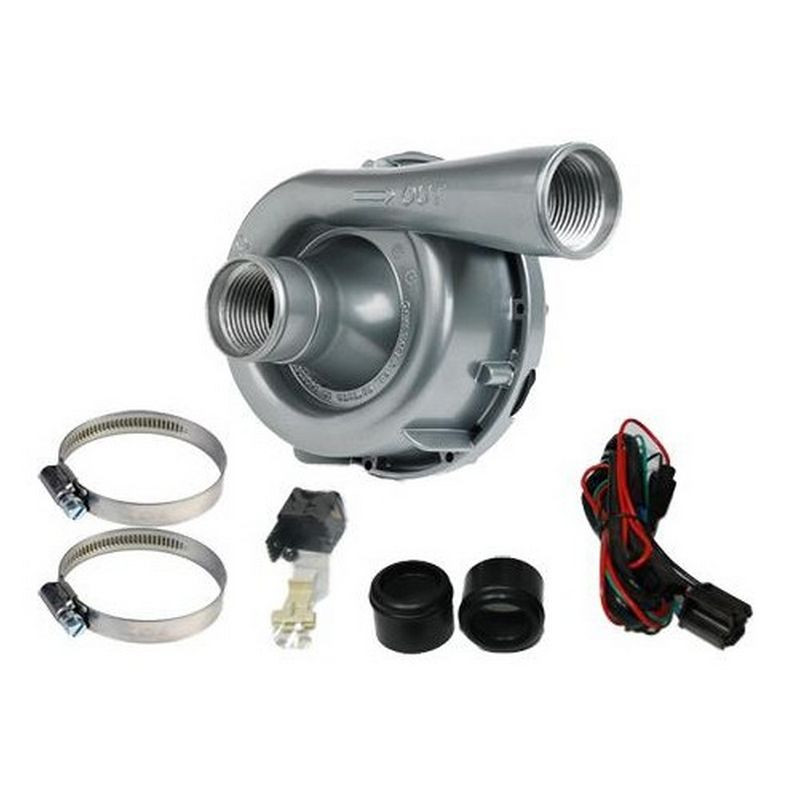
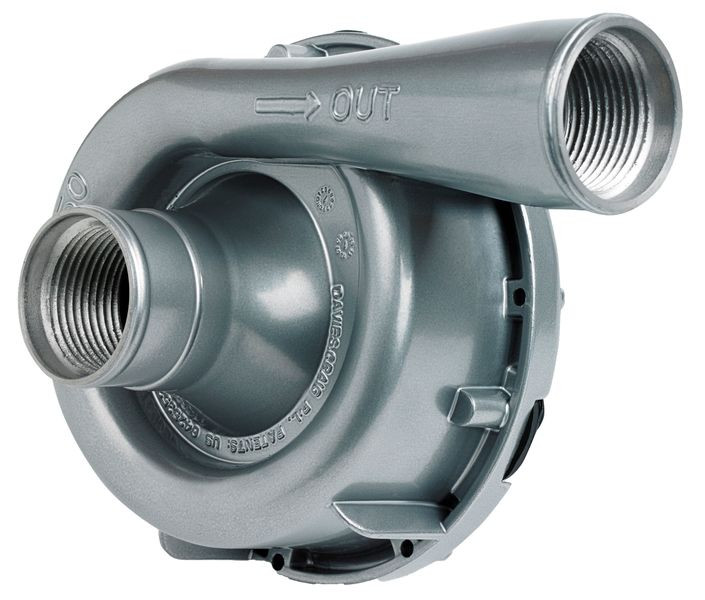
Davies Craig EWP150 (Alu) Electric Water Pump Kit (12V) - 8060
Davies Craig EWP150 alloy electric water pump kit for 12 V systems, with 162 L/min max flow at 13 V. 3–15 V DC operating range, 10 A max current, 35–51 mm hose size compatibility. Kit includes a basic wiring harness with 10 A fuse and a 12 V 40 A relay.

Net price: 188 €
Key Features & Benefits – Davies Craig EWP150 Alloy Electric Water Pump Kit 12V
The Davies Craig EWP150 Alloy Electric Water Pump Kit 12V is a remotely mounted electric water pump kit designed to support coolant circulation. It fits 35–51 mm hose sizes and can be used to complement or replace an existing mechanical water pump.
Published figures include 162 L/min maximum flow at 13 V DC and an operating range of 3–15 V DC. The kit includes a basic wiring harness (with a 10 A fuse) and a 12 V 40 A relay to support a planned electrical installation.
When is this useful?
It suits cooling systems where you want an inline, remotely mounted pump to maintain coolant flow, including higher heat-load engines and water-to-air intercooler circuits.
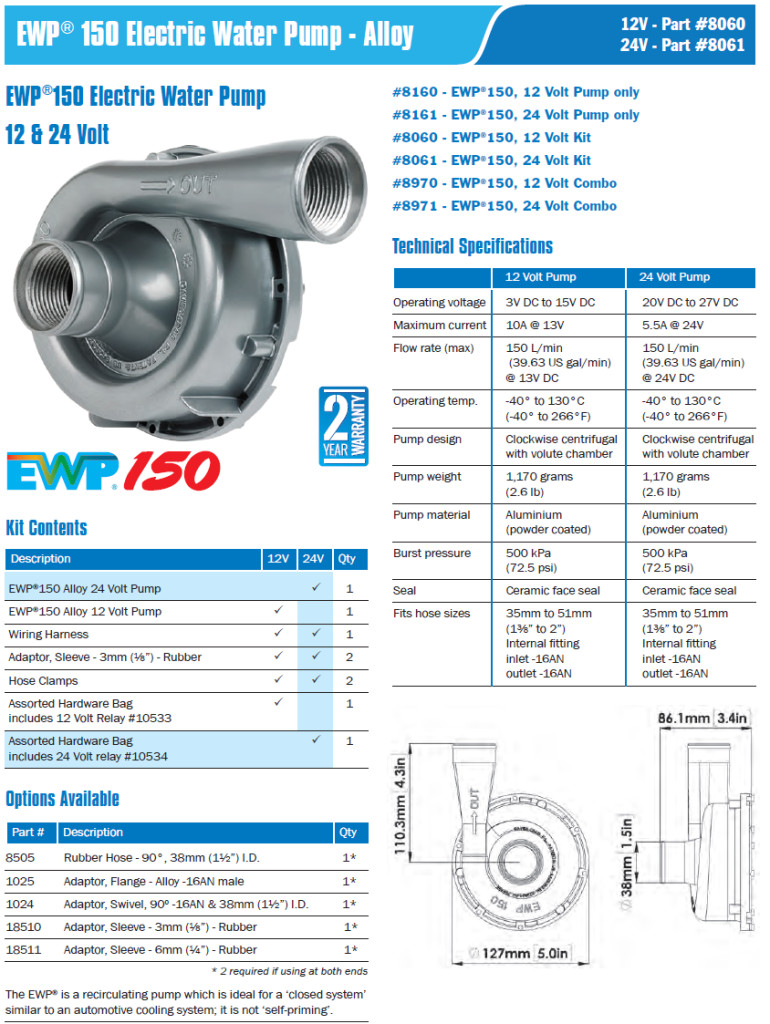
Technical specs
- System voltage: 12 V
- Operating voltage: 3 V DC to 15 V DC
- Maximum current: 10 A @ 13 V
- Flow rate (max): 162 L/min (42.8 US gal/min) @ 13 V DC
- Operating temperature: -40° to 120°C (-40° to 248°F)
- Pump design: clockwise centrifugal with volute chamber
- Pump material: aluminium (powder coated)
- Pump weight: 1,170 grams (2.6 lb)
- Burst pressure: 500 kPa (72.5 psi)
- Seal: ceramic face seal
- Self-priming: No
- Fits hose size: 35 mm to 51 mm (1.38" to 2")
- Push-on fitting size: 38 mm (with 3 mm sleeve: 44 mm; with 6 mm sleeve: 51 mm)
- Internal fitting: -16AN ORB (inlet & outlet)
- Kit contents: EWP150 alloy pump (1 pc), basic wiring harness with 10 A fuse (1 pc), hose clamps (2 pcs), 12 V 40 Amp 5-pin relay with resistor protection (1 pc), installation hardware
Selection & installation tips
- Hose size check: confirm your hose ID fits the 35–51 mm range and matches the 38 mm push-on spigots.
- Connection choice: decide between push-on hose routing or -16AN ORB screw-in fittings for your layout.
- Placement: as it is not self-priming, plan mounting so the pump remains flooded with coolant at rest.
- Electrical load: size switching and wiring for the 10 A maximum current and use the supplied 40 A relay and fuse.
- Bleeding: bleed the system before first run, then check for leaks and verify flow through the circuit.
Before installation, verify hose size, chosen connection method and mounting position, then compare your measurements to the technical specs listed above.

Net price: 188 €