
The CL Brakes brake pads category (formerly Carbone Lorraine) brings high-performance sintered compounds for serious track-day and racing applications. The core of the range is the RC5+ compound, ideal for light cars, low-grip conditions and mixed road/track use, while additional mixes such as RC6, RC6E, RC8 and RC8R target full competition. These pads deliver a firm pedal, strong modulation and high friction from cold, yet remain relatively kind to brake discs.
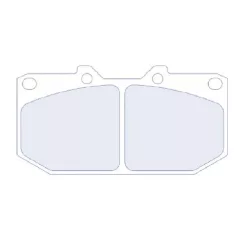
Net price: 262 €
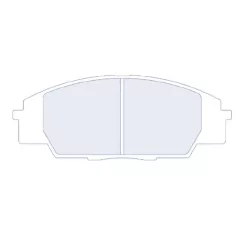
Net price: 254 €
CL Brakes brake pads for track and competition
The CL Brakes brake pads line is built around sintered metal technology developed for demanding industrial and motorsport use. The brand – previously known as Carbone Lorraine – supplies friction materials for everything from mountain bikes to high-speed trains, and the same know-how is applied to performance car pads. The RC5+ compound already offers strong bite from cold and maintains its friction level at high temperatures, making it suitable for cars like Subaru Impreza, Nissan Skyline or Mitsubishi 3000GT used on the track. A key design goal is to provide high friction and a stiff, confidence-inspiring pedal without sacrificing disc life or requiring complex bedding procedures.
The CL Brakes range covers several compounds with different average coefficients of friction and wear characteristics. RC5+ sits around µ≈0.4 and is optimised for light cars and low-grip conditions such as wet tarmac, gravel or road tyres. RC6 and RC6E step up the friction level and thermal capacity, suiting sprint and endurance racing where repeated heavy stops are the norm. At the top of the tree, RC8 and RC8R are intended for high-power, high-grip cars running in top-level series, where maximum stopping power and stability under extreme heat are critical. Thanks to the sintered construction, the pads remain essentially incompressible, which translates into a short, firm pedal and precise modulation throughout a session.
Technical Basics
CL Brakes brake pads use a sintered metal friction layer bonded to a high-quality backing plate by brazing. This construction offers a very stable coefficient of friction across a wide temperature window, and the pad structure does not “squash” under high pedal forces. The RC5+ compound is tuned for progressive response and easy control, especially useful on the rear axle of lighter cars where fine brake balance is required. RC6 is a versatile race compound, widely used in many disciplines, and can be installed on both front and rear axles. CL emphasises that disc wear remains reasonable because there is minimal material transfer and the pad does not smear onto the rotor.
RC6E (Endurance) is tailored for long-distance racing, combining a good friction level with extremely low pad and disc wear. It delivers a consistent pedal over extended stints, from moderate to very high temperatures, with an easy and predictable bedding process. RC8 is aimed at the most demanding high-performance cars in categories such as WRC, touring cars and powerful GT machinery, where brake temperatures and speeds are extreme. The RC8R version uses the same friction material but adds a grooved backing plate designed to improve heat dissipation and reduce contact area with the caliper pistons. This patented shape helps control brake fluid temperature and is particularly beneficial on cars with well-developed brake ducting.
Selection Criteria
Choosing the right CL Brakes brake pad starts with an honest assessment of how the car is used: daily driving, fast road, regular track days, sprint racing or endurance events. For mixed road and occasional track use, RC5+ is often the best starting point thanks to its effective cold friction, disc friendliness and straightforward behaviour. Drivers who attend track days frequently, or who compete in club-level sprint events, will benefit from stepping up to RC6, which offers higher friction and better thermal stability. For long-distance or endurance racing, RC6E is usually the most cost-effective option over a full season because of its very low wear rate.
Cars running slick or semi-slick tyres, high downforce and powerful engines often demand the more aggressive RC8 or RC8R compounds. These mixes focus on generating the shortest possible braking distances and maintaining consistent performance at extreme disc temperatures. Vehicle weight, brake disc size and ventilation, as well as tyre grip and ABS calibration, all influence the choice: an under-specified pad will fade and lengthen braking zones, while an over-aggressive compound may feel wooden when cold and can be noisy. As a general rule, avoid using pure race compounds on primarily road-driven cars unless you fully understand the trade-offs in comfort, legality and warm-up behaviour.
Installation & Maintenance
When fitting CL Brakes brake pads, the first step is to inspect rotor thickness, surface condition and any signs of cracking or heat checking. High-friction sintered compounds place more thermal and mechanical stress on discs, so worn or marginal rotors should be replaced before installation. Caliper sliding surfaces, pad abutments and guide pins must be cleaned thoroughly, and a suitable high-temperature brake grease applied where specified – never on the pad friction face. Although the manufacturer notes that no complicated bedding-in procedure is required, a short bedding cycle of progressively harder stops with cooling periods is strongly recommended to stabilise the pad–disc interface.
From a maintenance point of view, regular inspection of pad thickness, disc wear and brake fluid condition is essential, especially after hard track use. Discolouration, surface cracking or chunks missing from the pad material are signs of excessive heat and should prompt a closer check or replacement. Because compounds like RC6, RC6E and RC8 can push the system to higher temperatures, a high-boiling-point racing brake fluid and more frequent bleeding are advisable. Mounting hardware such as caliper pins, springs and bolts should be checked for correct torque and any signs of fatigue, particularly on cars that see kerb strikes or rough rally stages. After any major change in pad compound or disc type, always carry out a controlled test drive to confirm pedal feel and stability before committing to full race pace.
FAQ
Which CL Brakes compound is best for track days?
For regular track days, most drivers start with RC5+ or RC6, depending on car weight and tyre grip. RC5+ works well for lighter cars and mixed road/track use, thanks to its predictable modulation and decent cold performance. RC6 is better suited to heavier or faster cars that generate more heat in the brakes during extended sessions.
What is the difference between RC5+, RC6 and RC6E?
RC5+ is a progressive, easy-to-drive compound with a moderate µ-value, ideal for low-grip surfaces and rear-axle applications. RC6 offers higher friction and more aggressive bite, making it a good general-purpose race pad. RC6E trades a small amount of peak friction for very low pad and disc wear, optimised for endurance racing where consistency over many hours matters more than ultimate bite.
When should I choose RC8 or RC8R pads?
You should consider RC8 or RC8R if your car is a high-power, high-grip race machine that regularly sees extreme brake temperatures. These compounds are designed for top-level competition where the shortest possible braking distances and relentless performance are required. RC8R’s grooved backing helps manage heat transfer into the caliper and brake fluid, but it should only be used on cars with effective brake cooling.
Do CL Brakes pads require special bedding-in?
The manufacturer states that CL Brakes sintered pads do not need a long or complicated bedding process, but a structured short bedding cycle is still beneficial. A series of medium to hard stops with cooling periods helps establish a consistent transfer layer on the disc. This improves initial bite, reduces the risk of judder and ensures the pads perform at their best from the start of a session.
Can I use CL Brakes racing pads on the road?
Many CL Brakes shapes physically fit into OE calipers, but legal road use depends on local regulations and the specific compound. RC5+ is the most road-friendly option, while RC6, RC6E, RC8 and RC8R are primarily intended for circuit or rally use and may not be approved for public roads. They can also be noisier and less effective when cold, so they are not ideal for everyday driving.
Are CL Brakes pads harsh on brake discs?
Sintered race pads are usually tougher on rotors than standard road pads, but CL Brakes compounds are engineered to minimise unwanted material transfer. In practice, disc life can be very good compared with other competition pads of similar performance. However, with aggressive compounds such as RC8 or RC8R and very high operating temperatures, high-quality, properly cooled discs remain essential for durability and safety.
