
In Carburettor Parts you’ll find service kits, jets (e.g., main jets and air correctors), plus linkage and fitting items used to restore sealing, fuel metering and repeatable tuning on carburetted setups. The range typically focuses on Weber-compatible items (covering DCOE/IDF/IDA families) and, for certain builds, Dart Machinery adapters/spacers.
Use filters by brand and jet size, sort by price or availability, then open the product page to confirm exact compatibility (carb family, size range and mounting details). Choose what your setup needs and place your order.
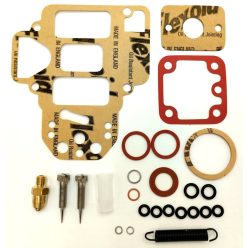
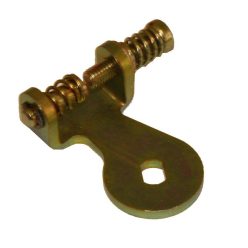

Net price: 25 €

Net price: 119 €

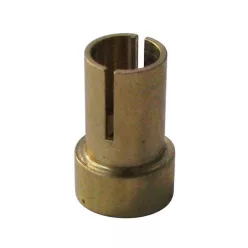
Net price: 3 €

Net price: 70 €
Net price: 40 €
Net price: 70 €
Net price: 38 €
Carburettor Parts – rebuild, fine-tune and keep your carburetted setup consistent
Carburettor Parts are essential when you’re rebuilding an ageing unit, chasing an unstable idle, or making targeted mixture changes after engine modifications. Carburettors are sensitive to sealing, clean fuel supply and correct jetting, so a proper service kit plus the right jet size often delivers the biggest “per euro” improvement in drivability and repeatability.
This category typically includes Weber-compatible parts across common families (DCO/DCOE/DCNL/DCOM/DCO-SP/IDF/IDA), such as main jets and air corrector jets in multiple size ranges, along with linkage pieces and accessories. For specific V8/US-pattern intake builds, Dart Machinery adapters and phenolic spacers may also be relevant where mounting patterns or heat management matter.
Technical Basics
Carburettor fuelling is shaped by several circuits; the main system dominates under load, while progression/idle circuits influence part throttle. The main jet and air corrector (air correction) interact to determine how the mixture evolves as rpm rises, so changing one component can shift behaviour across a wider range than you expect. Rebuild items (gaskets, sealing components) ensure those changes are actually repeatable rather than masked by leaks.
The site’s filtering shows that many jets are offered in broad size steps (for example, 70–290 is a common selectable range on certain air corrector listings). Always compare like-for-like within the same carb family, because a number on its own is only meaningful when the part geometry and standard match. If you’re recording data, a TPS sensor kit can be useful for throttle position logging on suitable carb types.
For installation geometry, phenolic spacers help reduce heat transfer to the carb body, and adapters (e.g., 4150 to 4500 patterns) solve bolt-pattern differences on certain manifolds. These parts can be very effective, but only if you confirm bolt spacing, height, and clearance in your engine bay before ordering.
Selection Criteria
Start by identifying your exact carburettor family (e.g., DCOE, IDF, IDA) and the specific part you’re addressing: rebuild (sealing), metering (jets), or actuation (linkage). A service kit is usually the right move for leaks or ageing seals, while jet changes are for mixture and response adjustments. If you’re unsure, the compatibility section on each product page is the safest reference.
When choosing jets, change one variable at a time and track the result (idle, cruise, full load). Use the available jet size options as controlled steps rather than jumping multiple sizes. For spacers/adapters, assess clearance (air filter height, linkage travel) and confirm the mounting pattern to avoid fitment surprises.
Brand-wise, the category commonly highlights Weber-compatible items and Dart Machinery intake hardware. If you’re replacing parts in an existing system, staying within the same family typically reduces downtime and makes tuning more predictable than switching standards.
Installation & Maintenance
Most post-rebuild problems come from air leaks or contamination. Replace gaskets carefully, ensure mating faces are flat, and keep passages clean before installing any new jet or sealing part. Good filtration on the fuel side is crucial, because tiny debris can block jets and undo your tuning work.
For linkage parts (e.g., balance levers), verify free movement and reliable return to idle. If fitting a TPS kit, pay attention to sensor alignment and range so the signal remains stable across the full throttle sweep. After any change, re-check for seepage and fastener loosening once the engine has heat-cycled.
If your engine specification changes (exhaust, cam, intake), expect that jetting may need a refresh. A consistent baseline (no leaks, clean fuel, correct ignition) is what makes carb tuning logical rather than frustrating.
FAQ
How do I choose the correct rebuild/service kit?
Match the kit to your exact carb family (for example, Weber DCOE vs IDF) because gasket layouts and internal components differ. Use the product page compatibility notes and compare against the markings on your carburettor body. If multiple versions exist, the part number and described fitment are the deciding factors.
What does a main jet change affect?
The main jet primarily influences fuelling under load and at higher airflow levels. It’s worth changing when full-throttle mixture is clearly rich/lean or after engine modifications that alter airflow demand. Make adjustments in small steps and record the outcome.
What is an air corrector jet and when should I change it?
An air corrector helps shape how mixture changes with rpm in the main system. If the engine behaviour shifts mainly in the upper range, this is often a key fine-tuning lever. Only use air correctors specified for your carb family and follow the size range shown on the listing.
Do phenolic spacers always improve performance?
Phenolic spacers can reduce heat soak into the carb, which may stabilise behaviour in hot conditions. However, they also increase carb height and can create clearance or linkage issues. Measure available space and confirm bolt pattern before buying.
Are jets interchangeable between DCOE, IDF and IDA?
Not automatically: even if sizes look similar, interchangeability depends on the family and the specific jet standard. Always follow the compatibility list on the product page for the exact carb types supported. When in doubt, match by family first, then by size.
Why is idle unstable after replacing gaskets or jets?
Common causes are an intake leak, dirt in a passage, or linkage not returning cleanly to idle. Re-check sealing surfaces, cleanliness, and throttle return before adjusting mixture screws. Ignition or valve issues can also present as “carb” symptoms, so confirm the base engine health.
Once you’ve confirmed the correct family and size, select the right Carburettor Parts item and place your order.
