
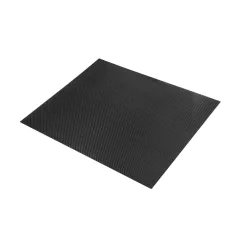
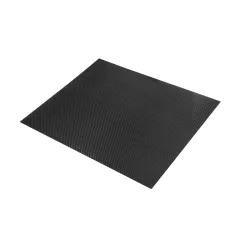
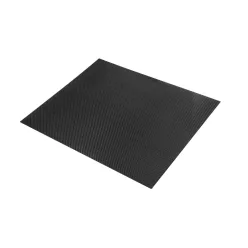
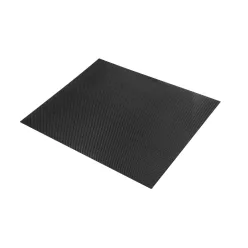
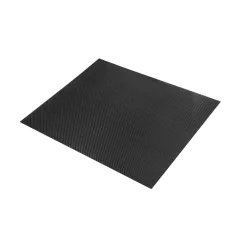
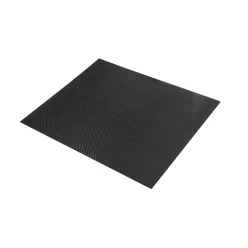
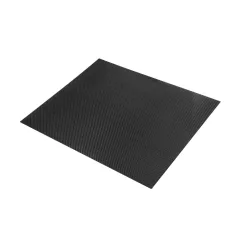
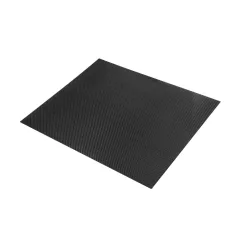
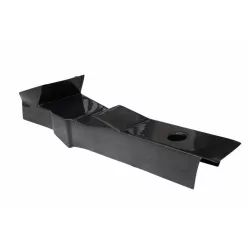
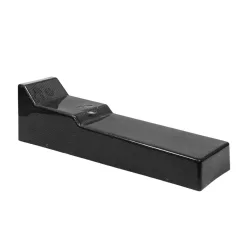
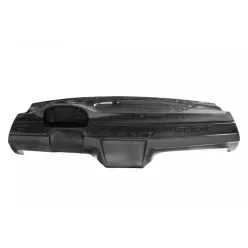
Our Carbon Elements range covers universal carbon sheets (matte/gloss, multiple thicknesses) and vehicle-specific trims such as dashboards and footrests. CFRP delivers high stiffness at low weight, making it ideal for interior panels, brackets and motorsport lightweighting. Select by size, thickness and surface finish to suit your build.
Brief Summary & Key Benefits
Carbon Elements deliver ready-to-fit CFRP parts and sheet material for custom panels, brackets and vehicle-specific trims. Universal carbon sheets (e.g., 50×60 cm) in 1–4 mm thickness are easy to cut and finish, while model-specific panels provide OE-style fit. Benefits include excellent stiffness-to-weight, corrosion resistance and premium matte or gloss surfaces.
Technical Basics
CFRP consists of carbon fibres in an epoxy matrix. Common weaves are 2×2 twill and plain, with multi-directional lay-ups for balanced properties. Surface finishes vary from gloss clear-style coats to matte textures; both benefit from UV-stable lacquer in exposed use. Thickness drives bending stiffness: thicker plates resist flex better; thinner sheets save mass and conform more easily. Note that carbon fibre is electrically conductive, so use insulation near wiring or terminals.
Vehicle-specific dashboards and foot rests typically use reinforced edges and wear-resistant top layers. Rounded edges reduce stress concentration and make trim mating easier.
Common pitfalls include undersized washers causing indentation, poor adhesive prep, excessive thickness where not required and leaving sharp edges that can initiate delamination.
Selection Criteria
Use case: 1–2 mm for covers and cosmetic panels; 2–4 mm for brackets or larger plates. For long spans, add mounting points or local ribs.
Finish: Matte hides micro-scratches; gloss offers a show look—consider UV lacquer for durability.
Size & machining: plan cut-outs and leave 2–3 mm allowance. Cut with fine-tooth saws or diamond tools; deburr and seal edges.
Weight: avoid over-speccing thickness; pair smart lay-up with proper fastener spread to keep mass down.
Model-specific parts: verify year/facelift and mounting scheme. For foot rests, check pedal clearance and carpet thickness to avoid interference.
Installation & Maintenance
Drilling/cutting: always wear eye and respiratory protection. Use low RPM with pilot holes; chamfer and seal holes. Employ large-area washers or rubber spacers to distribute loads.
Bonding: degrease with IPA and use two-part epoxy or structural acrylics. Apply even clamping pressure and respect full cure times.
Surface care: clean with microfibre cloths and mild detergents. Avoid abrasives; for sun-exposed parts, add UV-stable clearcoat. Do not wax matte surfaces to a gloss finish.
Safety: CFRP is electrically conductive; keep clearance from terminals and use insulating shims where needed. Break all sharp edges with a light radius.
FAQ
Q: Which thickness for a bracket?
A: Typically 2–3 mm works for small plates; larger spans may need 3–4 mm or more mounting points.
Q: Matte vs gloss?
A: Matte hides wear; gloss is more show-oriented and may need protective clearcoat.
Q: Edge fraying when cutting—what helps?
A: Use fine-tooth blades, deburr and seal the edge with epoxy or clearcoat.
Q: Can I fasten directly to metal?
A: Yes, but use large washers/spacers to avoid point loads on the laminate.
Q: Heat resistance?
A: Epoxy matrices tolerate moderate heat; near hot zones add heat shielding or spacing.
