
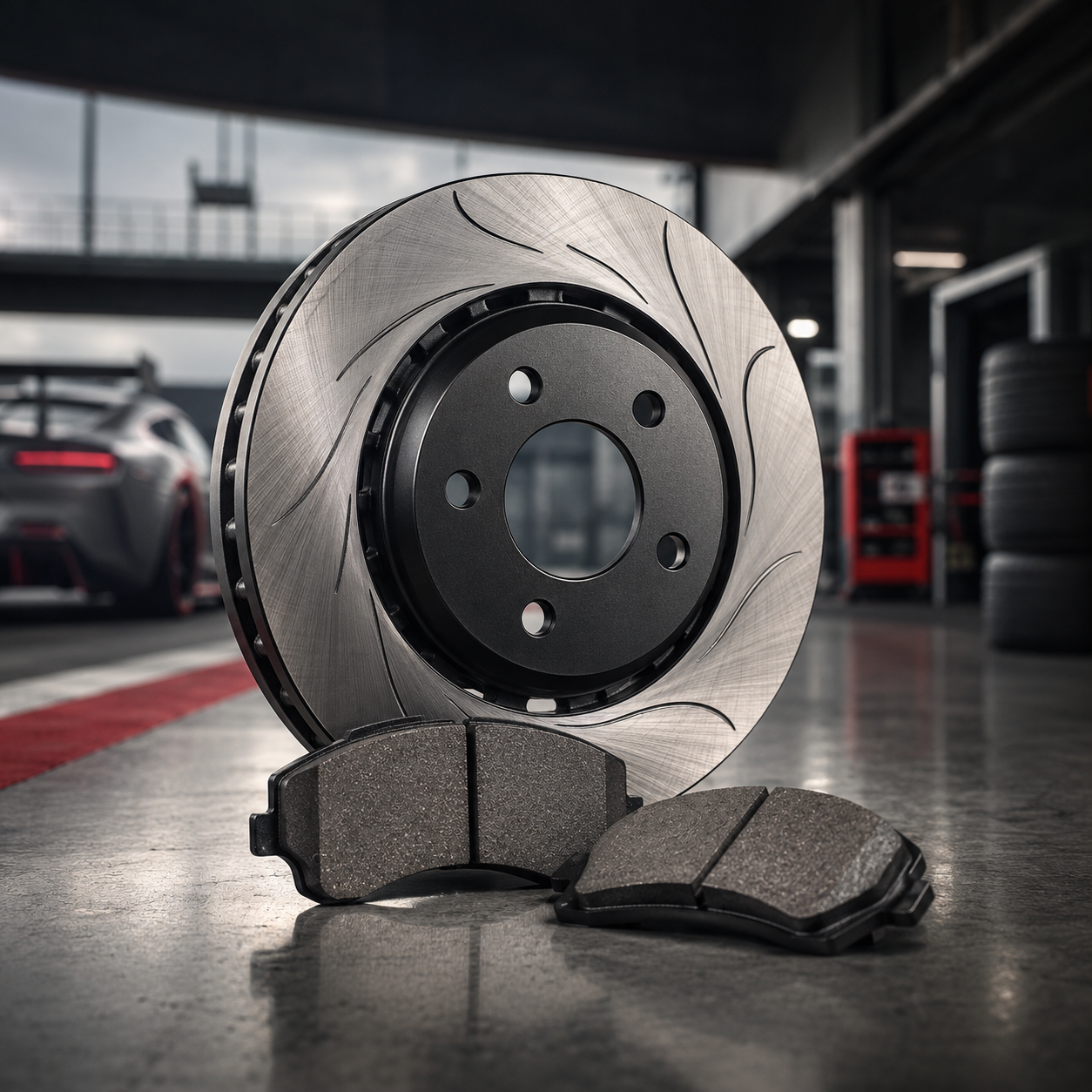
Brake Pad Selection: 7 Costly Mistakes to Avoid on Road and Track
Effective brake pad selection is not about buying the most aggressive compound available. Vehicle mass, tyre grip, disc capacity, cooling and real driving conditions determine which pad will remain safe and predictable. A road pad may overheat during repeated track use, while a race pad can be awkward when cold. The target is consistent braking, clear modulation and a wear pattern that can be monitored.
This guide is written for road cars, fast-road builds and track-day vehicles. It explains the warning signs of a poor match, a logical diagnostic process, correct bedding principles and the checks worth completing before you place an order.
Brake pads work in one of the hottest and most demanding areas of the car. They are still only one part of a larger system. Real stopping performance depends on the pad, disc, caliper, fluid, tyre and cooling arrangement working together. A more expensive compound is not automatically a better match.
What is a brake pad compound?
A brake pad uses a formulated friction material made from several components. The exact recipe differs between manufacturers. For the driver, the key characteristics are the working range, friction response, modulation, wear rate, noise and effect on the disc.
Road compounds must provide dependable response from cold. Low noise, manageable dust and predictable first applications also matter. Track compounds place greater emphasis on stability during repeated heat cycles and consistent performance over a session.
Many products sit between these two groups. Fast-road and track-day pads offer different compromises. The same compound may work well in a light car but become overloaded in a heavier, faster vehicle.
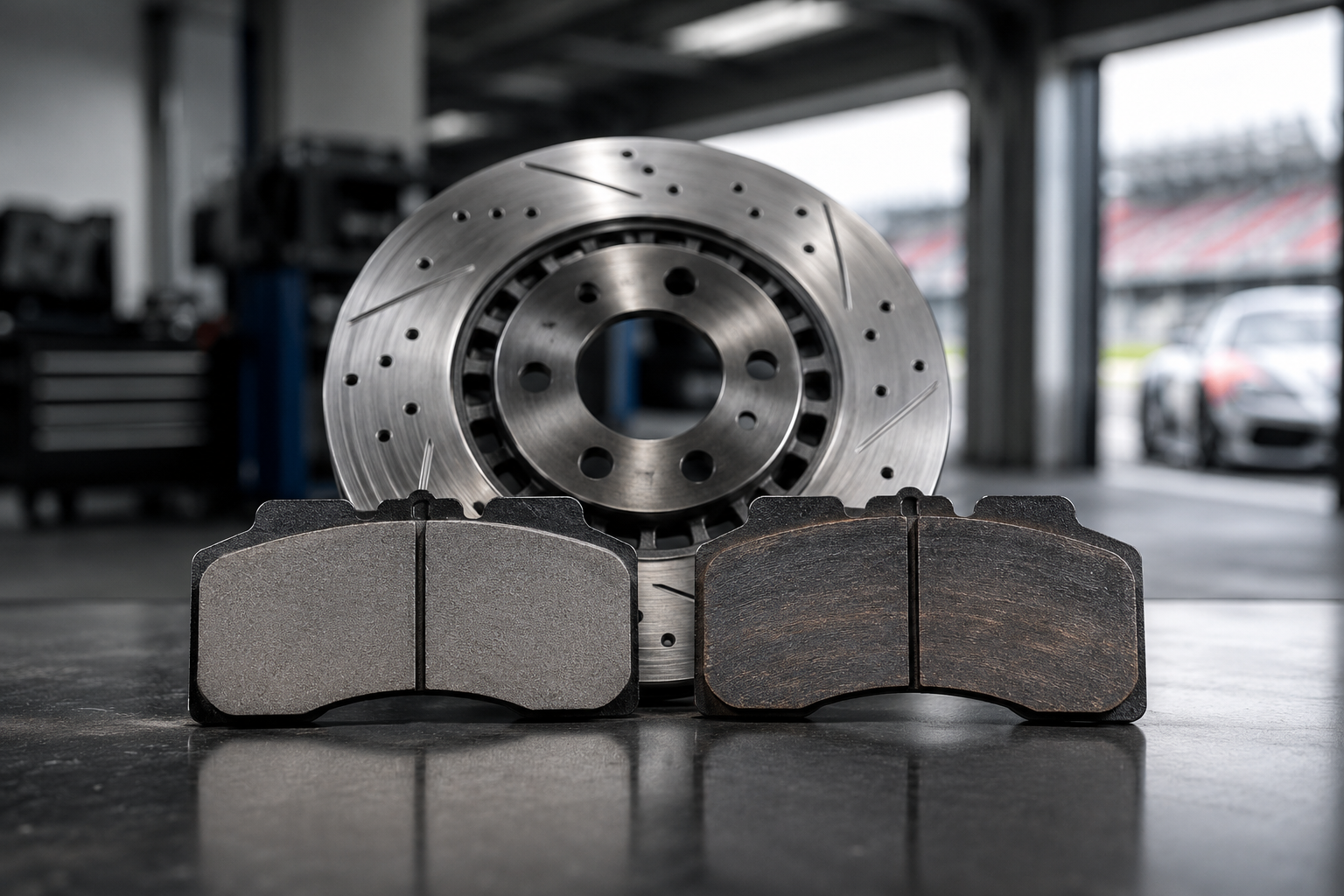
How should you approach brake pad selection?
Good brake pad selection begins with an honest description of the car’s real use. Do not choose from engine power or appearance alone. Consider braking speed, frequency, session length and the time available for cooling.
1. Define the operating environment
- Daily road use: dependable cold response, progressive feel and durability.
- Fast-road driving: greater heat tolerance without losing useful cold performance.
- Track days: repeatable braking across several demanding laps.
- Competition: a compound matched to the discipline, tyre, stint and braking system.
A road car attending one circuit event each year needs a different compromise from a dedicated race car. The manufacturer’s intended-use guidance should outweigh a general recommendation taken from another vehicle.
2. Account for mass and braking speed
Higher vehicle mass and higher entry speed create more heat during deceleration. Engine output is only an indirect factor. What matters is the speed being removed and how closely the braking zones follow each other.
A light car with effective airflow can remain stable on a modest setup. A heavy performance road car may create far more thermal load on the same circuit.
3. Consider tyre grip
A high-grip tyre can transmit more braking force to the road. That increases the load placed on the pad and disc. After fitting a semi-slick, a previously suitable road pad may begin to overheat or wear quickly.
4. Inspect the disc and caliper
Disc diameter, thickness, material and condition all influence heat capacity. Caliper stiffness and free piston movement matter as well. No friction compound can correct a sticking caliper or a disc with an uneven wear pattern.
7 signs of incorrect brake pad selection
1. Braking drops when hot, but the pedal stays firm
This may indicate that the pad has exceeded its useful thermal range. The pedal remains positive, yet the car needs more pressure or distance to slow down. This behaviour is commonly described as pad fade.
Separate it from a hydraulic problem. A pedal that becomes longer, softer or spongy points more strongly towards overheated fluid, trapped air or another hydraulic fault.
2. The brakes feel uncertain when cold
A circuit-focused compound may need more pedal effort during its first cold applications. Initial response can feel weak or inconsistent. This is particularly inconvenient on short journeys, in rain or during colder weather.
3. The friction surface looks shiny or glazed
A smooth, hard and reflective surface can indicate glazing. Incorrect bedding, overheating or prolonged light braking may cause it. Braking performance can fall, and squealing may appear.
Sanding the surface is not always a lasting repair. Identify the cause first. Then inspect the disc and follow the pad manufacturer’s instructions.
4. The brakes judder after hard use
Drivers often describe every vibration as a warped disc. The real cause may be uneven material transfer, poor bedding, overheating or an installation error.
Check disc runout, thickness and surface condition. Inspect hub cleanliness and caliper operation as well. A new pad set alone may not prevent the fault from returning.
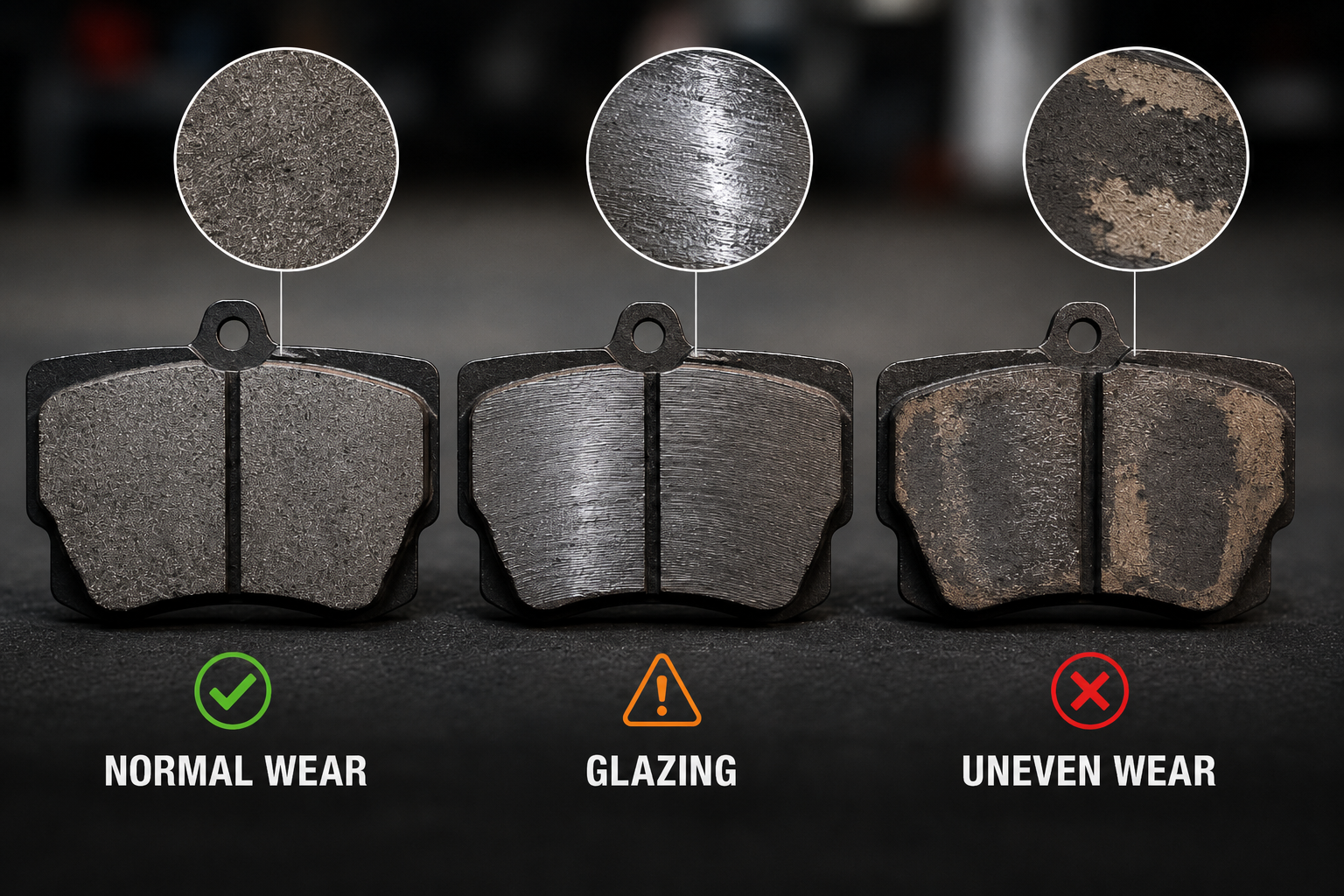
5. Pad wear is unusually rapid
Rapid wear can point to insufficient heat capability or poor cooling. Long sessions, high vehicle mass and a binding brake component can produce the same symptom.
Compare the inner and outer pads. Inspect both sides of the vehicle. An uneven wear pattern often reveals more than the remaining friction depth alone.
6. Noise and dust do not suit the application
Some performance and competition compounds naturally create more noise and dust. That is not automatically a defect. On a road car, however, it may show that the chosen pad is unnecessarily aggressive.
Squeal can also come from vibration, contamination or incomplete bedding. Missing damping parts and caliper faults are other possibilities. Sound alone cannot provide a reliable diagnosis.
7. Brake behaviour changes from lap to lap
When the brakes feel strong on one lap and weak on the next, inspect the complete system. Fluid, disc condition, airflow, tyre behaviour and driving technique may all contribute.
The strongest initial bite is not always the best circuit characteristic. A stable and progressive response may be more valuable throughout a full session.
Road, fast-road or track pads?
A road compound should build useful friction from cold. It should remain easy to modulate in normal traffic and require no special warm-up. Noise, dust and disc wear are also important ownership factors.
A fast-road compound can add thermal margin for mountain roads and occasional circuit use. That does not mean it is designed for long, repeated track sessions. During brake pad selection, work from the highest load the car will genuinely experience.
Track-day and race pads show their main advantage under higher thermal demand. They may require more effort when cold. They can also create more noise, more dust and greater disc wear.
Why does brake pad bedding matter?
The new pad and disc surfaces need to establish correct contact. A suitable bedding process helps create an even friction layer. This can improve modulation and reduce the risk of judder.
The exact procedure varies by compound. Always follow the manufacturer’s bedding instructions. Controlled applications and suitable cooling are commonly required.
Avoid immediately making repeated stops to a standstill with a new pad. Do not hold a very hot brake in one position for an extended period. This can encourage uneven deposits.
Common mistakes and misconceptions
“The most aggressive race pad is always better”
Not necessarily. A compound designed for extreme heat may never reach a useful condition on the road. Effective brake pad selection is a matching process, not a ranking contest.
“A soft pedal means I need a stronger pad”
A soft or long pedal is rarely solved by pad compound alone. Air, degraded fluid, hose expansion, caliper movement or another mechanical fault may be responsible.
“More initial bite always means a shorter stop”
Initial bite is only one part of brake feel. Tyre grip, ABS behaviour, road conditions and modulation all influence the real stopping distance.
“Any front and rear compounds can be combined”
Different compounds can alter brake balance. Some vehicles benefit from a deliberate front-to-rear split. The combination must still suit the system layout and manufacturer guidance.
Checks to complete before ordering
- Confirm the exact vehicle, model year and caliper type.
- Define the real use: road, track day or competition.
- Consider vehicle mass and typical braking speed.
- Identify the tyre type and available grip.
- Inspect disc condition, dimensions and compatibility.
- Check fluid age and whether the system has been bled correctly.
- Consider session length and available brake cooling.
- Read the manufacturer’s use and bedding guidance.
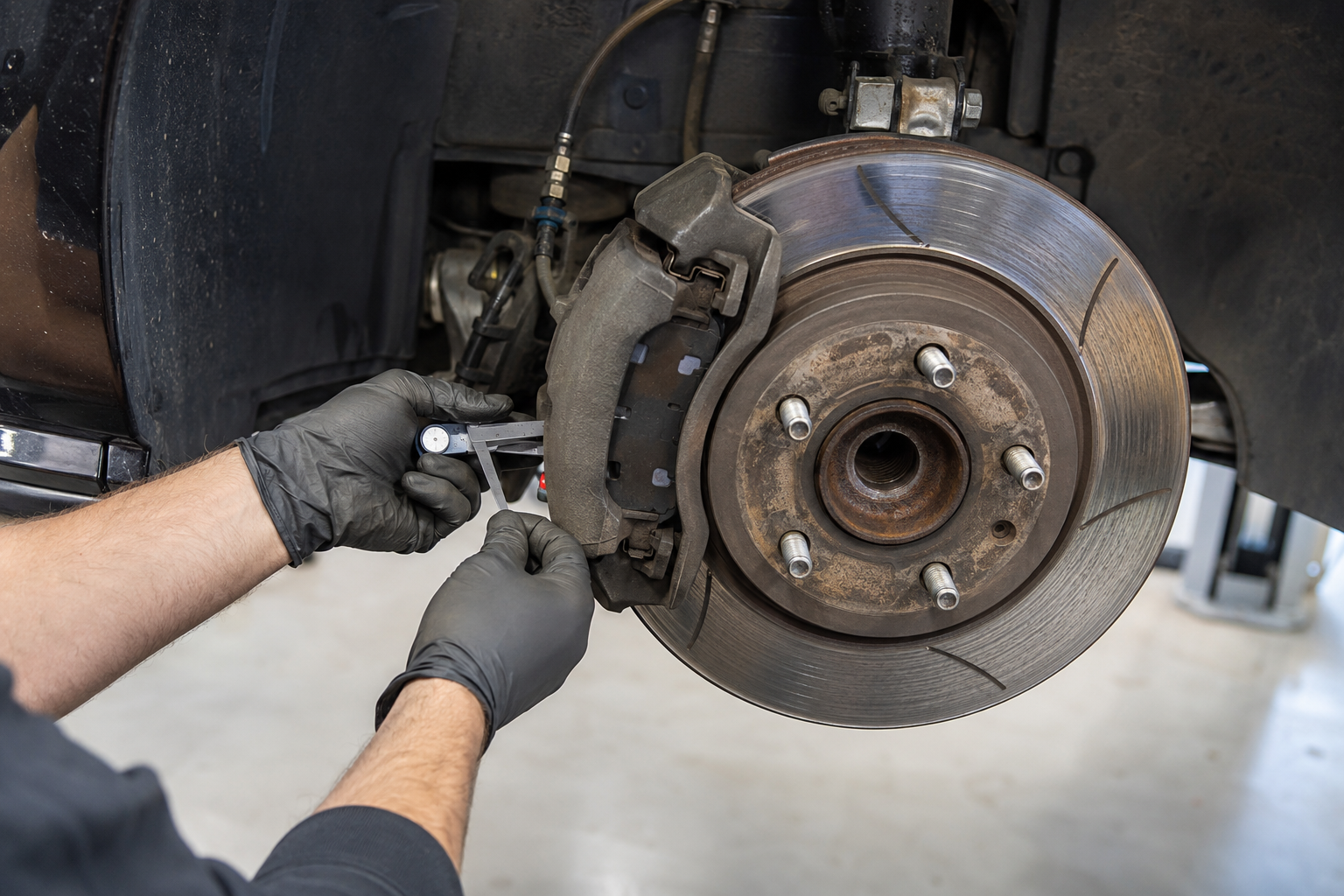
Where practical, avoid changing several parts at the same time. A single-variable approach makes the result easier to understand. After a track event, record pad wear, pedal feel and any change in braking behaviour.
Brake pad selection FAQ
Can track pads be used on the road?
Some can, while others are unsuitable or not approved for road use. Check the product classification, cold response and applicable local requirements.
Are new pads enough before a track day?
Not always. Fluid, discs, calipers, hoses and cooling are equally important. The weakest part of the system limits repeatable braking performance.
Why do new brake pads squeal?
The compound, incomplete bedding or an installation issue may be responsible. Contamination, vibration and caliper faults can create the same symptom.
When should brake pads be replaced?
Remaining thickness is only one factor. Cracking, glazing, uneven wear, heat damage and structural condition must also be assessed.
Conclusion: choose the pad that fits the system
The right pad matches the vehicle’s mass, tyres, discs and real operating conditions. The target is consistent pedal feel, stable braking and a wear pattern that can be monitored. Reliable brake pad selection therefore starts with the complete system.
Explore the related category and inspect the braking system before ordering. The LLRacing range includes components for several levels of use:
- road and fast-road brake pads;
- track-day and competition brake pads;
- high-performance brake fluids;
- braided brake hoses and fittings;
- brake installation and maintenance accessories.
When asking for advice, provide more than engine output. Vehicle mass, caliper type, disc size, tyre and typical session length support a far more accurate recommendation.
