
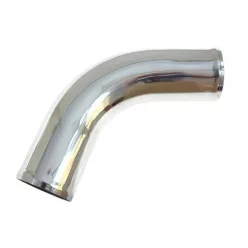
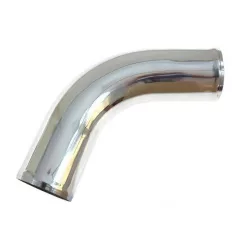
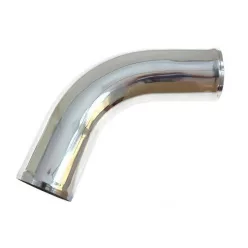
Our Aluminium 67° Elbow Pipes are lightweight, weldable or clamp-on bends for intake and intercooler plumbing. They cover popular diameters (approx. 35–70 mm) with a typical 300 mm leg length, helping you achieve neat, flow-friendly routing in tight bays. At 67° these elbows split the difference between 45° and 90°, reducing joint count while keeping packaging compact.

Net price: 9 €

Net price: 19 €

Net price: 6 €

Net price: 7 €
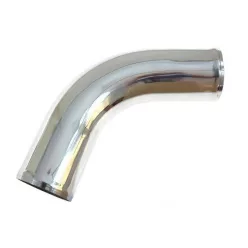
Net price: 7 €
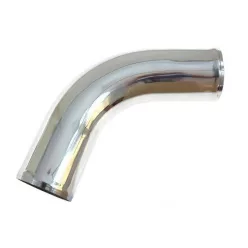
Net price: 8 €
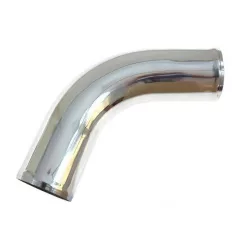
Net price: 8 €
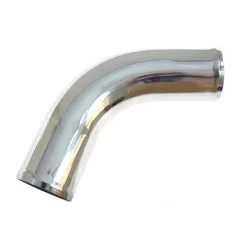
Net price: 9 €
Net price: 9 €

Net price: 9 €
Net price: 14 €
Net price: 9 €
Brief summary & key benefits
Aluminium 67° Elbow Pipes fill the gap between 45° and 90°, delivering a substantial direction change while keeping packaging tight and pressure losses modest. They’re ideal around inner wings and strut towers, or whenever you want to replace multiple smaller angles with a single, tidy bend. Typical options span 35–70 mm diameters with about 300 mm legs, giving enough trimming freedom for precise fitment. Lightweight aluminium reduces loads on brackets and clamps and offers clean, corrosion-resistant cold-side plumbing.
Technical Basics
These elbows are designed for the intake/intercooler side, not for exhaust heat. A 67° bend lowers joint count versus stacking smaller angles, which helps reduce potential leak points. Smooth internal surfaces and well-aligned joints preserve air velocity. Common nominal sizes include 35 mm, 40 mm, 45–51 mm, 57 mm and 63–70 mm; the typical leg length is around 300 mm. Pair with quality silicone couplers and stainless clamps; aim for step-free transitions at the joints. Because aluminium has high thermal conductivity and relatively low stiffness, avoid over-tightening clamps that could ovalise the tube.
Selection Criteria
Diameter: match turbo, intercooler and throttle-body stubs. Undersizing restricts, oversizing can reduce air velocity. Angle strategy: a 67° elbow can replace a 45° plus a short 30° section; two 67° elbows with a short straight approximate 134°, while a 67° + 45° combo yields ~112°. Choose the configuration that keeps joints accessible and packaging neat. Leg length: about 300 mm provides trimming room for couplers, MAP/IAT bosses or joiners. Wall gauge: light gauges suit most cold-side runs; go heavier for long unsupported spans or harsh usage. Material pairing: avoid aluminium–steel contact in the same joint to minimise galvanic effects; isolate with silicone/EPDM where needed.
Installation & Maintenance
Plan the route, mark cut points, then deburr and degrease thoroughly. Add a light edge chamfer so silicone couplers slide on without damage. Align the elbow so there’s sufficient straight length behind the clamps. Tighten clamps evenly and stop before deformation. If welding, account for aluminium’s higher thermal expansion and conductivity; use solid fixturing and controlled heat input. Pressure- or smoke-test the assembly and re-torque clamps after initial heat cycles. Periodically inspect mounts, heat shielding and potential chafe points near panels or looms.
FAQ
Is a 67° elbow suitable for the exhaust side?
No—use stainless steel for hot sections; aluminium is intended for the cold side.
Which diameters are typical?
Usually 35–70 mm; choose to match your hardware stubs.
What leg length do these elbows have?
Around 300 mm, giving good trimming allowance.
Should I clamp or weld?
Cold-side systems typically use silicone couplers and clamps; weld only when fixed geometry is required.
Why is my joint leaking?
Common causes are burrs, angled cuts or undersized/low-quality clamps. Re-cut square, deburr and tighten evenly.
When is 67° better than 45° or 90°?
When you need more turn than 45° without the sharper path and packaging of a 90° bend.
