
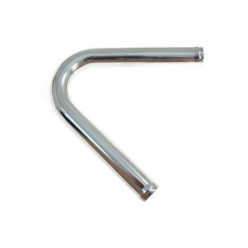
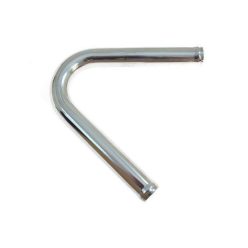
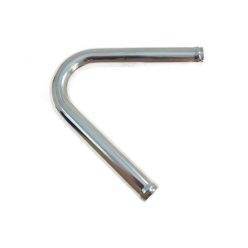
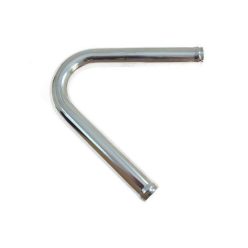
Our Aluminium 135° Elbow Pipes are lightweight, weldable or clamp-on bends for intake and intercooler fabrication. Offered in popular diameters (approx. 25–46 mm) with a typical 300 mm leg length, they allow neat routing in tight bays. Aluminium saves weight and resists corrosion—great for street builds and workshop projects.

Net price: 11 €

Net price: 11 €

Net price: 11 €

Net price: 11 €
Net price: 12 €
Net price: 12 €
Net price: 12 €
Net price: 12 €

Net price: 14 €
Brief summary & key benefits
Aluminium 135° Elbow Pipes provide a large direction change on the cold side while keeping packaging compact. A 135° bend is perfect when 90° isn’t enough and a 180° U-bend would be excessive. With lightweight aluminium construction, these elbows reduce load on brackets and clamps, and their smooth interiors help maintain air velocity. Typical options cover ~25–46 mm diameters with around 300 mm legs for trimming freedom.
Technical Basics
Designed for intake and intercooler plumbing, aluminium elbows offer good corrosion resistance and low mass. The 135° geometry achieves a significant turn between straight runs, often replacing multiple smaller bends and reducing joint count. Common nominal sizes include 25 mm, 28 mm, 32 mm, 40 mm and 46 mm; the typical leg length is about 300 mm. They pair with silicone couplers and stainless clamps—match outside diameters to avoid internal steps.
Note: aluminium is not intended for exhaust temperatures. For hot sections use stainless steel. Avoid mixing dissimilar metals in the same joint; otherwise galvanic corrosion can occur. Where different materials must be joined, use silicone/EPDM couplers to isolate the parts.
Selection Criteria
Diameter: size to the turbo, intercooler and throttle-body stubs. Undersizing increases restriction; oversizing may reduce air velocity. Geometry: a single 135° elbow can replace several small angles, but check clearances so the pipe doesn’t touch bodywork. Leg length: around 300 mm is typical and offers enough trimming allowance; add a straight if you need more room for couplers or sensors. Wall gauge: light gauges suit most cold-side work; choose heavier walls for long unsupported spans or harsh use.
Couplers & clamps: use quality silicone couplers and stainless T-bolt or W-series clamps. Poor clamps can ovalise the tube and cause leaks. Mind tolerances—“same size” from different brands may differ slightly.
Placement: a 135° bend is handy around the intercooler end tanks, inner wings and strut towers, or when steering the charge pipe from the turbo towards the throttle body. Leave enough straight length for clamps and ensure heat shielding and clearance to looms, hoses and panels.
Installation & Maintenance
Mark cut lines, then deburr and clean both inside and outside edges. Add a light chamfer to protect silicone as it slides on. Tighten clamps evenly and stop before deforming the tube. If you must weld aluminium, account for higher thermal expansion and conductivity; secure alignment and control heat input. After assembly, pressure- or smoke-test for leaks and re-torque clamps after the first heat cycles. Inspect mounts and potential chafe points periodically; add protective tape or rubber isolators where needed.
FAQ
Can I use these on the exhaust side?
No—choose stainless steel for hot sections; aluminium elbows are for cold-side plumbing.
What diameters are typical?
Common sizes are roughly 25–46 mm; match your hardware stubs.
What leg length do they have?
Usually around 300 mm, giving flexibility for trimming and fitment.
Clamp or weld?
On the cold side, silicone couplers and clamps are standard; weld only when fixed geometry is required.
Why is my joint leaking?
Often due to burrs, angled cuts or undersized/low-quality clamps. Re-cut square, deburr and retighten.
