
Our Acceleration & Lap Timers include precise GPS/GNSS data loggers, displays and accessories for track days and testing. Predictive lap timing shows live deltas by sectors, while external GPS antennas, robust mounts and dedicated cables ensure stable signal and secure installation. Pick the right combination of screen, logging and mounting options for your use case.
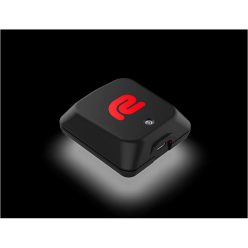
Net price: 178 €
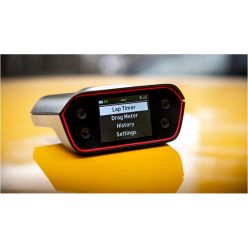
Net price: 331 €


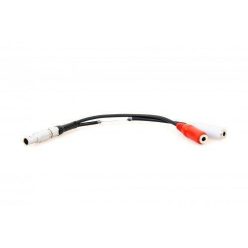
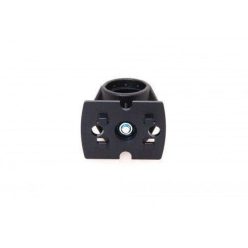

Net price: 192 €


Net price: 1 145 €

Net price: 147 €


Brief Summary & Key Benefits
Acceleration & Lap Timers turn seat time into measurable progress. Using multi-constellation GPS/GNSS, they compute position and speed precisely, while predictive timing shows live delta against your best. Logged data—time, speed, acceleration and sometimes CAN signals—enable post-session analysis of lines, braking and throttle. Accessories such as external GPS antennas, sturdy mounts and power solutions keep the system reliable.
Technical Basics
Modern units track multiple satellite systems (GPS, GLONASS, Galileo) to improve coverage and stability. Higher sampling rates (e.g., 10–20 Hz) generate denser traces for smoother speed and position curves. Predictive displays compute a running delta to your reference lap, often with sector gates, so you instantly see gains and losses. Some loggers add an on-board IMU and vehicle CAN inputs for deeper insight.
Signal quality depends on antenna placement; a roof-mounted or dash-top external antenna with clear sky view reduces dropouts, especially under roll-cages or heated windscreens. Many systems support video overlay, embedding lap timing and channels into footage for easier review and coaching.
Selection Criteria
Use case: for simple lap timing and basic review, a display unit may suffice. For frequent track work or development, choose a data-logging model with robust export. Drag or drift applications may prioritise start/finish logic and flexible sectoring.
Display & feedback: prioritise sunlight-readable contrast, clear delta scale and optional LED/audio cues. Adjustable sector gates help compare lines precisely.
Sampling & sensors: higher update rates produce cleaner traces. IMU and CAN channels enable correlation with driver inputs and vehicle states (steering, throttle, brake).
Mount & power: secure suction mounts, column clamps or roll-cage brackets are essential. Power can be internal battery, 12 V adapter or USB; for long days, consider external packs.
Integration: verify camera compatibility, trigger/overlay options and software support. Check export formats (CSV, VBO, GPX) for your analysis tools.
Installation & Maintenance
Place the antenna with clear sky view, away from obstructions (cage, sunroof, heater elements). Provide cable strain relief and route away from high-current wiring. Clean glass before applying suction pads; tighten brackets to minimise vibration.
Setup: define start/finish and sectors, update firmware, and perform a short shakedown to verify stable signal. For logging, format the memory card and monitor remaining capacity on long sessions.
Maintenance: inspect suction cups, connectors and antenna housings each season. Carry spare fuses/adapters and back up data promptly to avoid file corruption.
FAQ
Q: How accurate is GPS lap timing?
A: With a motorsport-grade GNSS unit and good antenna placement, differentiating tenths is realistic; sampling rate and signal quality are key.
Q: What is predictive timing?
A: A live delta versus your reference lap, updated continuously across sectors to highlight where you gain or lose time.
Q: Do I need an external antenna?
A: It greatly improves stability under heated or curved windscreens and in caged cars thanks to better sky view.
Q: How do I export data?
A: Most loggers save to a memory card and support common formats (e.g., CSV/GPX) for analysis in your preferred software.
Q: Why does my mount slip?
A: Dirt, grease or temperature changes. Clean glass, slightly moisten the cup and avoid side-loads on the arm.
