
Our Wires & Harnesses range covers motorsport-grade cables, connectors and pre-made harnesses for clean, reliable installs. Quality copper/tinned-copper conductors, heat- and oil-resistant jackets, and CAN/sensor-ready looms ensure stable signals and sturdy cranking. Correct cross-section, short grounds and tidy routing reduce voltage drop and troubleshooting time.

Net price: 945 €

Net price: 568 €

Net price: 568 €

Net price: 849 €

Net price: 568 €

Net price: 568 €
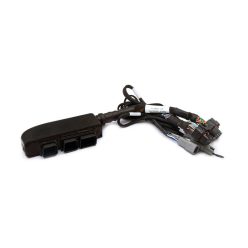
Net price: 568 €
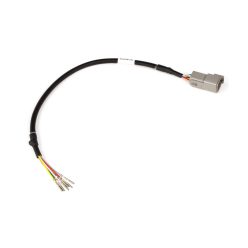
Net price: 33 €

Net price: 322 €

Net price: 29 €

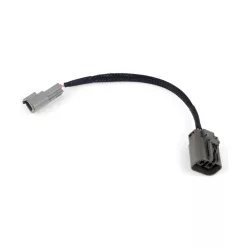
Net price: 29 €
Brief summary & key benefits
The Wires & Harnesses category provides motorsport-ready cables and pre-made harnesses that withstand heat, fluids and vibration. Proper cross-section, low-resistance terminations and clean routing ensure stable cranking and clean sensor signals, reducing voltage drop and troubleshooting time during intense race weekends.
Technical Basics
High-purity copper/tinned-copper strands offer low resistance and flexibility. Jackets range from PVC/PE to high-temperature ETFE (Tefzel) for superior abrasion and heat resistance. For signalling, use shielded cables—especially on CAN, VR sensors and high-impedance inputs. In power feeds the simple law U=I·R means thin wires run hotter and sag more, so main feeds and grounds must use larger mm² cross-sections.
Connection quality depends on correct crimp tooling and mechanical strain relief. The crimp is the primary bond; finish with heat-shrink and boots where needed. Avoid tight bends and proximity to heat sources; protect looms with convoluted tubing or braided sleeving. Separate power and signal physically or by shielding to minimise interference and ground offsets.
Common pitfalls include undersized conductors, poor ground points, screw-on “temporary” joints instead of proper crimps, and long shared grounds that inject noise. Another frequent issue is incorrect CAN termination (missing or duplicated 120 Ω), which triggers intermittent comms errors.
Selection Criteria
Choose cross-section (mm²) and jacket by load and environment. Starters and main feeds need larger conductors on short runs; sensors prefer lighter, flexible cable. For signals, pick shielded twisted pair on CAN and other fast lines. Match connectors by pin count, latch style, fluid/temperature resistance and packaging limits. Pre-made adapter harnesses accelerate ECU swaps and reduce wiring mistakes compared to full custom looms.
Project examples: in engine bays, add heat protection and proper grommets for bulkhead pass-throughs; with a boot-mounted battery, place the main fuse near the source and use adequately sized ground straps. For data-heavy builds, keep bus runs short, avoid ground loops and reserve service loops for maintenance at the ECU, fuse/relay boxes and bulkhead connectors.
Installation & Maintenance
Work on an isolated system. Route away from sharp edges; add edge guards and retainers. Prepare ground points to bare metal, protect against corrosion and torque fasteners to spec. Use sealed connectors (per IP rating) in exposed areas and keep service points accessible. Periodically inspect for heat discolouration, jacket damage and loose retention, especially after the first sessions.
For buses like CAN, keep twisted-pair geometry and correct termination; avoid co-routing with high-current lines. In starter circuits, minimise joints, use crimped lugs and keep runs short. Label looms (heat-shrink markers) so diagnostics and future changes are faster and less error-prone.
FAQ
Q: How do I size wire for main feeds?
A: Base it on peak current and length; higher currents and longer runs require larger mm² conductors and short paths.
Q: When should I use shielded cable?
A: In noisy environments and for sensitive sensors or buses (e.g., CAN, VR signals) to reduce interference.
Q: Crimp vs. solder?
A: Use a proper crimp as the primary joint; solder only as support, with strain relief to avoid fatigue.
Q: How can I reduce voltage drop?
A: Use larger cross-sections, keep runs short, ensure solid grounds and choose quality connectors.
