
A water-to-air intercooler system, also known as a water-to-air intercooler system (chargecooler), transfers heat from compressed intake air into coolant and then into a separate heat exchanger, which makes it useful where front-end space is limited or repeated load consistency matters.
This category includes vehicle-specific kits, separate chargecooler radiators and universal cores for BMW, Infiniti and custom projects; the key checks are platform fitment, core size, air-side inlet diameter and the position of the coolant connections. Verify exact dimensions and specifications on the product card; in-stock items dispatch fast within the EU.
The inlet angle and bleed/fill point location matter almost as much as core size, because poor routing can lead to trapped air and hose preload. Use the filters by brand, vehicle and finish, then open the product page to confirm exact dimensions and fitment details.

Net price: 1 549 €

Net price: 1 549 €

Net price: 1 549 €

Net price: 1 549 €

Net price: 1 549 €

Net price: 1 549 €

Net price: 1 549 €
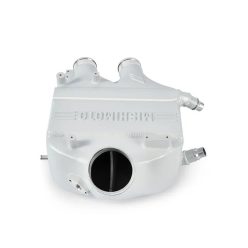
Net price: 1 549 €
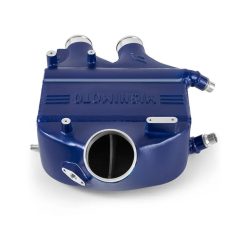
Net price: 1 549 €
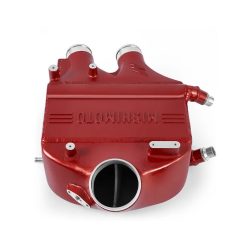
Net price: 1 549 €
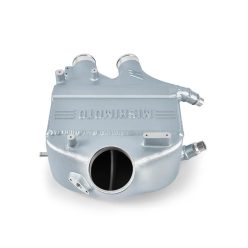
Net price: 1 549 €

Net price: 1 549 €
Water-to-Air Intercooler Systems: Compact Packaging and More Stable Charge Temperatures
These liquid-cooled charge-air systems move heat from the compressed intake stream into coolant and then into a separate radiator, which is why they are often chosen for tighter engine bays, shorter charge pipe routing and more repeatable temperature control under road, track or custom-build use.
Technical background and system integration
The core idea is dual-stage heat rejection: the chargecooler core lowers intake temperature on the air side, while the coolant circuit carries that heat to a front heat exchanger or auxiliary radiator. Because of this, performance depends not only on core size but also on radiator placement, coolant path length, bleed strategy and how well the whole circuit manages thermal movement.
The current range includes vehicle-specific hardware and universal options: BMW M2/M3/M4 and M5/M6 chargecoolers, Toyota Supra A90 and BMW Z4 chargecooler radiators, Mercedes A/CLA45 AMG auxiliary cooling parts, Infiniti Q50/Q60 kits, plus Garrett cores and TurboWorks water intercoolers in several sizes.
- Fitment: On platform-specific parts, confirm chassis, engine and model year before comparing anything else.
- Core size: On universal units, check width, height and thickness against the real space available around brackets, fans and pipework.
- Inlets: The category includes 2.5in, 3in and 3.5in air-side connections, with straight, angled or 90-degree layouts depending on the unit.
- Coolant side: Some cores use 1/2"-14 NPT ports, so thread type, adapters and hose routing should be planned together.
How to choose the right one
Start with size and connection layout: decide whether you need a complete chargecooler assembly, a separate radiator or a universal core for a custom loop. OE-location upgrades are mainly a fitment decision, while custom builds depend more on available space, charge pipe route and the layout of the coolant circuit.
Inlet geometry matters as much as raw volume, because the wrong entry or exit angle can force extra bends, longer pipework and unwanted preload at the couplers. It is also worth checking whether the product includes an expansion tank, cap, clamps or only the cooling unit itself.
For a custom build, list the core dimensions, air-side diameters and angles, coolant port positions and the intended highest fill point first, then narrow the range using the product cards.
Installation and failure-prevention tips
Stable mounting matters here because a coolant-filled unit adds mass, vibration and heat movement to the brackets and joints. The core and radiator should be supported so the hose set is not acting as a structural member, while the pipes and hoses still retain a little movement allowance.
On both the air and coolant side, sealing depends on surface condition, clamp placement and hose material working together. Degrease using a manufacturer-recommended cleaner, then allow to dry completely before applying load/boost. After that, confirm the clamp sits behind the bead rather than on a transition radius.
A common issue is partial support through the hose set, or preload left in the air-side and coolant-side connections; typical signs can include light seepage after heat, unstable IAT behaviour or intermittent pressure loss. This is best prevented with the correct inlet orientation, vibration-tolerant mounting and careful bleeding of the coolant circuit.
Bleeding deserves extra care: if the system uses an expansion tank or a dedicated fill point, it should genuinely sit near the highest part of the circuit. After the first heat cycles, re-check coolant level, clamp condition and whether any hose is rubbing against an edge, shroud or bracket.
PRO TIP: When two cores fit the same space, the better hose route and easier bleed layout often create the more usable system, not simply the physically larger core.
Frequently asked questions
When is water-to-air a better choice than air-to-air?
It can be the better fit when front-end space is tight, shorter charge routing is useful or repeated-load temperature control matters more than maximum frontal area. It also suits many modern platform-specific layouts that already rely on a liquid-cooled charge-air concept.
Is changing the core alone enough, or do I also need a radiator?
That depends on whether you are upgrading a complete system or building a custom loop. If the heat exchanger side remains the limiting part, a larger core on its own may not deliver the temperature stability you expect from a better-balanced system.
What is the most common failure or installation mistake?
Work through a short checklist: inspect brackets, hose alignment, clamp seating, fill-point height and coolant level both cold and hot. Then log intake temperatures and re-check the mount points after the first heat cycle in line with the product maker’s guidance.
How can I tell if the heat exchanger is too small or badly placed?
A typical sign is that intake temperatures recover more slowly after repeated pulls or sustained track use. In that case, review not only core size but also radiator position, airflow path and whether the coolant circuit has been bled properly.
Which product-card details matter most on a universal core?
Check core dimensions, air-side inlet diameter, inlet angle and coolant-port thread first. Together, those details determine whether the unit can actually be packaged into the planned space with sensible routing.
