
The Voltage Stabilisers collection smooths battery/alternator ripple, keeping a stable 12 V bus and lower electrical noise for the ECU, sensors and lighting. Using capacitive buffering and low-impedance grounding improves throttle response, lamp brightness and data accuracy. Choose by power handling, wiring layout and mounting location to keep the system reliable under load.

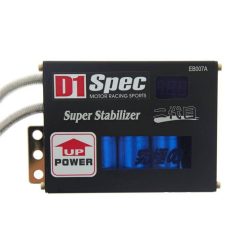
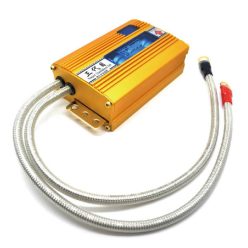
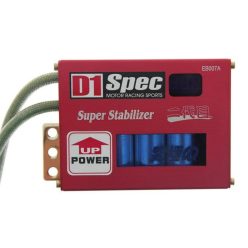
Brief summary & key benefits
Voltage Stabilisers buffer alternator/battery sag and filter electrical noise. A steadier 12 V rail improves ECU and injector behaviour, keeps ignition energy consistent and prevents dimming lights. For road and track builds alike, stabil supply equals cleaner data and fewer drivability complaints.
Technical Basics
Capacitive buffering: high-capacitance, low-ESR/ESL packs absorb fast load steps, reducing voltage dips. Short, low-resistance bus bars keep losses down and response fast.
Grounding & impedance: low impedance wiring is key. Use short, thick cables to the battery/rail and chassis. Star-grounding helps avoid loops that inject noise into sensors.
Filtering: RC/ferrite elements attenuate high-frequency ripple, aiding ECU analogue inputs and ignition control.
Current & thermal limits: enclosure material and copper cross-section define continuous rating. Mount with airflow to avoid heat soak.
Selection Criteria
Load profile: heavy consumers (fans, fuel pumps, audio) need higher capacitance and robust terminations. Race cars prioritise ECU/injector stability; show cars value lighting and audio quality.
Wiring layout: choose units suited to battery-close installation with short positive/ground cables. Displays provide live voltage feedback during tuning.
Environment: for engine-bay use prefer sealed, vibration-resistant housings; for cabin use compact size and tidy routing matter.
Chemistry: compatible with 12 V systems; with LiFePO₄ batteries verify vendor guidance and allowable voltage range.
Installation & Maintenance
Mounting: place near the battery or distribution block to minimise loop length. Keep away from exhaust heat and shield if required.
Cabling: use adequate cross-section (e.g., 10–16 mm²) copper, crimped lugs and heatshrink. Clean contact surfaces to bare metal, apply light anti-corrosion grease and torque correctly. Implement star-grounding.
Validation: after the first drive, log rail voltage under load and check unit temperature. Periodically re-torque terminals and inspect for chafing.
FAQ
Will it add horsepower?
Indirectly—by stabilising supply it reduces noise and drops, helping the ECU and pumps maintain consistent operation.
Where to connect?
Between battery positive and chassis ground with short, thick leads; avoid long, thin wiring.
OK with smart alternators?
Yes. The stabiliser passively buffers and doesn’t interfere with ECU-controlled regulation.
Can I oversize it?
Not an issue; undersizing reduces effectiveness. Correct wiring matters most.
