
Vehicle-specific cooling fans (járműspecifikus ventilátorok) are model-matched electric fan assemblies, shrouds and related control parts designed around a specific radiator package and engine-bay layout. The right setup supports accurate fitment and can help when replacing the stock mechanical fan.
Choose by make, model, engine, year, transmission and radiator arrangement; the BMW E36/E46/M3 shroud kits and the Honda fan switch serve different jobs and are not interchangeable. Verify exact dimensions and specifications on the product card; in-stock items dispatch fast within the EU.
Use filters by vehicle make, then open the product card to confirm controller type, probe style and whether additional wiring may be needed. Before fitting, check radiator clearance, blade path and nearby loom routing so packaging issues are caught before the first heat cycle.

Net price: 371 €
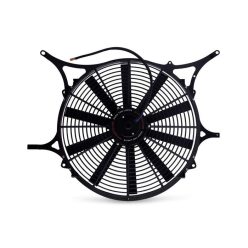
Net price: 368 €
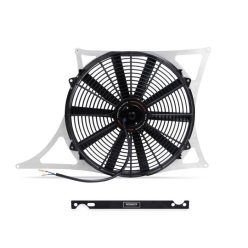
Net price: 396 €

Net price: 47 €
Vehicle-Specific Cooling Fans and Model-Matched Cooling Solutions
Model-matched layout: The products here are model-matched electric fan assemblies (fitment-led cooling fan kits) built around a specific radiator package, expansion tank position and engine-bay clearance. That is why this category is about exact application rather than picking a fan from a generic diameter list.
System role: A vehicle-specific fan setup influences radiator airflow at idle and low road speed, packaging around the front end, and the relationship between shroud, blade path and controller strategy. In practice, a good match helps reduce unwanted stress on nearby components and keeps the airflow path and sealing behaviour more consistent.
Current range: The live assortment is mainly Mishimoto BMW E36, E46 and E46 M3 shroud-and-fan kits plus a Honda fan switch, so platform fitment and control method matter more than brand alone.
Technical background and system integration
Air path: A shroud is not only a mounting panel; it also helps guide air through the radiator core instead of letting it spill around the fan opening. Clearance, shroud seating and blade position all affect how the package behaves in real traffic and paddock conditions.
Control side: Some kits are supplied around a controller concept with 1/8 NPT or probe-type sensing, while another product in this category is a replacement-style fan switch. Those parts do different jobs, so controller type, sensor style and vehicle wiring need to be checked together.
- BMW E36: Check engine family, radiator type and whether the build still uses the stock expansion tank arrangement before choosing a shroud kit.
- BMW E46: Non-M and M3 applications should be treated separately, and manual or automatic details on the product card matter when confirming fitment.
- Honda: If you are choosing the fan switch, confirm the application list and thread details on the product card before ordering.
How to choose the right one
Quick selection guide: If you want a direct, vehicle-matched fan package, start with exact vehicle identity here; if you want to compare a broader fitment-led range first, open Fan Shroud Kits.
Fitment logic: Check make, model, year, engine, transmission, M or non-M designation, radiator version, controller inclusion and sensor style. On the product card, also confirm whether the fan is pre-mounted to the shroud and whether extra wiring may be required for your car.
Installation and failure-prevention tips
Dry test-fit: Before final assembly, place the shroud, inspect blade clearance, look at loom routing and confirm nothing is pre-loaded against the radiator or surrounding hardware. Small alignment issues often show up only after heat cycling and engine movement, so catching them early saves rework.
Common failure: If the shroud does not seat correctly, the wiring runs too close to the blade, or the sensor location is poorly chosen, you may see noise, intermittent fan operation, blade contact or weak idle cooling. The practical prevention is a careful test-fit, tidy loom routing and a full re-check of mounting points before the first sustained heat cycle.
Custom-route option: If your build needs a fan chosen around a custom radiator or non-standard packaging, Universal Fans is often the better starting point because you can work from diameter, pusher or puller layout and installation depth.
PRO TIP: On BMW projects replacing the stock mechanical fan, do not judge the solution by the fan alone; shroud shape, radiator interface, controller strategy and real engine-bay clearance need to work as one package.
FAQ
What makes a vehicle-specific fan different from a universal fan?
A vehicle-specific solution is designed around one radiator package and engine-bay layout, so mounting points, shroud form and clearance are application-led. A universal fan is more suitable for custom builds or modified cooling layouts where you create the installation logic yourself.
When do I need a shroud kit and when is a fan switch enough?
You need a shroud kit when the fan-side hardware itself is the job, such as replacing a stock mechanical fan or changing the radiator-side packaging. A fan switch can be enough when the hardware is already in place and you only need an application-correct part for fan activation control.
What is the most common failure or installation mistake?
The fastest diagnostic check is to confirm that every mounting point is seated, the blade turns freely, the connectors are secure and the wiring is not touching moving or hot parts. That short checklist usually shows whether the next step should focus on fitment, wiring or sensor placement.
What should I check if the fan switches late or behaves inconsistently?
First compare the product’s sensor or switch solution with your vehicle, then inspect the connectors and loom route. After that, confirm that the application list, thread detail, sensor type and radiator arrangement on the product card really match your car.
Can additional wiring or a separate controller be required?
Yes, that can apply to some shroud-and-fan kits, which is why the included-parts list on the product card matters. Before ordering, confirm what is supplied and whether your car uses a stock or modified control strategy.
