
Turbosmart Fuel Pressure Regulators covers a broad range of EFI regulators such as FPR-800, FPR-1200 AN6, FPR-2000 AN8 and FPR-3000, typically with a 1/8 NPT gauge/sensor provision and a 1:1 manifold-referenced ratio.
You’ll also see the compact FPR Kompact series, described with 1/8 NPT universal fittings and OE-style bolt-on options for certain in-rail layouts. Use filters and sorting, open each product card, and confirm port standard (e.g. AN6/AN8/AN10) plus base pressure range against your setup. Pick the right Turbosmart unit and place your order.
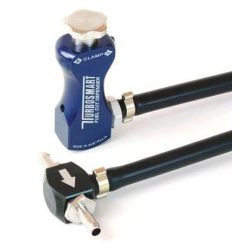
Net price: 145 €
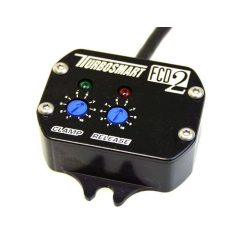
Net price: 285 €

Net price: 301 €
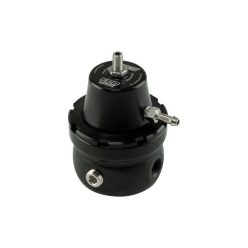
Net price: 237 €
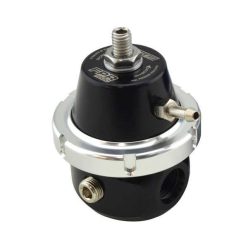
Net price: 259 €

Net price: 259 €
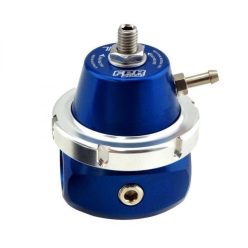
Net price: 273 €
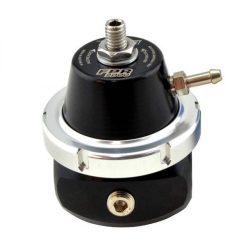
Net price: 281 €
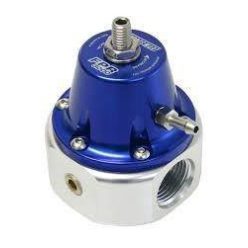
Net price: 366 €
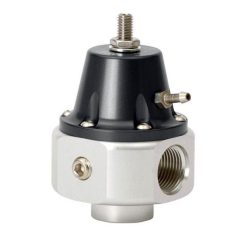
Net price: 338 €
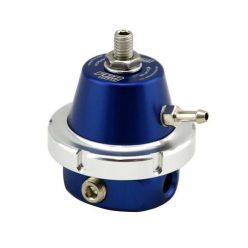
Net price: 233 €

Net price: 233 €
Turbosmart Fuel Pressure Regulators – port-size matched FPR solutions with wide adjustment ranges and 1:1 reference control
A fuel pressure regulator (FPR) is used to hold a stable pressure differential across the injectors relative to manifold pressure, so fuelling remains consistent from idle to full load.
The Turbosmart range in this category includes several port standards: compact 1/8 NPT-threaded units (such as FPR-800) and larger-flow options using AN6, AN8 and AN10 connections (such as FPR-1200, FPR-2000 and FPR-3000), often with a dedicated gauge port for monitoring.
Alongside regulators, the listing also includes Fuel Cut Defender items (FCD-1, FCD-2) intended to adjust the factory fuel-cut threshold on turbo cars.
Technical Basics
Across the product pages, typical base pressure adjustment ranges are shown, for example 30–90 PSI appears on FPR-800 and FPR-2000, while FPR-1200 lists 30–70 PSI and FPR-3000 lists 30–60 PSI. These ranges are commonly used in EFI applications where you want controlled injector differential pressure.
A 1:1 ratio means the regulator tracks manifold pressure, helping maintain injector delta pressure as boost rises. Correct reference hose routing and leak-free connections are essential, otherwise the pressure-to-boost relationship can drift under load.
Do not mix standards: AN ports (e.g. AN6/AN8/AN10) seal differently to tapered NPT threads. Many listings highlight a dedicated 1/8 NPT gauge port, which is useful for a pressure gauge or sensor without improvising fittings.
The FPR Kompact description highlights adjustable pressure and a 1/8 NPT pressure sensor port, plus both universal and OE-style bolt-on options for certain in-rail regulator layouts. It also lists both an OE/EFI upgrade range (35–80 PSI) and a low-pressure option (3–20 PSI), so matching your system type is non-negotiable.
Several Turbosmart pages reference stainless steel internals, a MILSPEC diaphragm and suitability for “any fuel”, including E85. You should still verify the rest of your fuel system (hose material, seals, filters and pump) is compatible with your chosen fuel.
Selection Criteria
Start with plumbing: if your setup is built around AN6, FPR-1200 is an obvious match, while higher-flow builds may prefer AN8 (such as FPR-2000) or AN10 inlets (such as FPR-3000). Minimising adapters usually reduces leak points and pressure losses.
Next, match the pressure window: a 30–90 PSI style range aligns with many EFI targets, whereas the FPR Kompact pages also mention a 3–20 PSI low-pressure option. Always cross-check with your injector data, ECU target and rail/injector combination before committing.
Then plan monitoring: a dedicated 1/8 NPT gauge port makes it straightforward to add a sensor for logging or a gauge for setup. If the port is plugged, confirm whether a blank is supplied so you can keep it sealed until you need it.
Finally, consider installation constraints: Turbosmart pages commonly mention a mounting bracket and a vacuum fitting for manifold reference. If packaging is tight, the FPR Kompact “small footprint” concept can help, but fitment should be checked against your actual rail, hose routing and heat shielding.
If your goal is changing the factory fuel cut point, the category includes both FCD-1 (pneumatic) and FCD-2 (electronic), and the choice depends on whether you are working with a MAP sensor or an AFM signal rather than fuel line size.
Installation & Maintenance
Always depressurise the fuel system before work and mount the regulator so fittings are not under strain and heat exposure is managed. After first start, perform a full leak check at the rail, return line and every fitting.
With AN fittings, focus on clean sealing faces and correct tightening; with NPT threads, use appropriate thread sealing and insertion depth. If you use a 1/8 NPT gauge port, keep sealant out of the fuel path and ensure the plug or sensor is properly seated.
Set the desired base pressure first, then validate 1:1 behaviour under load, not only at idle. If pressure fluctuates, common causes are a restricted return path or an incorrectly routed manifold reference line.
For FCD-1, the description emphasises raising the factory fuel cut point without wire cutting, while FCD-2 is described as altering a factory 5V MAP sensor or AFM output at an adjustable level with LED setup support and a safety-oriented release feature. Only adjust these if you understand how your boost control and engine protection strategies work.
For ongoing reliability, periodically check bracket tightness, reference hose condition and fitting torque after heat cycles. Fuel smell, damp joints or unstable fuel pressure under load should be treated as immediate diagnostic triggers.
FAQ
What is the difference between Turbosmart FPR-800 and FPR-2000?
FPR-800 is listed with multiple 1/8 NPT ports, while FPR-2000 is listed with AN8 ports plus a separate 1/8 NPT gauge port. Both reference a 1:1 manifold pressure ratio and wide adjustability, so the practical decision is usually your line standard and the flow demand of your build.
What does a 30–90 PSI base pressure range mean?
30–90 PSI refers to the adjustable base pressure window on the regulator. This is typically used for EFI systems where you need a stable injector differential pressure. Always set it using a measured value and confirm behaviour under load.
What does 1:1 ratio mean on a fuel pressure regulator?
A 1:1 ratio means fuel pressure rises in step with manifold pressure, helping maintain injector delta pressure as boost increases. It relies on a correct manifold reference hose connection and leak-free routing. If the reference is wrong, fuelling can drift at load.
Are these regulators suitable for E85?
Multiple listings mention suitability for “any fuel”, including E85, often alongside stainless steel internals and a MILSPEC diaphragm. You still need to ensure the rest of your fuel system materials are E85-compatible. If in doubt, follow the manufacturer specs for every component in the fuel path.
What is a Fuel Cut Defender (FCD-1 / FCD-2) used for?
FCD-1 is described as raising the factory fuel cut level on turbo cars with a MAP sensor without cutting/splicing wires. FCD-2 is described as adjusting a factory 5V MAP sensor or AFM output with LED indicators and a release feature to retain a safety cut. Use these only with a clear boost control plan and proper engine protection strategy.
Filter by port type, pressure range and packaging needs, then choose the right Turbosmart FPR solution and check out.
