
A turbo flange (turbo mounting flange) is the connection piece that helps align a turbocharger, manifold, downpipe or oil drain point in custom and performance builds. In this category you will find adapter plates, turbo flanges and oil drain flanges for different mounting patterns and installation roles.
Choose by bolt pattern, centre bore, plate thickness and the relevant turbo family or wastegate standard, then compare those details against the mating part and the available space around the assembly. Verify exact dimensions and specifications on the product card; in-stock items dispatch fast within the EU.
To reduce fitting issues later, check face flatness, bolt access and the room needed for thermal movement before final tightening so the joint is not forced out of alignment under load.
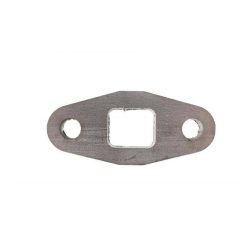
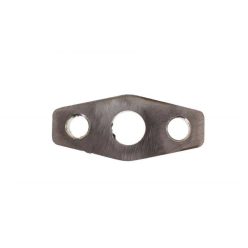
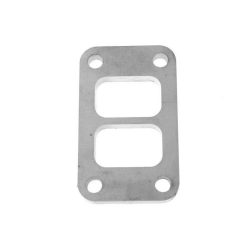
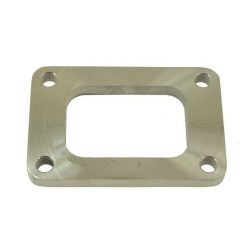
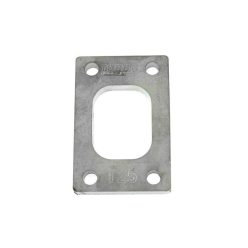
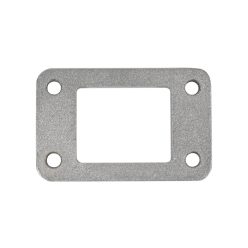
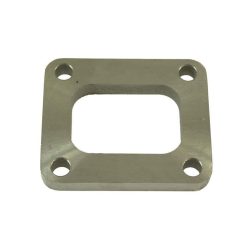
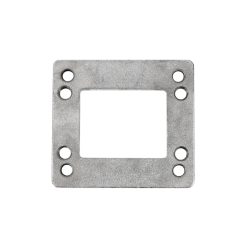
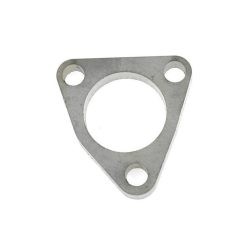
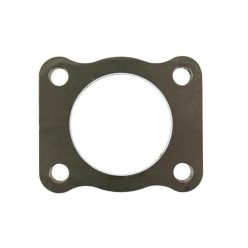

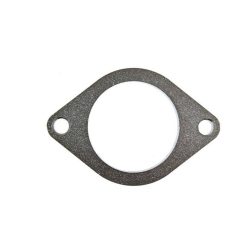
Net price: 9 €
Turbo flanges and adapters for accurate fitment in custom turbo and exhaust fabrication
Turbo connection flanges and adapter plates are the linking parts that help coordinate different turbo housings, manifolds, downpipes and oil drain points into one workable fitment strategy. It is not only about matching the holes; plate thickness, centring, bolt access and nearby component clearance all influence whether the finished joint remains practical to assemble and service.
Technical background and system integration
Flange role: A turbo flange is more than a spacer, because it affects gasket seating, turbo position and how easily the surrounding exhaust or oil drain section can be assembled.
Adapter logic: Adapter plates are useful when two different mounting standards need to meet, while still leaving reasonable access for bolts, tools and surrounding hardware.
- Patterns: T2, T25, T28, GT25, GT28, T3, T4, T06 and some platform-specific layouts can differ in hole spacing, centre opening and fastener position.
- Use case: This category covers turbo-side flanges, wastegate flanges and oil drain flanges, so the first step is to define exactly which connection point on the turbo system you are solving.
- Plate thickness: A thicker or thinner plate can influence hardware length, spacing and the final geometry of the assembled joint.
- Flat seating: Good sealing starts with a face that is straight, burr-free and properly aligned to the mating part before the joint is tightened or welded nearby.
How to choose the right one
Quick selection guide: First decide whether you need a turbo mounting flange, a downpipe-side transition, a wastegate flange or an oil drain flange, because parts that look similar can serve very different functions and patterns.
Filters and product cards: Use the list view to narrow by name or price, then compare pattern naming, platform reference and part shape on the product card against your own turbo or mating flange. When several similar T-series standards seem possible, checking the centre bore and hole spacing is usually more reliable than the product name alone.
- Turbo family: With K03, T3, T4 or T25/T28 references, always confirm that your own housing and the selected flange truly share the same mounting standard.
- Vehicle-specific: Subaru EJ20/EJ25, Mitsubishi 4G63T or Nissan SR20DET naming is a useful shortcut, but the final decision should still come from the actual geometry shown on the product card.
- Oil drain: On oil drain flanges, the passage shape and outlet direction can matter just as much as the bolt pattern for a clean gravity return path.
Installation and failure-prevention tips
Assembly basics: Before final tightening, check face flatness, free bolt engagement, gasket surface cleanliness and whether the connected pipe or housing is pulling the joint sideways. On a mechanical joint, it helps to tighten in an even staged sequence and recheck the connection after the first heat cycle.
Installation space: During trial assembly, confirm tool access around bolt heads, the sweep of the manifold or downpipe, and whether nearby heat shields, tubes or wiring reduce serviceability more than expected.
Common failure: One of the most frequent issues is a flange installed slightly off-centre, rotated against the natural pipe angle or loaded by a stressed mating section; typical signs are blow-by noise, soot marks around the joint or repeated gasket trouble. In that case, replacing the gasket alone may not solve the root cause if side-load remains in the connection.
PRO TIP: Before committing to the final assembly, dry-fit the full joint with two or three bolts first, because that quickly reveals whether tool access, pipe angle and real-world clearance are actually workable.
Should I choose a turbo flange or an adapter plate?
A standard turbo flange is usually the better option when two matching standards need a stable connection face. An adapter plate is more suitable when you need to bridge between different bolt patterns or mounting families.
Is stainless or steel the better option?
That depends on the exact part and the wider build. Heat exposure, weld planning, surrounding materials and the intended finish usually matter more than the simple material label on its own.
How do I know the bolt pattern really matches?
Always compare the pattern name on the product card against the real hole spacing and centre opening on your own turbo or mating flange. On older or already modified systems, relying on naming alone can be risky.
What is the most common failure or installation mistake?
Check that the flange seats fully across the face, then inspect even bolt loading, gasket position and whether the attached pipe is forcing the joint out of line. After that, listen for blow-by on cold start and look for soot or local discolouration around the perimeter once the system has run.
Do all turbo flanges need a separate gasket?
That depends on the specific joint design, because some connections work with a dedicated gasket while others depend on the mating face style or the original hardware concept. The product card and your existing counterpart should guide that choice.
Once you have confirmed the exact pattern and installation space, use the product card to verify geometry, application point and fitment logic before choosing the right flange or adapter for the build.
