
Gear oils (transmission oils) are lubricants matched to the load, friction and temperature profile of manual gearboxes, differentials and LSD units. In this category you will find options stated for differential service and competition gearbox use.
Choose by viscosity grade, the exact unit you are servicing, and whether the oil is specified for LSD, differential or manual transmission duty. Verify exact dimensions and specifications on the product card; in-stock items dispatch fast within the EU.
The safest way to avoid a mismatch is to compare the manufacturer requirement against SAE 90 or 75W-140, then confirm whether the unit needs an LSD-compatible friction characteristic.

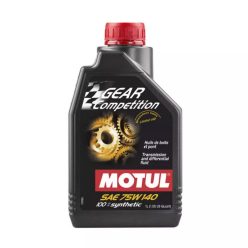
Gear Oils – for manual gearboxes, differentials and LSD units
This range covers gearbox and differential lubricants often searched under the gear oil label. The right product is matched to tooth load, operating temperature and the friction needs of the unit, so the same car may legitimately require a different formula for the manual gearbox and the differential.
Technical background and system integration
The oil film task is not limited to wear control: it also helps distribute load across the gear mesh, supports heat management and may calm operating noise in hard-worked driveline parts.
Product cards in this category typically point either to an LSD-focused differential oil or to a competition 75W-140 gear oil, so one product does not suit every unit automatically. A clutch-type limited-slip differential can need a different friction response from a synchronised manual gearbox or a separate hypoid differential.
If the vehicle manual calls for API GL-4, GL-5, SAE 90 or 75W-140, read that together with the product card before buying. MOTUL 90PA is aimed at limited-slip differential use, while Gear Competition 75W-140 appears in applications where racing gearbox and differential duty can overlap.
How to choose the right one
The quick selection logic here is simple: first decide whether you need oil for a differential only, or a product also stated for manual gearbox or combined gearbox-differential use.
The product card check matters because even within one brand the oils are not intended for the same hardware. Use filters, sort by availability or name, then open the product page to confirm viscosity, application, pack size and LSD suitability.
- Unit type: manual gearbox, differential, combined gearbox-differential unit or limited-slip differential.
- Viscosity: SAE 90 and 75W-140 do not automatically answer the same duty cycle or heat load.
- Specification: API marking, vehicle requirement and the application shown on the product page should decide together.
- Usage: road, heavy-duty and motorsport service can justify different compromises.
Installation and failure-prevention tips
Change preparation starts with checking fill quantity, service interval and the approval or viscosity stated by the vehicle manufacturer. Before refill, keep the drain and fill area clean so no contamination enters the casing.
Set the level using the manufacturer’s method, then recheck after a short drive for leaks, unusual noise or shift feel changes. In this category, mixing awareness matters as well: blending unlike formulas or ignoring residue from the previous fill can alter the way the unit behaves.
The common mistake is choosing only by the viscosity number and not confirming whether the oil is actually intended for an LSD differential, hypoid final drive or synchronised manual gearbox. The result can be differential chatter, heavier cold shifting or a changed operating note; prevention starts with the manual, the product card and correct unit identification.
PRO TIP: On track cars or heavily used road cars, pay special attention to hot driveline noise and the first cold shifts after an oil change, because both can reveal very quickly whether the selected oil suits the unit.
Which is better for an LSD: SAE 90 or 75W-140?
Neither is better on its own; the correct one is the grade required by the exact differential or driveline unit. SAE 90 and 75W-140 can behave differently when cold and hot, so the vehicle requirement and the stated application should decide together.
Can I use the same oil in the manual gearbox and the differential?
Only if the manufacturer explicitly allows it and the product page covers both duties. On many vehicles the gearbox and the differential ask for different friction behaviour and different specifications, so a shared choice is not the default.
What is the most common failure or installation mistake?
First identify the exact unit, then compare the manual requirement with the product card. Next check fill level, any leak after the service, and observe noise and shift quality separately when cold and warm. If something changes, review the specification again rather than relying on the viscosity number alone.
Should I choose mineral or synthetic-technology oil?
The unit design and the way the car is used should decide. This category includes an LSD-focused route and a competition 75W-140 route, so the base-oil description matters less than the exact intended application.
When should I check the system again after an oil change?
After a short drive, inspect for external leaks, listen for any change in operating noise and note how the first few cold shifts feel. After track use or heavier load, another quick inspection is sensible.
Narrow the choice by unit type, viscosity and application, then confirm fitment on the product card before adding it to your basket.
