
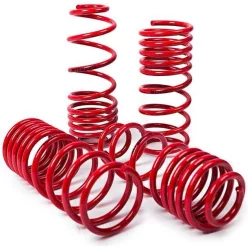
The Toyota – MTS Technik lowering springs category includes kits for Toyota Auris I–II Hatchback, Auris II Touring Sports and Avensis I (T22) and Avensis II (T25) Sedan, Hatchback and Estate models, with drops from 20/20 up to 40/40 mm. These application-specific lowering spring kits reduce ride height, trim body roll and improve cornering stability. Tuned for fast-road use, MTS Technik springs enhance Toyota chassis performance while preserving everyday usability.
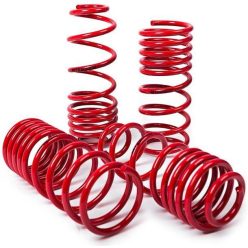
Net price: 182 €

Net price: 166 €

Net price: 162 €

Net price: 179 €
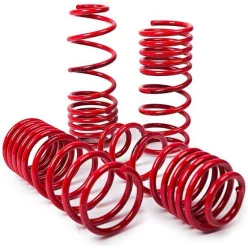
Net price: 174 €
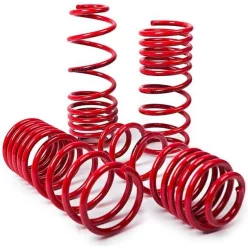
Net price: 182 €
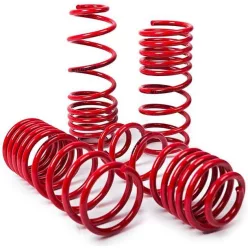
Net price: 174 €
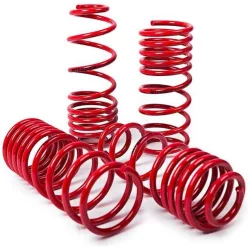
Net price: 174 €
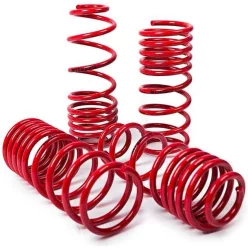
Net price: 201 €
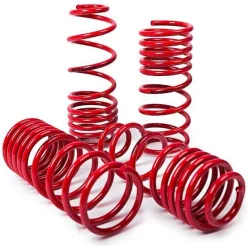
Net price: 222 €
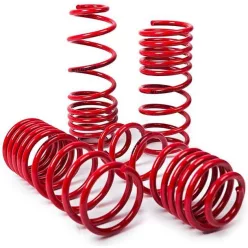
Net price: 177 €
Net price: 179 €
Benefits and applications of Toyota lowering springs
The Toyota – MTS Technik lowering springs range targets popular compact and mid-size Toyota models, notably Toyota Auris I–II Hatchback, Auris II Touring Sports and Avensis I (T22) and Avensis II (T25) in Sedan, Hatchback and Estate form. Factory suspension on these cars focuses on comfort and flexibility for mixed driving, which often leaves generous wheel arch gaps and noticeable body roll when cornering enthusiastically. A carefully selected lowering spring kit with drops between roughly 20 and 40 mm reduces ride height, lowers the centre of gravity and tightens body control. The result is a Toyota that feels more planted in bends, dives less under braking and delivers a more confident steering response.
Technical Basics
MTS Technik lowering springs are produced from cold-formed, high-strength spring steel with multi-stage heat treatment and durable anti-corrosion coatings to handle daily use and winter salt. Common drop figures in the Toyota category include 20/20 mm, 20/25 mm, 30/30 mm, 30/40 mm, 40/30 mm and 40/40 mm, indicating the change in front and rear ride height relative to stock suspension. Each kit’s spring rates are tailored to specific axle-load ranges, engine types (e.g. diesel vs petrol) and body styles (Hatchback, Sedan, Estate), ensuring that Auris and Avensis applications work correctly with OE or uprated dampers. As with any lowering, larger drops reduce available suspension travel and ground clearance, increasing the risk of contact with ramps, speed bumps and rough surfaces if care is not taken.
Selection Criteria
Selecting the right Toyota lowering spring kit begins with accurately identifying the model (Auris I or II, Auris II Touring Sports, Avensis I T22, Avensis II T25), body style, engine and production year. An Auris II Touring Sports running a 20/20 mm setup faces different load conditions than an Avensis I (T22) on a 40/40 mm kit, so respecting part numbers and axle-load data is essential. For predominantly road use, drops in the 20–30 mm range generally offer the best compromise between sharper handling and everyday practicality. More assertive 40/30 or 40/40 mm setups suit drivers who want a clearly sportier stance and feel, paired with good road quality and careful wheel-and-tyre selection.
Installation & Maintenance
Professional fitting of lowering springs on Toyota models is strongly recommended, as front MacPherson struts and rear springs must be dismantled and reassembled correctly. Safe use of a spring compressor, correct support of suspension arms and adherence to factory torque specifications are all critical for a reliable installation. During the process it is wise to inspect shock absorbers, top mounts, bushes and bump stops and to replace any worn components so the new springs work in a refreshed environment. After installation, a thorough wheel alignment – focusing on toe and, where adjustable, camber – is mandatory to ensure stable straight-line behaviour and to avoid uneven tyre wear. Regular inspections of spring coating, spring seats and suspension joints help maintain performance over time.
FAQ
How much should I lower a road-driven Toyota Auris or Avensis?
For most daily-driven Toyota models such as Auris and Avensis, a drop of around 20–30 mm offers the best balance between sharper handling and usable ground clearance. It cleans up the stance and improves stability without making speed bumps and ramps a constant concern. Larger 40 mm drops are more suitable where road quality is good and the driver prioritises a sporty look.
Can I keep OEM dampers with MTS Technik springs on my Toyota?
With moderate 20–30 mm drops and healthy factory dampers, many Toyota applications can safely retain OE shocks. For larger drops around 40 mm or on high-mileage cars, upgrading to sport dampers is recommended to maintain effective control and durability. A properly matched spring-and-damper combination usually delivers the most predictable and long-lasting result.
How does ride comfort change after lowering a Toyota?
Lowering springs make the suspension firmer, so bumps and surface joints are felt more clearly, especially with low-profile tyres. In return, body roll and pitch are reduced, braking stability improves and steering feedback becomes more precise. Drivers who value comfort should choose modest drops and avoid very large wheels or extreme tyre profiles.
Will lowering my Toyota increase tyre wear?
Tyre wear can increase if wheel alignment is not corrected after lowering, particularly if toe and camber move outside suitable ranges. A careful geometry setup immediately after installation and periodic checks help keep tyre life close to stock. Rapid inner-edge wear or pulling to one side are clear signs that alignment needs to be checked.
Is approval required to lower a Toyota for road use?
Legal requirements depend on local regulations and vehicle inspection standards in your country. Using TÜV or ECE-approved springs and keeping the documentation in the car often simplifies inspections. When in doubt, consult an inspection station or suspension specialist experienced with Toyota models.
