
The Threaded Adapters & Studs category helps you connect AN/JIC 37°, NPT and metric ports correctly in fuel, oil and coolant plumbing. Typical items include straight stud adaptors (male/male), female/female unions, reducers/expanders, blanking plugs and sender adaptors, always according to the sealing method stated on the product page. For the wider system range, also browse AN Hoses, Fittings & Adapters. Use filters and sorting, then open the product card to verify the exact thread and sealing type before choosing. Add the right adaptor to your basket and place your order.
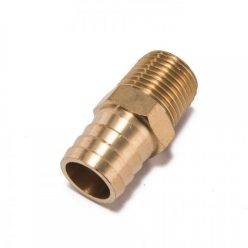
Net price: 3 €
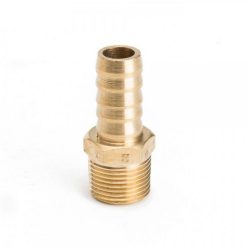
Net price: 3 €

Net price: 4 €
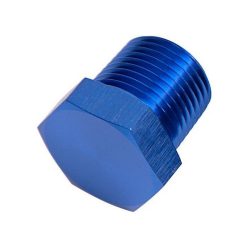


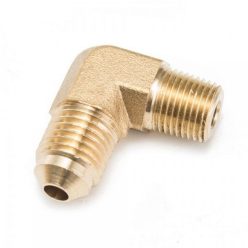
Net price: 4 €


Net price: 12 €
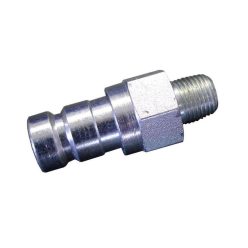
Net price: 31 €
Threaded Adapters & Studs – for AN/JIC, NPT and metric threads, with reliable transitions and service-friendly plumbing
Threaded Adapters & Studs are used to make transitions between different port standards predictable, so your system seals for the right reasons rather than “because it seems to fit”. You will typically see a stud adaptor (male/male), a female/female union, reducers/expanders, a blanking plug and sender adaptors, commonly used across fuel, oil and coolant circuits. Final compatibility should be decided by the stated thread call-outs and the sealing method on the product page.
For long-term reliability, match not only the thread but also the sealing method at the port. AN side connections often rely on AN/JIC 37° flare sealing, while NPT uses a tapered thread seal, and many metric ports seal via a washer or an O-ring style seat. Quick warning: forcing near-match threads can damage ports and still leave you with an ongoing seep.
Technical Basics
With AN/JIC 37° joints, sealing happens on the cone/seat interface, while the thread mainly provides clamping. With NPT, sealing is typically achieved on the tapered thread, so the correct sealing approach depends on the manufacturer’s instructions. Quick warning: do not apply sealant to flare sealing faces, as it can prevent proper seating.
On metric threads, pitch differences (for example M10x1.0 vs M10x1.5) are critical, so you must verify the full thread designation rather than the diameter alone. Many sender adaptors work correctly because sealing occurs on a defined seat (washer or O-ring) instead of the thread. Quick warning: if the product does not clearly state how it seals, choose a different adaptor where the sealing concept is explicit.
Common functional parts in this category include a reducer, expander, T-piece style adaptor, hose-barb to thread adaptors, and oil return style fittings where hose diameter and retention method matter. In these cases, routing support and vibration control are as important as thread selection. Quick warning: if an adaptor is supporting the weight of the line, add a bracket or clamp to unload the port.
Selection Criteria
Start by identifying both ends: what thread is on the port, and what connection you need on the other side (for example AN/JIC 37° or NPT). Then choose whether a stud (male/male), a female/female union, or a reducer/expander is the correct geometry, and make sure you have spanner access for assembly and checks. Quick warning: if the thread does not start smoothly by hand, stop and re-check standards.
For sensor installations, the right sender adaptor depends on thread, sealing method and available clearance, especially on oil pressure/temperature points. If you need multiple take-offs from a single port, a T-piece can help, but consider the lever load and support it if needed. Quick warning: heavy branches should be supported so they do not crack or strip the port over time.
Material choice often comes down to environment: aluminium and stainless steel options may both be present, and heat/corrosion exposure plus service frequency should guide the decision. Because terms like “thread adaptor”, “stud”, “union”, “reducer” and “blanking plug” can overlap in a build, confirm male/female ends and exact sizes on the product images and specs. Quick warning: mismatched material and sealing choices often show up as weeping after the first heat cycles.
Installation & Maintenance
Keep assembly clean, and start the thread by hand to avoid cross-threading. On AN/JIC 37° joints, keep the sealing cone clean and scratch-free; on NPT, apply only the sealing method specified for the tapered thread. Quick warning: overtightening can deform sealing surfaces and create a persistent leak.
After installation, perform a staged pressure test and re-check joints after the first heat cycle, as interfaces can settle slightly. If you disassemble the system, use a blanking plug or cap to prevent contamination entering the line. Quick warning: any fuel smell, oil misting or visible dampness should be treated as urgent.
During routine checks, look for residue around threads, loosening, and poor support that loads the adaptor. If threads or seats are damaged, replacing the affected adaptor is usually safer than trying to “tighten past” the issue. Quick warning: if you cannot identify the cause of a leak, do not run the system under load.
FAQ
What is the difference between AN/JIC 37° and NPT?
AN/JIC 37° seals on the flare cone/seat, while the thread clamps the joint. NPT typically seals on the tapered thread itself, so the sealing approach is different. Always verify where the joint seals in the product specification.
What is a stud adaptor (male/male) used for?
A stud adaptor is a double-ended threaded piece used as a straight connector between two female ports or components. It is common when you need a compact “joiner” without adding hose length. Confirm both thread standards and the sealing method on each side before ordering.
How do I tell M10x1.0 from M10x1.5?
Both are metric M10 threads, but the pitch differs and they are not interchangeable. Use the OE specification, the sender’s documentation, or a thread gauge rather than forcing a trial fit. If unsure, choose an adaptor with an explicitly stated thread pitch and sealing method.
Do I need thread sealant on AN fittings?
Usually not on AN/JIC 37° flare joints, because the cone is the sealing surface. On NPT tapered threads, sealant may be required if the product specifies it. Never apply sealant to flare sealing faces.
When should I use a blanking plug?
A blanking plug is used to close unused ports or to keep a circuit clean during service work. It helps prevent dirt ingress and reduces leak risk at spare take-off points. Verify the port’s thread type and sealing method to choose the correct plug.
Verify thread and sealing type on the product page, then order the adaptors you need to complete your routing.
