
The Swirl Pots (Surge Tanks) category is for builds that need a more consistent fuel supply under high lateral G, helping reduce fuel starvation when the main tank sloshes. You will typically see compact 1.5–5 L sizes in aluminium, with different layouts including versions intended for pump mounting.
Sort by popularity or price, filter by stock, then open each product card to confirm the connection type (e.g. AN ports or hose barbs), dimensions and whether the chosen option comes with pumps. Pick the version that matches your plumbing and place your order.
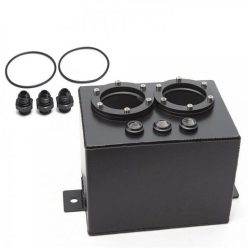
Net price: 41 €
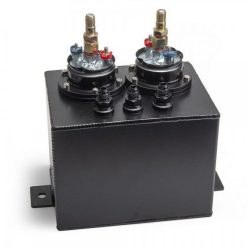
Net price: 117 €



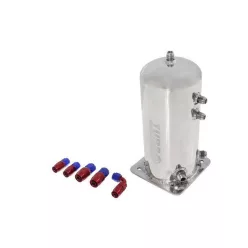
Net price: 80 €
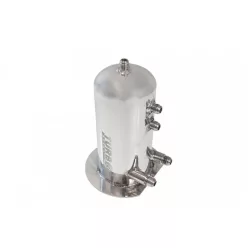
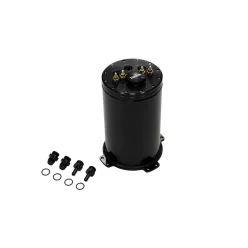
Net price: 244 €
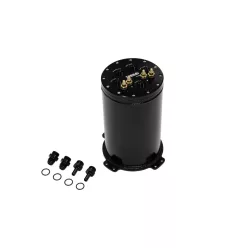
Net price: 244 €
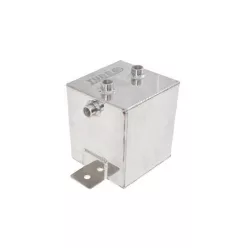
Swirl Pots (Surge Tanks) – steadier feed, fewer pickup issues, more predictable fuel pressure
A properly sized fuel surge tank (collector tank) is designed to keep a more stable feed to the high-pressure pump when fuel moves around in the main tank. For track days, drifting, rally or time attack, this anti-surge approach can noticeably improve consistency, especially when the main tank level gets lower.
You may also see these referred to as a swirl pot or buffer tank; the principle is the same: a small reservoir where the pump has a calmer pickup environment. Exact port layout, sizing and pump options vary by product, so always verify compatibility on the individual product page.
Technical Basics
A swirl pot typically uses multiple lines: a low-pressure lift pump fills it from the main tank, the high-pressure outlet feeds the engine, the return comes back from the regulator/rail, and an overflow goes back to the main tank (plus venting where required). This circulation helps keep the high-pressure pump supplied with liquid fuel even during hard cornering or long drifts.
Common construction is aluminium, and you’ll often find capacities around 1.5 L, 2.5 L and larger options up to roughly 5 L. Some products list AN8-type ports, while others may use hose-barb stubs (for example 8 mm / 13 mm), so choose hoses and fittings to match the exact ports stated.
There are also assemblies intended for 044-style pump mounting, including versions supplied with one or two pumps. Quick warning: poor mounting, inadequate venting or heat exposure can lead to aeration and unstable pressure, so the surge tank must be installed as part of a complete, coherent system.
Selection Criteria
Choose capacity based on how you use the car: lighter track use often works with a compact 1.5–2 L tank, while drift and competition-style use may benefit from 2.5–5 L for extra buffer. Measure the available space in mm and confirm the tank’s dimensions fit your mounting plan.
Decide whether you build with AN fittings or hose barbs, and keep the hose size consistent throughout the system. For EFI, the lift pump flow, the high-pressure pump demand and the return routing must be balanced, otherwise you risk cavitation, noise and fluctuating fuel pressure.
If you prefer a pump kit, check whether mounting hardware and required fittings are included, and whether the tank is prepared for 1–2 pumps. “Surge tank”, “swirl pot” and “buffer tank” are often used interchangeably, but the real fit depends on port layout and pump compatibility, not the name.
Installation & Maintenance
Focus on secure mounting and correct routing: the lift pump feeds the surge tank, and the high-pressure pump draws from it to supply the engine. Route the overflow back to the main tank and ensure proper venting so the system cannot pull vacuum or build pressure where it shouldn’t.
For leak prevention, use fuel-rated seals and correct tightening procedures; with AN fittings, the flare seat must mate cleanly, while hose barbs rely on correct hose ID and clamp quality. Quick warning: keep the tank and lines away from exhaust/turbo heat sources and add heat shielding if needed.
Maintenance is mostly periodic checks of hoses, clamps, mounting points and pump filters (if used). If you notice louder pump noise, pressure fluctuation or suspected aeration, revisit lift pump delivery, return routing and venting first, as these are common failure points.
FAQ
What is a swirl pot (surge tank) and when do I need one?
Answer: A swirl pot is a buffer tank that helps reduce fuel starvation under high lateral G and low main-tank level. It’s most useful for drifting, track driving and other aggressive use where fuel slosh can uncover the pickup. Confirm your setup includes a lift pump and a suitable overflow/return layout.
How do I plumb a surge tank for an EFI fuel system?
Answer: Typically a lift pump feeds the surge tank from the main tank, and the high-pressure pump draws from the surge tank to the engine. The return from the regulator goes back into the surge tank, while the overflow returns to the main tank. Always follow the exact port layout shown on the specific product page.
Which size should I choose: 1.5L or 2.5L?
Answer: For mild track use, 1.5 L can be sufficient, while 2.5 L may offer more buffer for drifting or competition use. Measure your available mounting space and confirm the port layout matches your plumbing.
Do I need AN ports (e.g. AN8), or are hose barbs OK?
Answer: Both can work if the system is built consistently. If the product lists AN8 ports, use matching AN hoses and fittings; if it uses barbs, match hose ID and clamp quality accordingly. The key is compatibility with your chosen hose and flow requirements.
Can I mount an 044-style pump directly on the surge tank?
Answer: Yes, some designs are intended for 044-style pump mounting and there are kits supplied with one or two pumps. Before buying, confirm pump count, mounting interface and ensure your wiring, fusing and heat management suit the installation.
Choose the surge tank that matches your plumbing and layout, then order the version that fits your build goals.
