
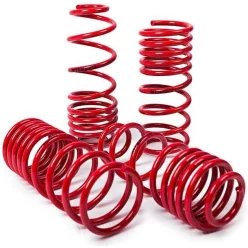
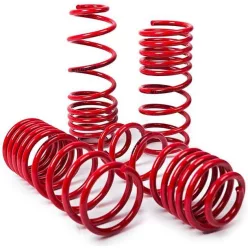
The Suzuki – MTS Technik lowering springs category covers popular models such as Suzuki Alto I–V and Alto VII, Baleno I–II, Ignis I–III, Kizashi, Liana and Splash with 20–40 mm drops. These vehicle-specific lowering spring kits reduce ride height, lower the centre of gravity and give a more controlled, stable feel. Tuned for everyday road use, MTS Technik springs sharpen handling while keeping Suzuki models practical in daily traffic.

Net price: 116 €
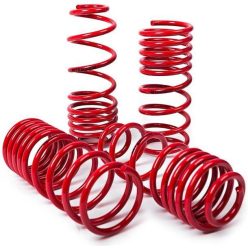
Net price: 124 €
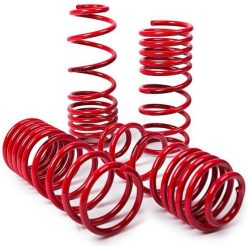
Net price: 127 €
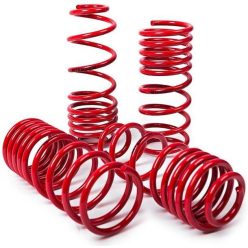
Net price: 179 €
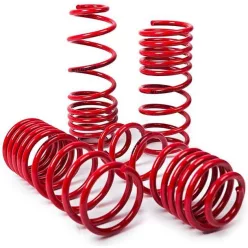
Net price: 169 €
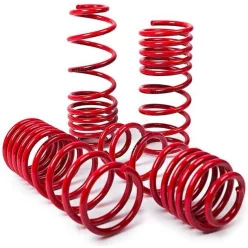
Net price: 119 €
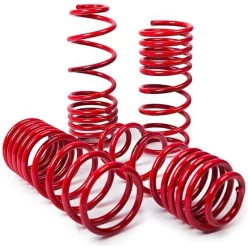
Net price: 133 €
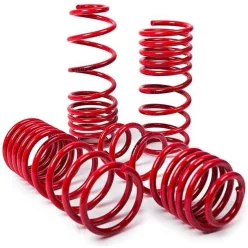
Net price: 135 €
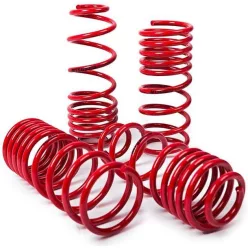
Net price: 116 €

Net price: 182 €
Net price: 211 €
Net price: 174 €
Benefits and applications of Suzuki lowering springs
The Suzuki – MTS Technik lowering springs range is designed to sharpen the behaviour of small and compact Suzuki models such as Alto I–V, Alto VII, Baleno I–II, Ignis I–III, Kizashi, Liana and Splash. Factory suspension on these cars aims for comfort and versatility, which can leave a relatively tall “4x4-style” wheel gap and noticeable body movement during spirited driving. A well-chosen lowering spring kit with 20/20, 30/30, 35/25, 35/35 or 40/40 mm drops reduces ground clearance, lowers the centre of gravity and tightens body control. The result is a Suzuki that turns in more confidently, rolls less in bends and looks significantly more purposeful on the road.
Technical Basics
MTS Technik lowering springs are manufactured from high-strength spring steel, cold-formed and heat-treated, then finished with durable anti-corrosion coatings to withstand daily and winter use. Typical drop values for Suzuki applications include 20/20 mm, 30/30 mm, 35/25 mm, 35/35 mm and 40/40 mm, indicating the change in front and rear ride height compared with stock suspension. Spring rates are matched to each model’s axle loads, engine variant and body style, so a light Alto receives a different setup than a heavier Kizashi or Liana. As with any lowering, greater drops mean less remaining suspension travel and ground clearance, so drivers must pay more attention to speed bumps, steep ramps and poor road surfaces.
Selection Criteria
Choosing the correct Suzuki lowering spring kit starts with identifying the exact model (for example Alto I–V or VII, Baleno I–II, Ignis I–III, Kizashi, Liana, Splash), body style, engine and production year. A Baleno II with a 20/20 mm drop will see a subtle visual and dynamic change, while a 35/35 or 40/40 mm kit delivers a more aggressive stance and firmer feel. For predominantly road use, drops in the 20–30 mm range generally offer the best balance between improved stability and usable ground clearance. Larger 35–40 mm drops suit drivers who regularly drive on good roads and are happy to trade some comfort for a sportier stance and more direct feedback.
Installation & Maintenance
Professional installation of lowering springs on Suzuki models is strongly recommended, as front MacPherson struts and rear springs must be removed and refitted safely. A suitable spring compressor and adherence to factory torque specifications are essential during assembly, especially when working on strut top mounts. It is also wise to inspect shock absorbers, top mounts, bushes and bump stops, since firmer springs will load these components more heavily. After fitting, a proper wheel alignment (primarily toe, and camber where adjustable) is mandatory to keep the car tracking straight and to avoid uneven tyre wear. Periodic checks of spring coating, spring seats and suspension joints help maintain long-term reliability.
FAQ
How much should I lower a daily-driven Suzuki Baleno or Ignis?
For most road-driven Suzuki models, a drop of around 20–30 mm offers the best compromise between sharper handling and practical ground clearance. It improves stance and stability without making everyday obstacles such as ramps and speed bumps difficult to manage. More aggressive 35–40 mm drops are better suited to good roads and drivers who accept a firmer ride.
Can I keep OEM dampers with MTS Technik springs on my Suzuki?
With moderate drops of up to about 30–35 mm and healthy original dampers, many Suzuki applications can retain OE shocks. On high-mileage cars or with larger drops, upgrading to sport dampers is recommended to maintain proper damping and avoid bottoming out. Matching springs and dampers usually gives a more consistent and durable suspension package.
How does ride comfort change after lowering a Suzuki?
Lowering springs make the suspension firmer, so bumps and joints in the road surface are felt more clearly, especially with low-profile tyres. In return, body roll is reduced, braking stability improves and steering feels more precise, which many drivers find reassuring. If comfort is a priority, choose a modest drop and avoid extreme wheel sizes and tyre profiles.
Will lowering my Suzuki increase tyre wear?
Tyre wear can increase if wheel alignment is not corrected after lowering, typically due to excessive negative camber or incorrect toe settings. A careful geometry setup immediately after installation and regular checks help keep tyre wear close to stock levels. Rapid inner-edge wear or pulling to one side indicate that alignment needs adjustment.
Is approval required to lower a Suzuki for road use?
Requirements depend on local regulations and vehicle inspection rules in your country, so they should always be checked in advance. TÜV or ECE-approved springs and carrying the documentation in the car often simplify inspections. When unsure, consult an inspection station or suspension specialist familiar with Suzuki models.
