
Standard 201SS exhaust flex pipes (exhaust flex connectors) are flexible sections for the exhaust system that help with vibration control, thermal movement and reduced stress between more rigid pipe sections.
This category is the right fit when you need to match the pipe size pair and flex-section length: the current range typically covers 45-90 mm inner diameters with 100-250 mm lengths, so filter by size first and then review the product card for exact details. Verify exact dimensions and specifications on the product card; in-stock items dispatch fast within the EU.
For longer service life, allow for weld clearance and make sure the flex pipe is not being used to hold a badly aligned exhaust branch in place; durable results depend heavily on neutral installation and proper support elsewhere in the system.

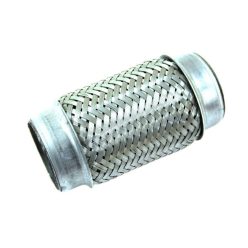
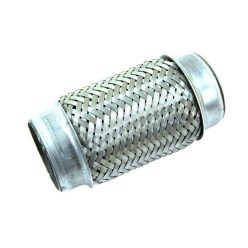
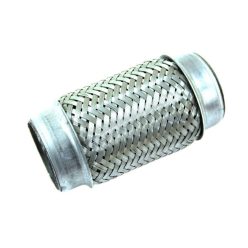
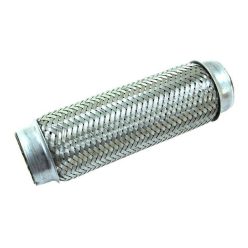


Standard 201SS Exhaust Flex Pipes for Exhaust Stress Management and Repair Work
A standard 201SS flex section is the compliant part placed between more rigid exhaust tubes, helping the system cope with engine movement, vibration and heat-related expansion so that welds, joints and surrounding components are not forced to absorb all of that movement on their own.
Technical background and system integration
System role: an exhaust flex pipe is not a shortcut for performance claims; it is a practical construction element that helps the exhaust line deal with movement more gracefully and may reduce unnecessary loading around the manifold, downpipe, weld areas and downstream sections.
Thermal movement: as exhaust temperature rises, the system naturally changes length and position, so the flex pipe works best when it has room to move and is not constantly bent sideways by a forced installation angle.
Material level: the Standard 201SS range is often a sensible entry point for road use and general fabrication jobs where broad size choice, straightforward installation and controlled cost matter, while the final decision should still reflect the vehicle’s use and the actual installation environment.
- Inner diameter: this page currently focuses on sizes roughly from 45 mm to 90 mm, so start with the real internal size of the existing exhaust line.
- Body length: options around 100, 150, 200 and 250 mm suit different packaging limits and movement needs.
- Install space: available straight length and the distance to hangers, bends and flanges all affect which option makes sense.
- System logic: the heavier or more constrained the exhaust branch is, the more important correct positioning and healthy hangers become.
How to choose the right one
Quick selection guide: on a leaf page, begin with inner diameter and then choose the flex-section length that fits the available straight section. If the old part is still on the car, do not rely only on a nominal description; measure the actual pipe size and make sure there is enough room for the weld zones as well.
Product-card check: once you narrow the list with filters, open the product page and confirm the exact size and length before ordering. When two close options seem possible, the real installed dimensions matter more than an old invoice description or a guess based on engine size.
If your main goal is comparing material grades, it helps to evaluate exhaust flex pipes as part of the whole system, because the difference between a standard version and a higher-spec option is not only about price but also about the working environment they are expected to face.
Installation and failure-prevention tips
Preparation: mark the cut so the flex pipe does not land directly on a rigid stress point, and leave enough room to rotate and align the section cleanly before final welding. A good position is usually accessible, yet not exposed to needless engine-rocking load.
Weld sequence: tack the part in place with the exhaust sitting in a natural resting position, then recheck the full line, the hangers and the alignment of both pipe ends. Results are usually more consistent when the flex pipe is finished in a neutral position instead of pulling the system into shape.
Common failure: early wear or rattling often starts when the flex pipe is installed at the wrong angle, sits too close to a rigid mounting point or is asked to compensate for an exhaust line that is already under tension. In that situation the system may become more resonant, the braid area may fatigue sooner and the part stops acting like a movement section and starts acting like a forced correction; careful sizing, neutral fit-up and sound hanger condition help prevent this.
Post-fit check: after the first heat cycles, inspect the welds, rubber hangers, nearby clearances and the distance to the floor, braces and other surrounding parts. Even a well-chosen flex pipe will not replace a poor exhaust path if the system is still touching something nearby.
PRO TIP: when replacing only a failed section, take reference photos from several angles before cutting the old part out, because that makes it much easier to recreate a neutral position and plan the final weld orientation.
FAQ
What is a Standard 201SS exhaust flex pipe used for?
It creates a flexible section in the exhaust line so the system can deal with vibration and heat-driven movement more effectively. This is especially useful on fabricated or repaired exhausts where several rigid sections meet and need some compliance between them.
What is the most common failure or installation mistake?
First check whether the flex pipe sits in line, has room to move naturally and is not pulling the exhaust to one side. Then inspect the hangers, the weld area, the floor clearance and whether the system is already under tension even when cold.
How does Standard 201SS compare with a higher-spec flex pipe?
The difference is usually tied to material level, operating margin and the type of environment the part is expected to face, not just the product name. For many road and general fabrication jobs, a standard version can be a sensible starting point, while harder use may justify looking at the whole system and selecting accordingly.
Should I weld it in or clamp it?
These types of flex pipes are commonly chosen for welded installation because that gives better control over routing and structural alignment. The final choice still depends on the pipe-end design and how the rest of the exhaust system is built.
What should I inspect if the system still resonates after installation?
Check whether the resonance appears only at certain engine speeds, because that helps separate routing and hanger issues from general exhaust noise. Then inspect the rubber mounts, nearby heat shields, load around the manifold area and whether the selected flex length is too short for the movement the system actually sees.
